

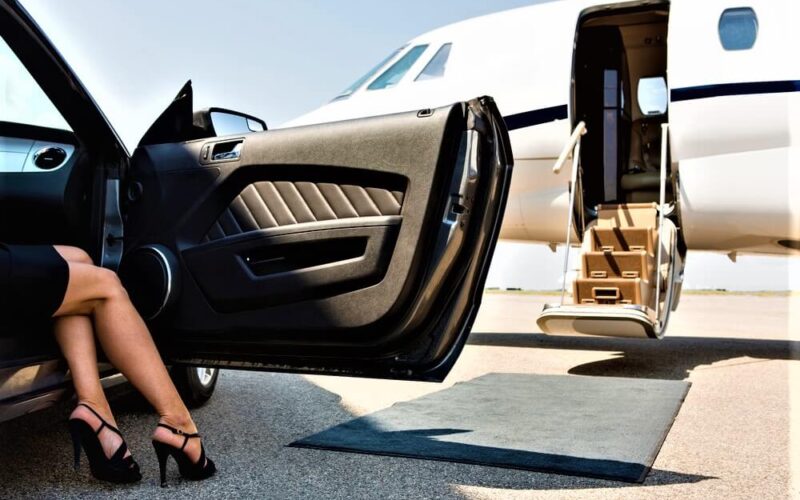
By almost any metric, business aviation is enjoying one of the strongest periods in its history. Manufacturers are reporting record sales, OEM backlogs in some cases stretch years into the future, and private flying remains far above pre-pandemic levels as more well-heeled travelers continue to enter the market. To many, it feels like an industry with limitless momentum.
But aviation has been in this situation before — and the warning signs of structural risks now emerging look uncomfortably familiar.
In 2007 and early 2008, business aviation was also booming. Then the financial crisis hit, and the same jets celebrated as symbols of global industrial strength became objects of political outrage. Executives abandoned their aircraft to avoid scrutiny, demand collapsed, and values cratered. The recovery took years.
The message today? Business aviation appears healthy — maybe a little too healthy.
Kevin Singh, founder and CEO of Icarus Jet, a charter and aircraft management firm with offices in Dallas, Dubai, and London, says he believes the industry may again be drifting into dangerous territory as lessons from 2008 fade. And this time, he argues, the vulnerabilities may actually run deeper.
In the aftermath of the financial crisis, Singh said, “there were guardrails to our industry. There was a respect for the crew, respect for the owner, respect for the airport, and respect for people and cities that were invested into this. There was a status quo, and today that is completely gone.”
He argues that the current boom has eroded the discipline that shaped business aviation in the years after 2008, as the cycle of greed and fear is again swinging recklessly toward excess. “Now, everybody has a private jet,” he said. “But what happened to our infrastructure in the meantime? You can’t take off from Morristown, Teterboro, White Plains, because you have two-hour delays. You can’t park in Europe because the infrastructure is bursting at its seams.”
In Singh’s view, the system was never designed to handle today’s traffic. Staffing shortages, airport congestion, and supply-chain fragility are no longer abstract concerns but real operational threats, with crews, maintenance teams, and air traffic controllers stretched to their limits.
That fragility extends to industry culture. Singh describes a marketplace where cost discipline and operational maturity have been replaced by vanity purchases, aggressive marketing, and a general erosion of responsibility.
“We went from naming and shaming people for having private jets and spray-painting their jets and yachts to ‘Look at me, I’m breaking speed records between two city pairs,’” he said. “The message is: I’m going zero to Mach 1 — and what are you going to do about it?”
Market behavior reflects the same drift. “Catering should not cost $5,000 for six sandwiches,” he said. “Somebody needs to step in and say this isn’t right.” Training costs have soared too, he said: “Fifty, sixty thousand dollars for recurrent training? We never paid more than 18 to 25. So greed has taken over. Responsibility has taken a back seat. Efficiency in this booming market is gone.”
The result, Singh said, is a “cavalier” attitude — with owners buying aircraft larger than they need because tax incentives and bragging rights shape their decisions, operators chasing sales at any cost, and an industry that has stopped explaining its value to the public.
He also worries that sustainability has nearly disappeared from industry discourse. “When you go to the NBAA [National Business Aviation Association] events, there’s almost no talk of sustainability anymore,” he said. A major private jet firm once promoted a sustainable aviation fuel message on the side of its aircraft, he noted. “Today, the pitch is that they offer a hypoallergenic mattress.”
Ignoring climate concerns, he argues, is strategically dangerous. Public opinion will shape aviation’s future, and if the economy weakens or the stock market turns, business aviation could again become a political target. “Once the tax incentive dries up or they lose Congress, there’s no longer a unified voice for our industry,” he said.
That vulnerability will only grow if the industry fails to explain its social value. “We have to make sure that we continue to educate people about why business jets exist, and that they do not take away anything from public resources,” he said.
Singh paints a stark contrast between two possible futures. One path blends better technology with real discipline and transparency. “If we use technology and AI to design better aerodynamics, better engines, emissions standards are going to be met,” he said. “Rather than, ‘Look, the Emperor is wearing the most luxurious fine linen and everybody else is hungry and poor,’ we need to create a future built on a sustainable, responsible industry.”
The darker path is what happens if nothing changes — if the boom continues on its current trajectory while airline service grows ever worse and consumer protections erode. “If we choose the other option where 500 ultra-wealthy people own 600 jets and everybody else is traveling on airlines that can’t even get them from point A to point B,” he said, “there is going to be a dangerous collective anger.” In that scenario, he warned, “five years later, we will pay those high-tier taxes for business aviation and have higher prohibition of movement of aircraft. We need be very careful.”
Singh stresses that outside scrutiny shouldn’t be seen as hostility but as a signal that the industry needs to evolve. “Engagement makes us better,” he said. “If people have questions or criticisms, we should be willing to meet them, explain what we do, and show how we’re addressing their concerns.”
For Singh, the stakes reach far beyond a temporary cooling of demand. The boom is real — but so are the structural vulnerabilities. “If we keep operating in a way that works against our own long-term interests,” he said, “costs will spiral out of control, the margins shrink, safety will suffer, and eventually the model stops working.”
1 comment
Well thought out and reported Stephen. As a former NetJets and Major Airline Captain and now an aviation legal expert and ghostwriter of educational email courses for private jet charter and management companies, I’m seeing the same result in our industry that Kevin is reporting on, what seems like a complete ack of emotional and moral accountability that you’re calling out. This oversight has outran our technological advances, has caught up to and is swallowing us. I’m seeing this lack of accountability and lack of focus on the human factor in our industry because we seem to inevitably default to concentrating on technological advancements at the cost of emotional intelligence education and training. My associates and I are doing something about it at FirstClassLeaders.com, where we educate, mentor, and nurture entry level and mature aviators back into what has always been sorely lacking in our industry, leadership with a concern for who and how we lead and the potential positive outcome, of good leadership – leadership from the bottom up not from the top down. I see the glutted ATC system and the ramifications of too many airplanes for too little space getting worse instead of better. There is much that I miss about our beloved industry but so much that I don’t.
Thank you for your reporting and for Kevin’s “fighting the good fight!”