

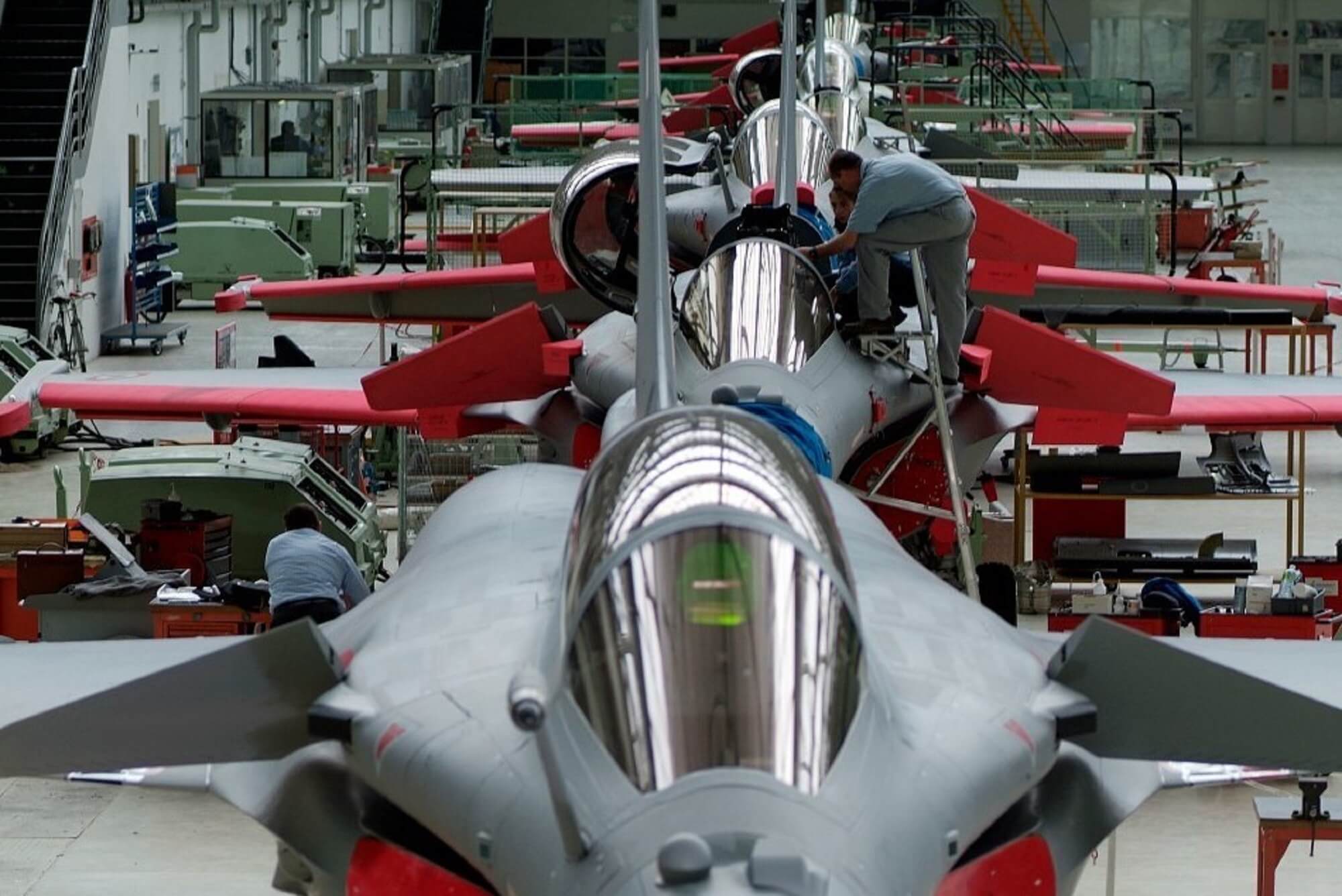
Dassault Aviation slightly exceeded its Rafale delivery target in 2025, but the French manufacturer is still producing its flagship fighter at a pace that leaves customers facing long waits amid intense global demand.
In a financial release published on January 7, 2026, Dassault said it delivered 26 Rafale fighters last year, including 15 for export customers and 11 for the French armed forces, compared with guidance for 25 aircraft. The company also handed over 37 Falcon business jets, short of the 40 deliveries it had targeted.
Less than three Rafale jets a month
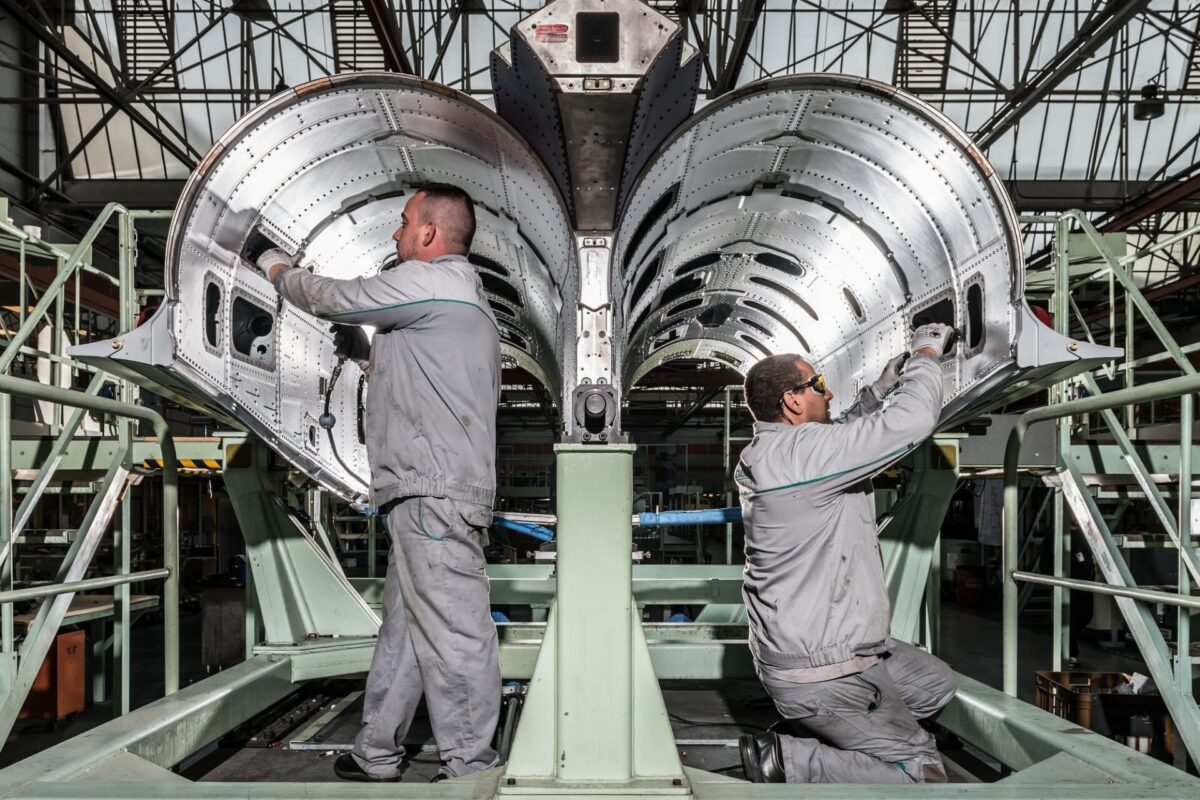
For air forces waiting for new fighters, the performance is relative. Delivering 26 Rafale jets over a full year equates to a production tempo of a little more than two aircraft per month, still below three per month.
Dassault’s management has acknowledged that its industrial ramp-up ambitions have been held back in recent years by pressure on the supply chain. Around 400 companies contribute to Rafale manufacturing, and some suppliers have struggled to recover after the Covid-19 crisis and cope with higher raw material costs. Those bottlenecks have limited the rate at which final assembly can accelerate, even as demand continues to grow.
The group nevertheless raised its 2025 revenue guidance to above €7 billion and said it will publish full-year results, including order intake and backlog figures, on March 4, 2026.
Backlog equals a decade of Rafale production at current rate
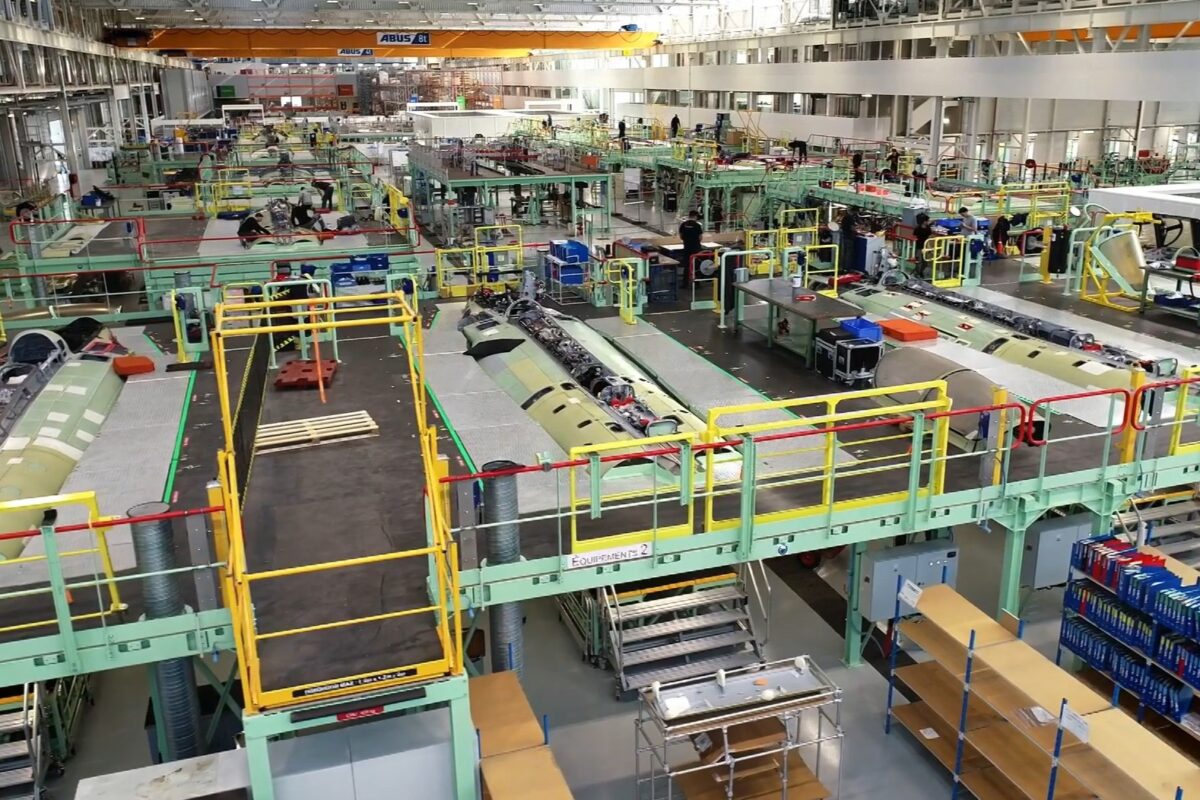
Dassault closed 2025 with a Rafale backlog of 220 aircraft: 45 for France and 175 for export customers. At the current 2025 delivery cadence, that represents roughly 10 years of production, underlining how tight capacity remains for future operators.
The Rafale’s orderbook has been reshaped over the past few years by a series of export contracts in Egypt, Qatar, India, Greece, Croatia, the United Arab Emirates, Indonesia, and Serbia, as well as French domestic orders. At the end of 2024, total Rafale orders since the start of the program stood at 507 aircraft, including 273 for export and 234 for France.
Despite the heavy backlog, demand shows no sign of weakening. In 2025, Dassault booked 26 new export Rafale orders and 31 Falcon orders, broadly stabilizing the fighter backlog at 220 units and lifting Falcon demand compared with 2024.
New demand signals from Iraq, India, and Ukraine
Beyond the firm backlog, several prospective deals point to sustained Rafale demand over the longer term. In the Middle East, Iraq and France are reportedly in late-stage talks on a contract for 14 Rafale F4 fighters, including 10 single-seat and four two-seat aircraft, with a potential signature expected in 2026.
In Asia, the Indian Air Force is pursuing a government-to-government acquisition of up to 114 additional Rafale fighters under its Multi-Role Fighter Aircraft program, positioning the type as a frontrunner for New Delhi’s next major fighter purchase.
In Europe, Ukraine and France signed a letter of intent in November 2025 covering the possible acquisition of up to 100 Rafale F4 fighters over the coming decade, alongside air defense systems, munitions and drones.
While these projects remain at various stages of negotiation and are not yet firm contracts, together they illustrate a strong pipeline of potential business that could keep the Rafale production line busy well into the 2030s.