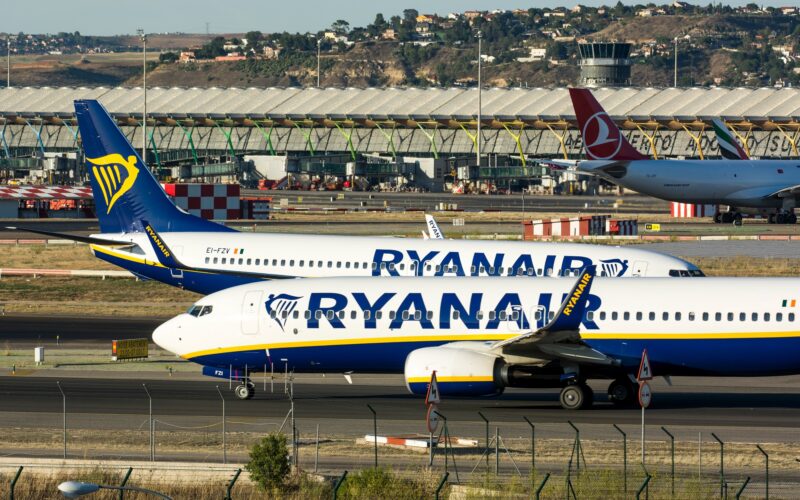
A public and increasingly personal feud has erupted between Ryanair CEO Michael O’Leary and Elon Musk after the airline ruled out installing Starlink in-flight internet across its fleet.
O’Leary told Reuters that Ryanair would not adopt Starlink, citing the cost and aerodynamic drag associated with the required antennas. He said the added drag would increase fuel burn and could cost the airline between $200 million and $250 million annually, which he translated to roughly an extra dollar per passenger.
The Ryanair chief also questioned passenger demand, noting that the airline’s average flight lasts about an hour. In his view, few customers would be willing to pay for onboard connectivity on such short routes, making the economics unworkable for an ultra-low-cost carrier.
Musk quickly responded on X, the social media platform he owns, warning that Ryanair risked losing customers to airlines that do offer reliable onboard internet. O’Leary fired back in a radio interview with Ireland’s Newstalk, dismissing Musk’s aviation expertise and escalating the tone of the exchange.
“What Elon Musk knows about flight and drag would be zero,” O’Leary said. “I would pay no attention whatsoever to Elon Musk. He’s an idiot. Very wealthy, but he’s still an idiot.”
Musk responded with a post of his own, writing: “Ryanair CEO is an utter idiot. Fire him.”
The exchange did not stop there. After an outage affected X, Ryanair’s official account mocked Musk with a post suggesting the platform needed better connectivity. Musk replied by floating the idea of buying the airline outright and appointing someone named “Ryan” to run it.
The clash comes as Starlink gains momentum across commercial aviation. Several major airlines have announced plans to equip their fleets with the satellite-based system, attracted by its higher speeds and lower latency compared with traditional inflight connectivity. Operators moving ahead with Starlink include United Airlines, Lufthansa Group, Qatar Airways, and Air France.
Supporters of Starlink argue that newer antenna designs minimize aerodynamic penalties and that passenger expectations around connectivity continue to rise. Ryanair, however, has long resisted optional features that add cost without a clear revenue upside, instead focusing on low fares and high aircraft utilization.