

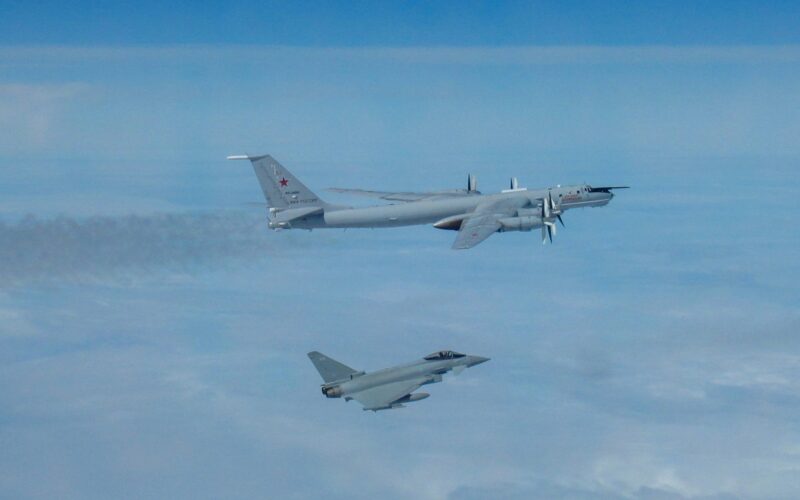
The UK has disclosed how the so-called secret agreement with Dublin authorizes Royal Air Force interception missions in Ireland’s airspace.
In a written answer to a parliamentary question on January 12, 2026, and first reported by the UK Defence Journal, the UK Minister for the Armed Forces Al Carns said that access to Irish airspace “is managed through extant diplomatic channels as per international norms with clearance being requested and granted for state aircraft under set conditions.”
“UK military aircraft do not enter the sovereign airspace of Ireland for operational purposes, without the express prior agreement of the Irish Government,” Carns added, stressing that “questions on sovereign airspace access and associated regulations are for individual nations to answer, therefore any questions on Irish airspace should be directed to the Irish Government.”
The response, published following a question from Democratic Unionist Party MP Carla Lockhart, effectively confirms that any RAF quick reaction alert activity over Ireland remains subject to case-by-case political consent from Dublin, rather than a standing UK guarantee to defend Irish skies.
Ireland’s air defense gap
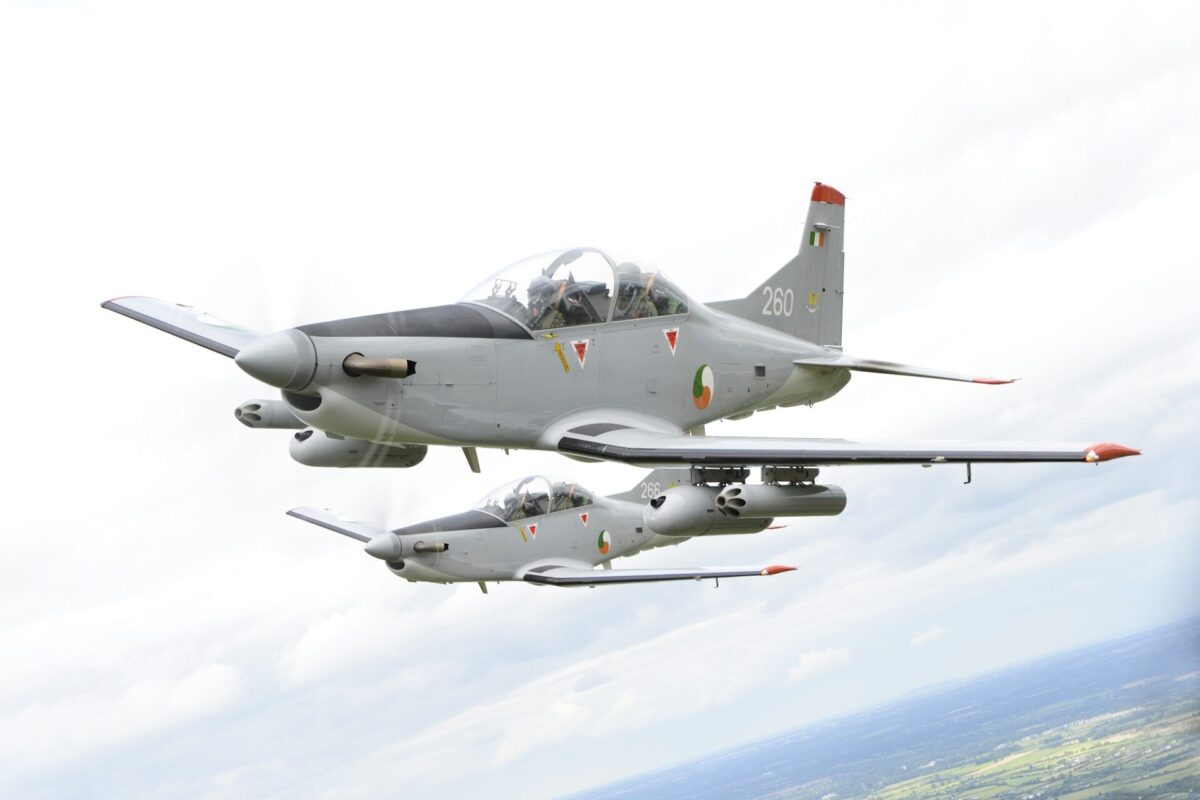
The clarification comes against the backdrop of Ireland’s persistent vulnerability in air defense. The country has not operated combat jets since 1998, when its Light Strike Squadron, flying Fouga CM170 Magisters, was retired.
In practice, Ireland relies on the bilateral understanding with the UK for the interception of non-compliant traffic, a dependence that has drawn growing scrutiny as tensions rise on Europe’s periphery and traffic across the North Atlantic continues to increase.
Former Irish Air Corps head General Ralph James has described Ireland as “probably the most vulnerable” country in Europe, arguing that military neutrality cannot substitute for credible air surveillance and interception capabilities.
Steps to rebuild airspace sovereignty
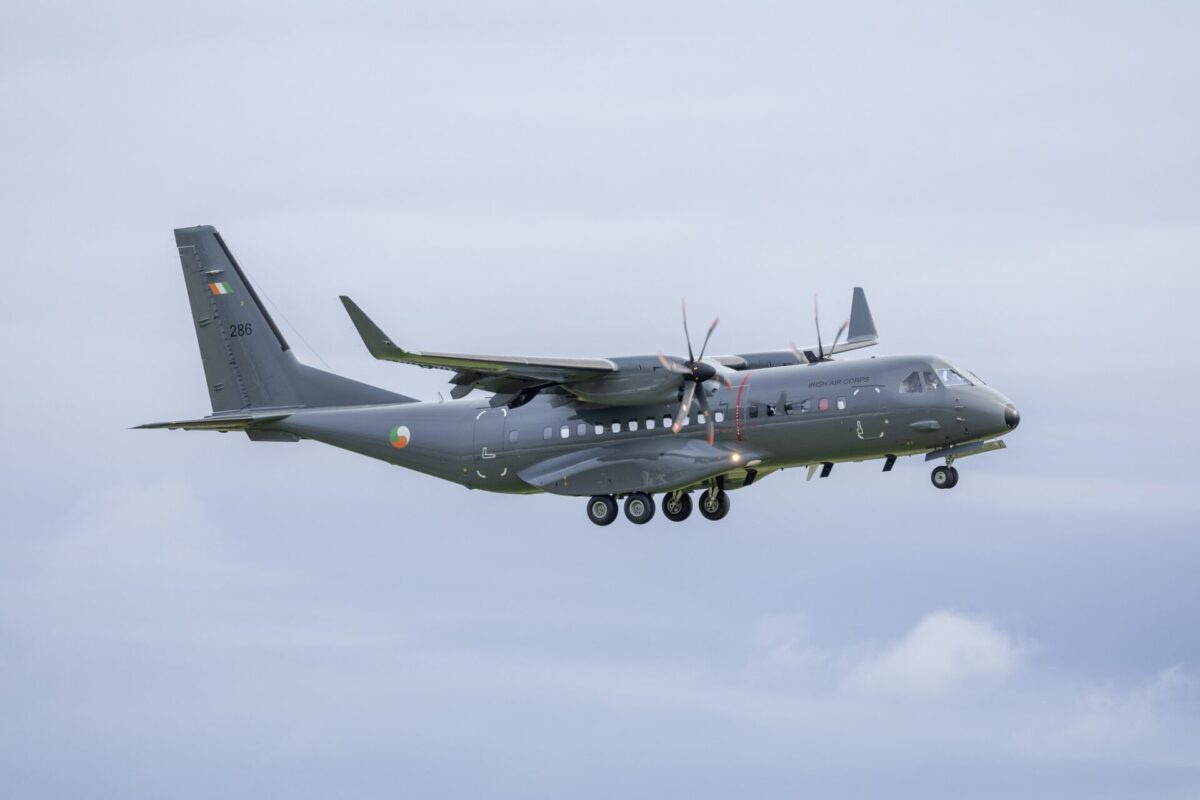
Dublin has begun modest steps to rebuild its air domain capabilities. In October 2025, the Irish Air Corps recently took delivery of its third and final Airbus C295, completing a program worth about €300 million that strengthens both maritime patrol and transport capacity.
Ireland is also exploring the purchase of its first modern combat aircraft in more than half a century. Current planning assumptions point to a preferred fleet of 12 to 14 jets, with annual costs estimated between €60 million and €100 million over 20 to 25 years, potentially pushing the total investment close to €2.5 billion.
Ahead of Ireland’s presidency of the Council of the European Union in the second half of 2026, the government has signaled that strengthening air surveillance and counter drone capabilities will be early priorities. Dublin has also indicated it may seek additional European support to help secure Irish airspace during high level meetings, reinforcing how much the country still leans on partners, including the UK, to protect its skies.
2 comments
I’ve often said the Saab JAS39 Gripen E would offer The Republic of Ireland with a cost effective Supersonic Fast Jet Interception platform, although not Gen 5, the Gripen E is most definitely Gen4.5 with its Onboard Radar, Sensors and upgraded Avionics and its clearance to carry and deploy up to date Air to Air Missiles along with Air to Ground capability. 12 to 14 Gripen E Aircraft would give the Irish Air Corps the capability and redundancy to police its entire Airspace From Baldonnel
At this stage,a squadron of Spitfires would be better than what we have at the moment.We are the laughing stock of Europe when it comes to defence.No Air Force,a Navy with no personell and an Army of 8,000 with no modern equipment.Consecutive governments are to blame for this shambles.