

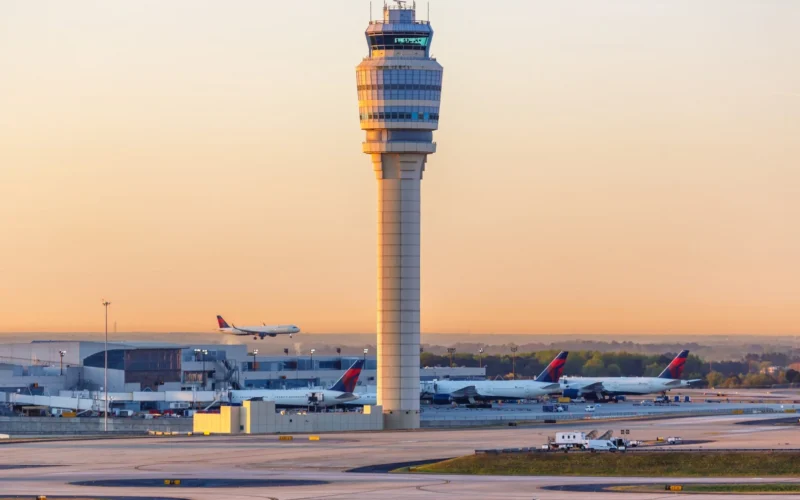
US lawmakers are weighing a funding package that would raise the Federal Aviation Administration’s budget to $22.2 billion for fiscal year 2026 and prevent a partial government shutdown when temporary funding expires on January 30.
The proposal, known as the Consolidated Appropriations Act of 2026, combines full-year funding for several federal agencies into a single bill. If Congress passes it before the current stopgap measure expires, the legislation would replace temporary funding with permanent appropriations for the remainder of the fiscal year.
For the FAA, the bill represents a $1.2 billion increase over fiscal year 2025 levels. The funding would support air traffic control operations, infrastructure upgrades, and the hiring of 2,500 additional air traffic controllers, as the agency continues to grapple with staffing shortages across the US airspace system.
Under the proposal, the FAA’s total budget would reach $22.2 billion. That includes a $235 million increase for the Air Traffic Organization, which oversees air traffic control operations, and $824 million for facilities and equipment. The bill would also repurpose more than $368 million from the 2021 infrastructure law for use in the Airport Improvement Program.
Lawmakers introduced the package as a “minibus” bill, meaning it bundles appropriations for multiple departments rather than addressing each agency separately. In addition to the Department of Transportation, the bill includes funding for the Departments of Defense, Homeland Security, Labor, Housing and Urban Development, and Health and Human Services.
Because the current continuing resolution expires on January 30, 2026, Congress must act quickly to avoid a funding lapse. The House is expected to vote on the bill this week. If approved, it would then move to the Senate, which is scheduled to return next week, leaving a narrow window to complete the process before the deadline.
A lapse in funding would trigger a partial government shutdown, forcing federal agencies to halt non-essential work. For the FAA, that could disrupt certification activity, training programs, and administrative functions, even as air traffic control operations continue at reduced capacity.
The National Air Transportation Association welcomed the funding increase but noted that the bill does not include separate safety legislation aimed at congested airports. In a statement, NATA said the proposal represents an important step toward stable FAA funding, but the organization said it would continue to review the details.
Specifically absent from the bill is the Rotorcraft Operations Transparency and Oversight Reform Act, or ROTOR Act. The Senate passed the measure in late 2025 following a fatal midair collision involving a military helicopter and a regional jet near Washington, D.C. The bill would require most aircraft operating near congested airports to use ADS-B, including certain military flights, but the House has not yet taken it up.
While the ROTOR Act remains separate from the funding package, aviation groups have emphasized the importance of both stable funding and safety reforms as air traffic volumes continue to grow.
If lawmakers pass the appropriations bill before the January 30 deadline, the FAA would gain full-year funding certainty for fiscal year 2026 and avoid another disruption tied to a short-term budget extension.