
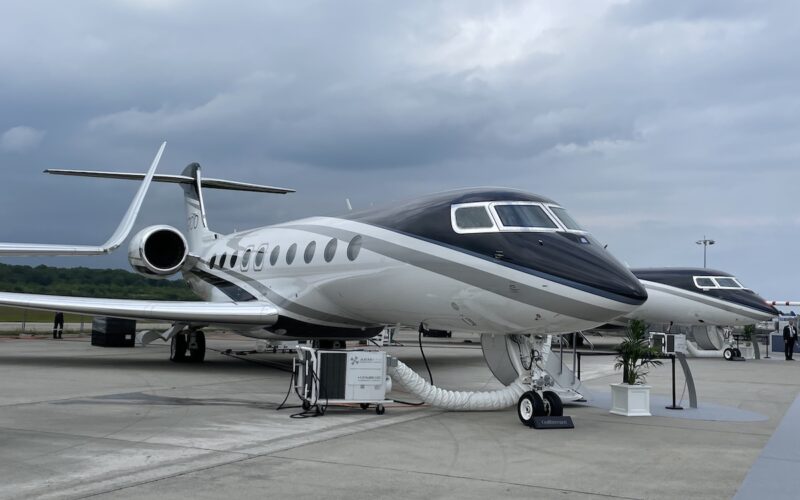
An escalation in tensions between the United States (US) and Canada over the certification of several Gulfstream private jets appears to be on the brink of a resolution, according to media reports.
On February 10, 2026, the Federal Aviation Administration (FAA) head Brian Bedford confirmed that concerns raised by US President Donald Trump over the time taken for Gulfstream jets to be approved in Canada had been addressed.
“I think we’ve resolved the issues with Canada. My understanding is Transport Canada will announce the Gulfstream certifications that have been delayed for years,” said Bedford according to Reuters.
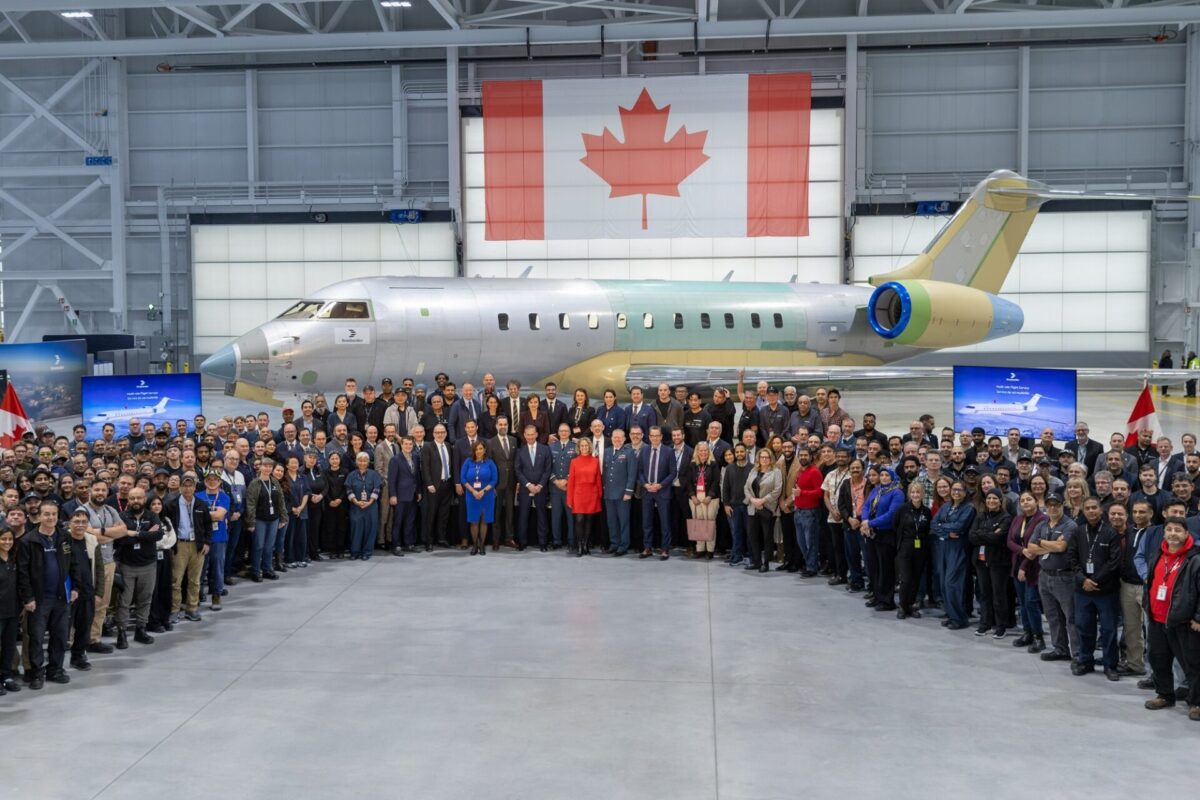
On January 29, 2026, President Trump threatened to “decertify” Canadian made Bombardier Global Express jets and “all aircraft” made north of the US border in retaliation for the perceived delays.
President Trump claimed that Canada had “illegally” refused to certify Gulfstream’s G500, G600, G700, and G800 aircraft and additionally threatened a 50% tariff on Canada for any aircraft sold into the US if the situation is not “immediately corrected”.
Gulfstream G700 and G800 were certified in the US with an exemption over potential issues with fuel-icing. In 2023, Gulfstream was given three years to address the fuel-icing matter while reassuring the public there was no risk to safety.
“The petitioner has requested a partial exemption from the affected sections of 14 CFR for a period of 3 years, in order to develop and conduct a full-scale test of the fuel system to show that the fuel system icing threat has been adequately mitigated for the Model GVIII-G700 and Model GVIII-G800 airplanes,” said the FAA in 2023.
On February 2, 2026, Bedford said that when the FAA certifies an aircraft, it expects other aviation regulators to accept its certification.
At the Singapore Airshow he told reporters that other countries’ aircraft safety validation process “shouldn’t take five, six, and seven years”.
3 comments
The certification in the USA came with a FAA exemption. The question really should be ‘Why does an a aviation manufacturer need a 3 year exemption?’. Canada has ever right to refuse to accept a FAA exemption, especially since the FAA doesn’t seem to be really doing their job, in making sure aircraft are certifiable & safe to be flown in, over the last few years.
With respect, isn’t the material point that even the FAA certification was subject to an exemption, rather than being a “clean” one? Moreover, could fuel icing and/or cold-soaking not reasonably be of greater concern in an environment like Canada’s, where ambient temperatures are generally lower than in the United States, and often significantly so? If so would the subject matter of the exemption not quite reasonably be of greater concern to Transport Canada than it might be for the FAA? There’s a reason cold-soaking tests are often undertaken in a place like Iqaluit.
Transport Canada has very specific certification requirements for cold climate operation, as detailed in:
https://tc.canada.ca/en/aviation/reference-centre/aircraft-certification-guidance-advisory-materials-pre-2007/advisory-circular-ac-no-500-006-issue-1
All current certifications and exemptions (as of February 13, 2026) for Gulfstream GVIII aircraft are listed at:
https://tc.canada.ca/en/search/site?key=Gulfstream+GVIII-G