

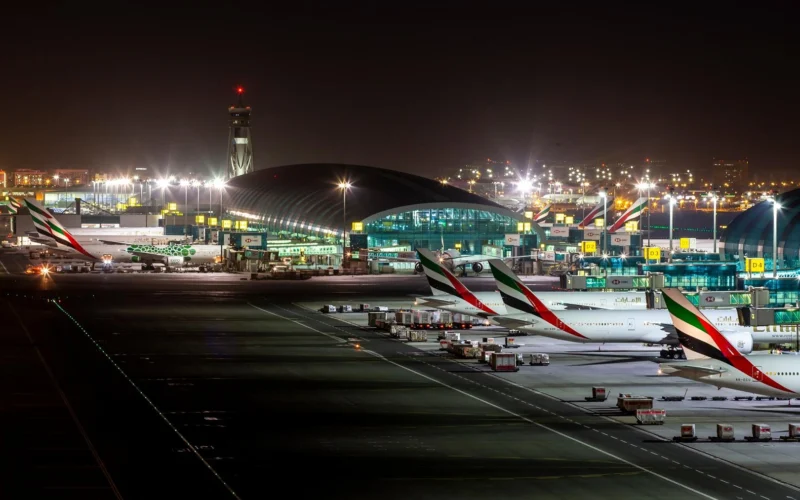
The European Union Aviation Safety Agency (EASA) has told airlines not to operate in the airspace of Bahrain, Kuwait, Qatar or the United Arab Emirates as renewed fighting between the United States and Iran creates unacceptable risks to civil aircraft.
The new Conflict Zone Information Bulletin, issued July 14, 2026, also covers airspace over the Gulf of Oman within the Muscat Flight Information Region west of 58 degrees east longitude.
EASA’s recommendation applies at all altitudes and flight levels and remains valid through July 29 unless the agency rescinds it. The bulletin applies to EASA-regulated airlines and foreign operators flying to, from or within the European Union under an EASA authorization.
Individual countries retain authority over their airspace, but EASA’s guidance effectively tells airlines under its oversight to stay out of many of the region’s aviation corridors.
EASA said repeated violations of the US-Iran ceasefire had again created a high level of risk across the Gulf.
Iranian efforts to control the Strait of Hormuz, attacks against commercial ships and related US military action have increased the danger in the region, according to the bulletin.
EASA also pointed to major US military facilities in Gulf states as potential targets for Iranian missiles and drones.
EASA said missile and drone activity, interceptions and falling debris pose a threat to nearby airspace. The agency also warned that active US and regional air defenses could mistake a civilian aircraft for a military target.
“Unpredictable military developments, combined with the possible use of missiles, drones, combat aircraft and air-defense systems, create a high risk to civil flights at all altitudes and flight levels within the concerned airspace,” EASA said.
The agency issued the tougher warning less than a week after allowing a broader Middle East and Persian Gulf bulletin to expire.
On July 8, EASA said an overall reduction in short-term tensions meant it would replace the previous bulletin with a lower-level information note covering the wider region. Separate warnings remained in place for Iran, Iraq and Lebanon.
The situation has since deteriorated. Iran fired ballistic missiles at a US air base in Jordan on July 14, while US forces carried out a third consecutive night of attacks after Iran moved to close the Strait of Hormuz.
EASA advised airlines to continue monitoring regional airspace developments and follow notices issued by national aviation authorities.
Separate EASA bulletins advising airlines not to operate in the airspace of Iran, Iraq and Lebanon remain in effect through August 31.