

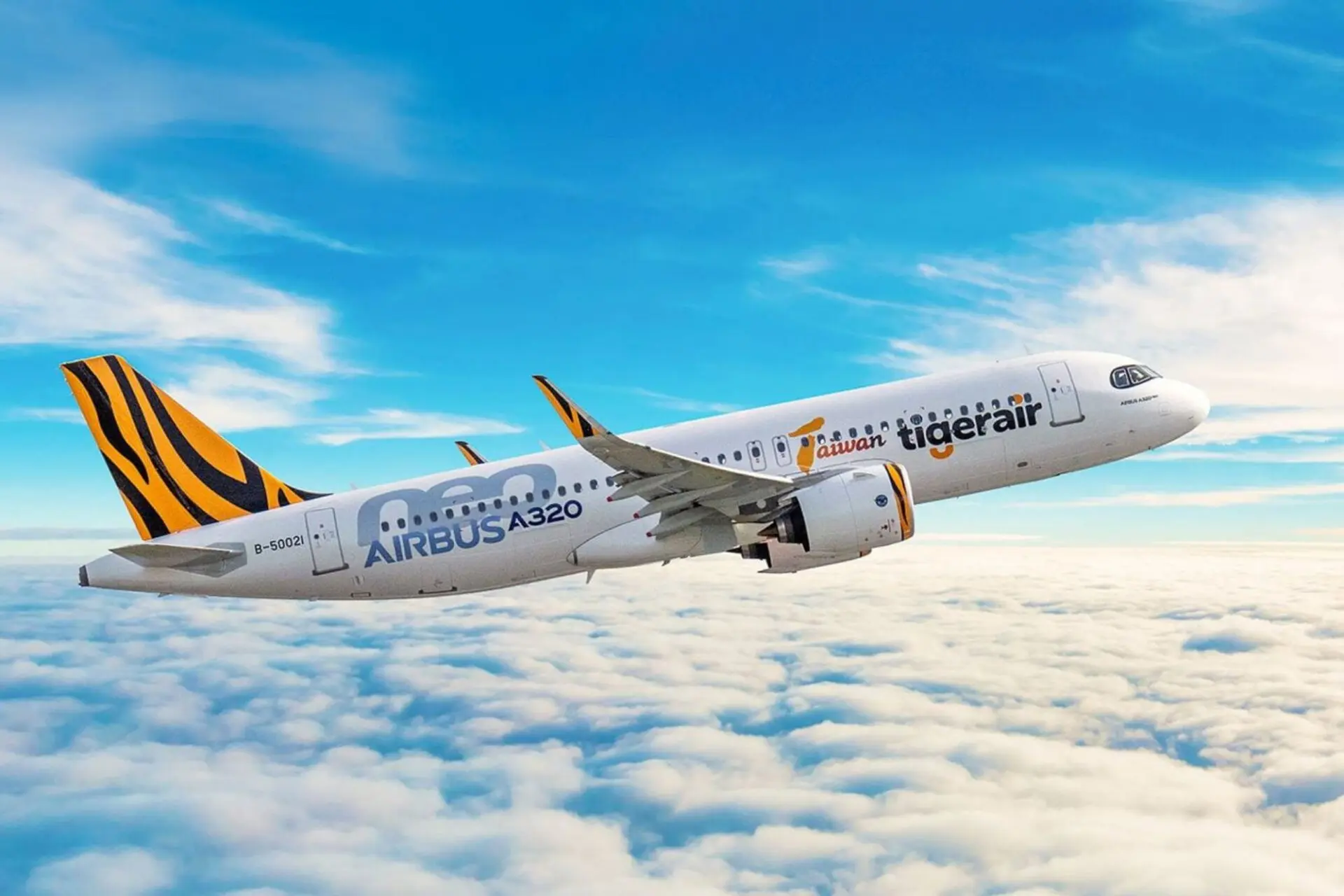
Tigerair Taiwan has signed a Memorandum of Understanding (MoU) with Pratt & Whitney for GTF engines to power 15 Airbus A321neo aircraft, four firm and 11 leased, extending a partnership between the two companies that dates back more than a decade.
The agreement, announced July 21, 2026, at the Farnborough International Airshow, comes as Tigerair Taiwan continues expanding its regional network.
The airline currently flies nine A320neo family aircraft powered by the GTF, alongside nine A320ceos running on IAE V2500 engines. Pratt & Whitney will also provide maintenance support for the new engines through a 12-year EngineWise Comprehensive services agreement, meant to keep costs predictable and performance steady over the long term. Deliveries are expected to begin in 2028.
Tigerair Taiwan has selected Pratt & Whitney GTF engines to power 15 additional A320neo family aircraft. The agreement includes a 12-year EngineWise services agreement. More: https://t.co/ts8S6OZK4t | #FIA2026 pic.twitter.com/0DRNr1V7Ep
— RTX (@RTX_News) July 21, 2026
A decade-long relationship continues
Rick Deurloo, President of Commercial Engines at Pratt & Whitney, said the order reaffirms Tigerair Taiwan’s trust in a company that exclusively powers the airline’s fleet, adding that the GTF engine will keep supporting the carrier’s regional expansion while delivering strong fuel efficiency.
Joyce Huang, Chairperson of Tigerair Taiwan, said Pratt & Whitney has been a trusted partner since the airline began operations in 2014, and that the new A321neo fleet, powered by the GTF, will support the carrier’s next phase of growth as it works to serve more passengers across more destinations at a lower cost per seat.
The efficiency case behind the GTF
Pratt & Whitney says the GTF engine’s geared architecture delivers 20% lower fuel consumption and a 75% smaller noise footprint compared to the previous generation of engines. More than 2,800 GTF-powered aircraft are currently flying worldwide across over 90 airlines, with an order backlog that has grown past 8,000 units, reflecting sustained demand for the platform.
The engine maker also points to the GTF’s design as a foundation for future propulsion technology, positioning the current generation as a building block for what comes next in aircraft engine development.