

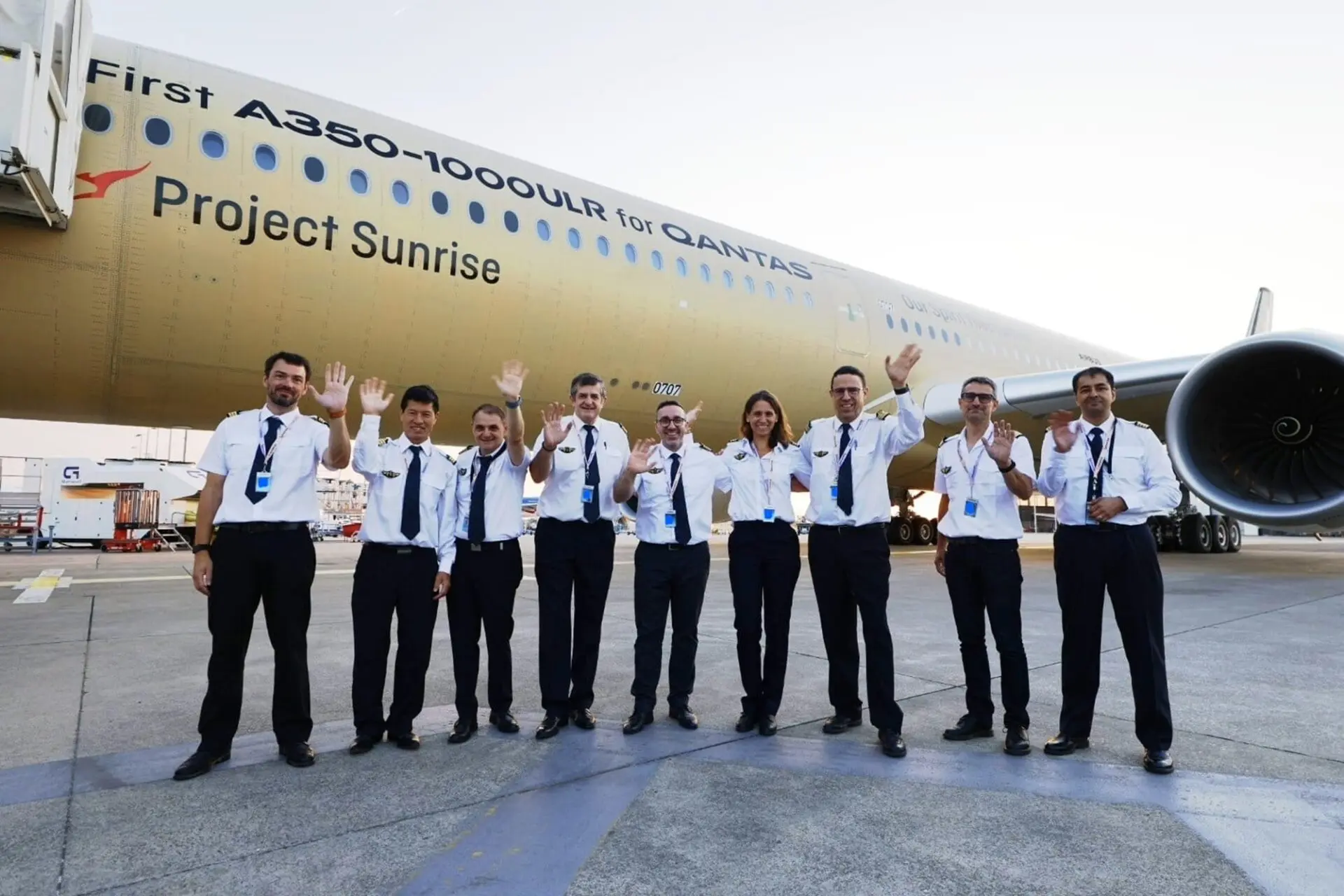
Airbus has set out on the first long-endurance test flight of Qantas’ A350-1000ULR aircraft, travelling non-stop from Toulouse-Blagnac Airport (TLS) in France to Melbourne Airport (MEL) in Australia.
On July 23, 2025, the Project Sunrise A350-1000ULR, currently registered F-WULR, departed the Airbus facility shortly after 07:30, local time, climbing to 35,000 feet, according to Flightradar24.
The flight team stood outside the aircraft for a photo just before setting off on the marathon flight with the A350-1000ULR due to land in Melbourne on July 24, 2026, at around 09.30am.
In a social media post before the flight began, Airbus wrote: “From summer to winter in a single hop! As part of our flight test campaign, our test crew is taking the #A350-1000ULR from Toulouse to Melbourne NON-STOP for the first time.”
In response to the message Qantas wrote, “See you in Melbourne tomorrow” followed by a waving hand emoji.
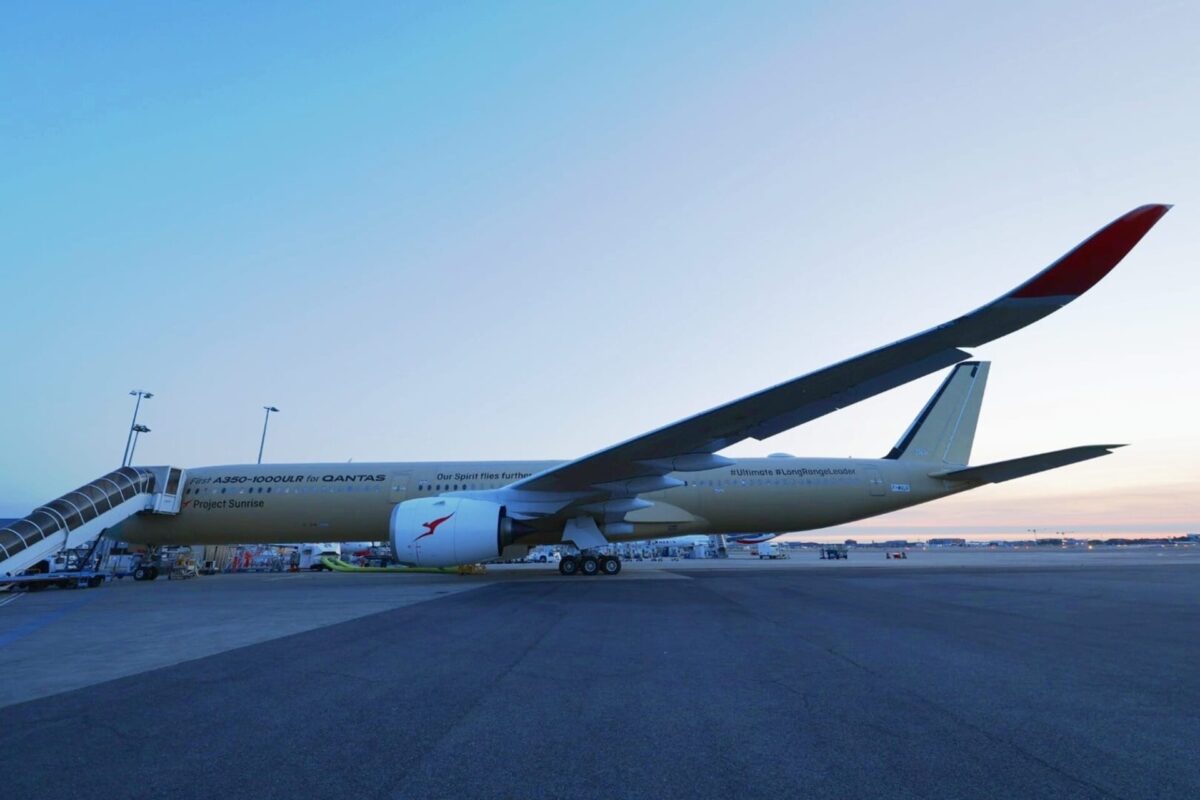
Analysts and engineers at Airbus will be using the 17,000-kilometer flight to assess a plethora of systems and acquire huge amounts of data on every aspect of the journey.
Once up and running Project Sunrise commercial flights will travel first between London-Heathrow Airport (LHR) and Sydney Airport (SYD). An additional route will also operate between Sydney Airport and New York in the future.
Other proposed routes include services from Melbourne and Brisbane to London, New York, Paris and Chicago.
The test Airbus A350-1000ULR is the first of 12 bespoke aircraft that will be delivered to Qantas. The aircraft have been designed with a rear center fuel tank, increasing its range by about 1,000 nautical miles.
Qantas ordered its new fleet of A350-1000ULRs in May 2022. The first aircraft, named Vega, is due to be delivered in April 2027.
The first non-stop flight from Toulouse to Melbourne is in the air. The nearly 17,000 km flight is part of the A350-1000ULR’s flight test campaign. Follow along at https://t.co/LfL7S6wdkG pic.twitter.com/znezr4ClRV
— Flightradar24 (@flightradar24) July 23, 2026
The aircraft has just 238 seats, which according to Qantas is the “lowest seat density of any A350 around the world,” and is designed to give travelers more space.
Qantas noted that it has been researching the cabin for a decade, working in collaboration with the University of Sydney’s Charles Perkins Centre and Caon Design Office along with other technology partners.
Ultimately, Qantas wants its guests to arrive at their destination feeling refreshed, and this overarching objective has guided the design and underlying philosophy.
You can follow the test flight’s progress on Flightradar24.
1 comment
But can it do the return trip against the prevailing wind?