

In a relief for both Airbus and Boeing, thousands of aviation industry workers have voted to back new contract proposals, averting the risk of deepening production woes for the manufacturers.
On October 1, 2026, Airbus confirmed that its workers in Spain had ended months of on-off strikes, with 76.76% of voting employees endorsing the new contract.
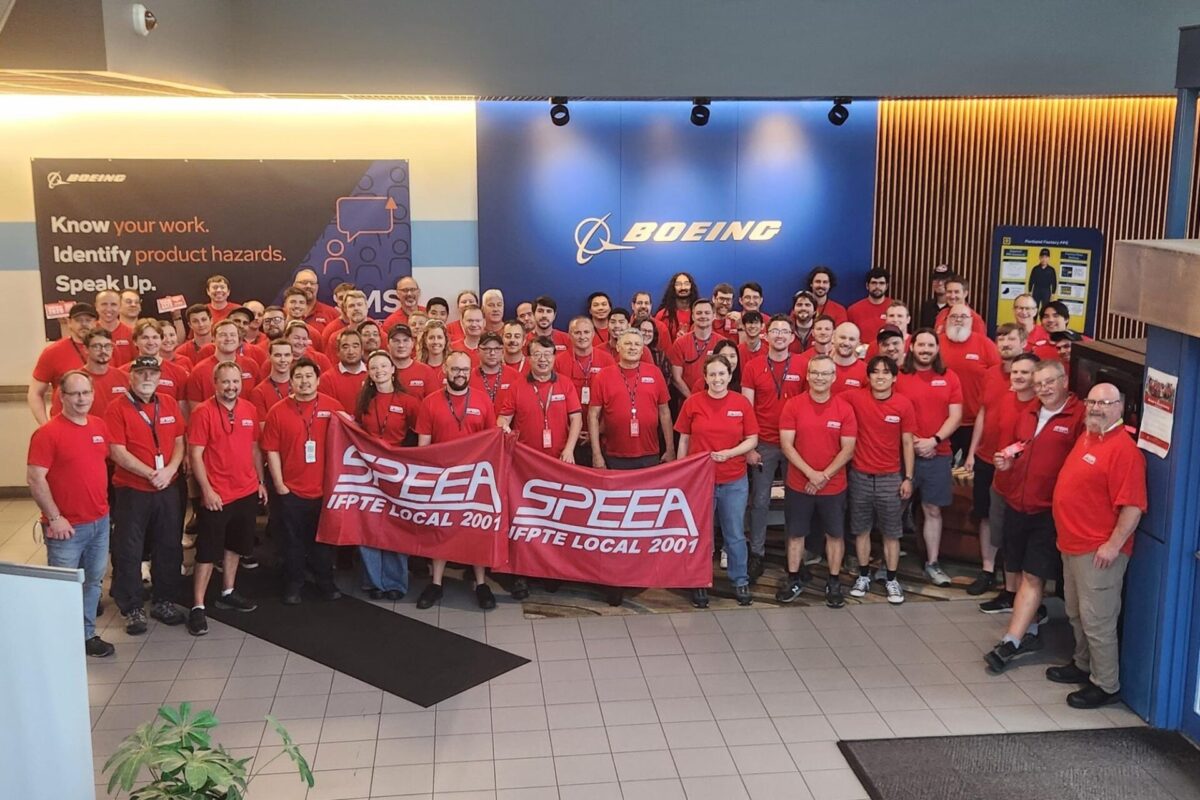
Later the same day, over in the US, the Society of Professional Engineering Employees in Aerospace (SPEEA), also announced that its members had ratified four-year contract offers from Boeing.
Previously, union members had overwhelmingly supported SPEEA calling strike action if progress had not been made through negotiations and subsequent offers.
Airbus workers in Spain
According to Europa Press, 13,560 workers – a turnout of 87% – from Airbus facilities in Getafe, Albacete, Illescas (Toledo), Seville (San Pablo and Tablada), and Cádiz voted in favor of new proposals.
On August 25, 2026, employees in Spain had begun an indefinite strike after workers rejected a company proposal on pay and working conditions.
This followed an earlier round of strikes held from July 1 through July 23, 2026. The current industrial action was on hold.
According to Reuters, Spanish Airbus staff secured wage increases, flexibility in holidays and a return to 40% remote working.
Commenting on the result of the vote, Airbus stressed that it would enable the company to “maintain a solid and competitive position in Spain”.
However, with 20.6% of workers voting against the deal, Airbus admitted “there is still much to be done” to meet employees’ expectations.
According to Airbus, the company has over 14,000 staff members working across its sites in Spain.
Boeing staff in the US
SPEEA had been encouraging its members to accept Boeing’s latest contract proposal when the ballot opened on September 24, 2026.
According to Professional and Technical bargaining units, both sets of staff members supported the upgraded proposal offer.
Members of the Professional Unit approved their contract by 67.62%, with 7,895 accepting the terms and 3,780 against.
Members of Technical Unit approved their contract by 53.48%, with 2,061 agreeing to the new conditions and 1,793 rejecting the offer.
Boeing presented its final proposal to SPEEA on September 11, 2026, following the conclusion of the latest round of negotiations.
The new contract promised to increase wages, improve working lives, and rebuild relationships between Boeing leadership and union members.
“We secured many victories that some thought were completely out of reach when this negotiation cycle started,” SPEEA told its members. “All of these gains would not have been possible without your individual actions and our collective strength.”
However, the union warned that “its work was not done”, and that it plans to “pressure Boeing management” to “rebuild an environment suitable for reestablishing trust with the membership that has eroded over the past decades”.
“Without trust, Boeing and SPEEA will likely find ourselves right back where we were when we started this contract negotiation cycle,” SPEEA said.
Highlighted improvements in the accepted offer from Boeing:
- A 10% Guaranteed Wage Increase (GWI) for all Prof and Tech unit-represented workers effective Oct. 16.
- Boeing to address concerns related to wage compression. The funds spent to address these concerns will be in addition to those identified in the contract offers.
- A 4% GWI for all Prof and Tech unit-represented workers during the annual compensation review in March 2027.
- 6% annual wage pools for 2028, 2029 and 2030, with each year having a 4% guaranteed increase for all.
- Revised language regarding work-from-home, overtime limits for Prof unit members, and a new process for communicating Boeing’s future workforce needs to help SPEEA members plan their careers with the company
- A move back to the current three-bucket retention rating system.
- Carrying forward the gains from the first Boeing offer.