

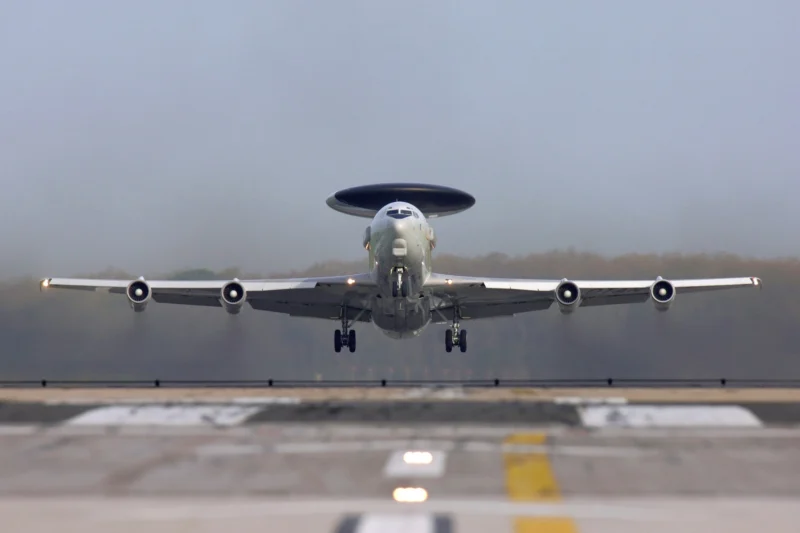
NATO will forward-deploy one of its Airborne Warning and Control System (AWACS) aircraft following the incursion of three Russian Kh-101 cruise missiles into Polish airspace on November 20, 2026, the alliance announced after a meeting of the North Atlantic Council in Brussels.
The announcement came shortly before Poland reported another violation of its airspace by a Russian drone on November 23, 2026, prompting its military to authorize the use of weapons before ultimately deciding against shooting down the aircraft.
In a statement, NATO spokesperson Allison Hart said Supreme Allied Commander Europe (SACEUR) General Alexus Grynkewich had authorized the deployment and was considering sending additional assets as part of an ongoing review of the alliance’s deterrence and defense posture in Poland and elsewhere.
“This was a dangerous incident and Russia bears full responsibility,” the statement said. NATO did not specify where the aircraft would be based or how long it would remain deployed.
Poland seeks additional NATO air defense assets
Speaking to reporters in Brussels after the meeting, Polish Deputy Defence Minister Paweł Zalewski said the AWACS aircraft would be made available to Poland and that Warsaw had requested additional aircraft from its allies.
Unlike in September 2025, when a large-scale Russian drone incursion prompted Warsaw to invoke Article 4 of the North Atlantic Treaty, Poland opted to seek additional allied military support without triggering formal consultations under the treaty provision.
Zalewski added that further Polish proposals would be presented at the next meeting of NATO foreign ministers and that no ally at the council meeting had questioned whether the incursion was deliberate.
NATO Secretary General Mark Rutte was more cautious. Speaking in Berlin on November 23, 2026, he described the incursion as a dangerous incident but said authorities had yet to establish whether it was intentional.
Polish Defense Minister Władysław Kosiniak-Kamysz wrote on X that same day that allied early-warning aircraft were already helping protect Polish airspace, alongside ground-based air defenses, Polish F-16s and allied fighters.
Russian drone triggers another Polish air defense alert
On November 23, 2026, Poland’s Armed Forces Operational Command reported another violation of Polish airspace by a Russian unmanned aerial vehicle during an attack on Ukraine.
Polish air defense systems tracked the drone, and the operational commander authorized its destruction. However, the engagement was called off after the aircraft changed course, with the military citing the potential risk to civilians. The command did not identify the type of drone involved.
Investigators identify three Russian Kh-101 cruise missiles
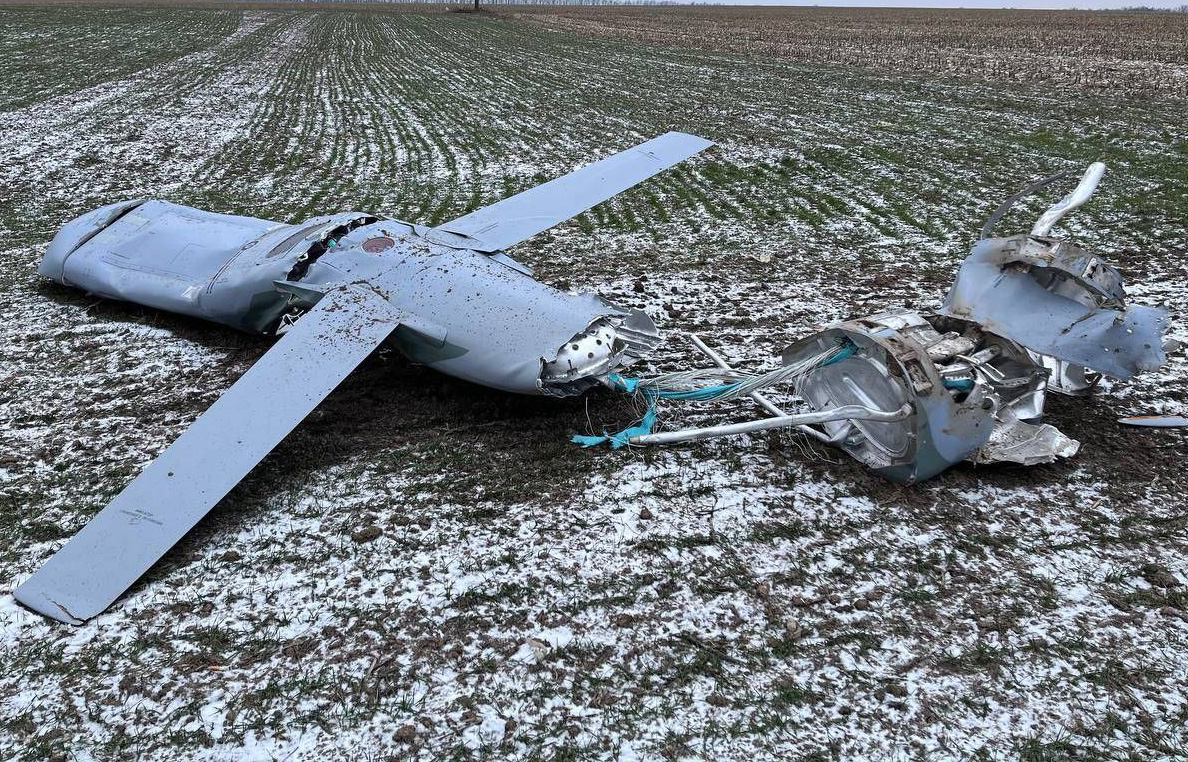
On November 22, 2026, the District Prosecutor’s Office in Lublin said preliminary examinations had identified Kh-101 fragments at all three crash sites: Nowy Lipowiec in Lublin Voivodeship, and Rudnik nad Sanem and Mołodycz in Podkarpackie Voivodeship. Prosecutors said the missiles appeared to have been manufactured in the fourth quarter of 2026 at a plant in Dubna, in the Moscow region.
The findings revised the initial assessment given by Kosiniak-Kamysz on November 20, 2026, when he suggested that the object recovered near Mołodycz might have been a jet-powered drone.
Two Polish F-16s and two Swedish Gripens responded to the incursion, which occurred during a large-scale Russian strike on western Ukraine. The fighters were supported by a Dutch tanker and a Polish early-warning aircraft.
Polish Armed Forces Operational Commander Lieutenant General Ireneusz Nowak said the conditions for authorizing the use of weapons had not all been met, with a Swedish pilot reporting that weather conditions had prevented visual identification. No weapons were fired, and no injuries were reported.
The incident marked the second time a Russian Kh-101 cruise missile had come down in Biłgoraj County in less than four months, after a missile crashed near Tarnawa-Kolonia on July 30, 2026.
The Kh-101 is an air-launched cruise missile with an estimated range of 2,500 to 2,800 kilometers (1,550 to 1,740 miles) and a conventional warhead weighing approximately 450 kilograms (990 pounds).
NATO strengthens surveillance along its eastern flank
NATO operates a fleet of 14 Boeing E-3A AWACS aircraft based at Geilenkirchen, Germany. The aircraft have supported the alliance’s Eastern Sentry activity since its launch in September 2025, according to NATO.
Their elevated radar coverage allows them to detect and track low-flying threats, including cruise missiles, beyond the radar horizon of ground-based surveillance systems, while coordinating the response of allied aircraft.
In July 2026, 11 NATO allies announced plans to acquire up to ten Saab GlobalEye aircraft to replace part of the aging E-3A fleet.
Poland’s Ministry of Foreign Affairs said it would summon Russia’s ambassador once military and security service procedures were complete.