

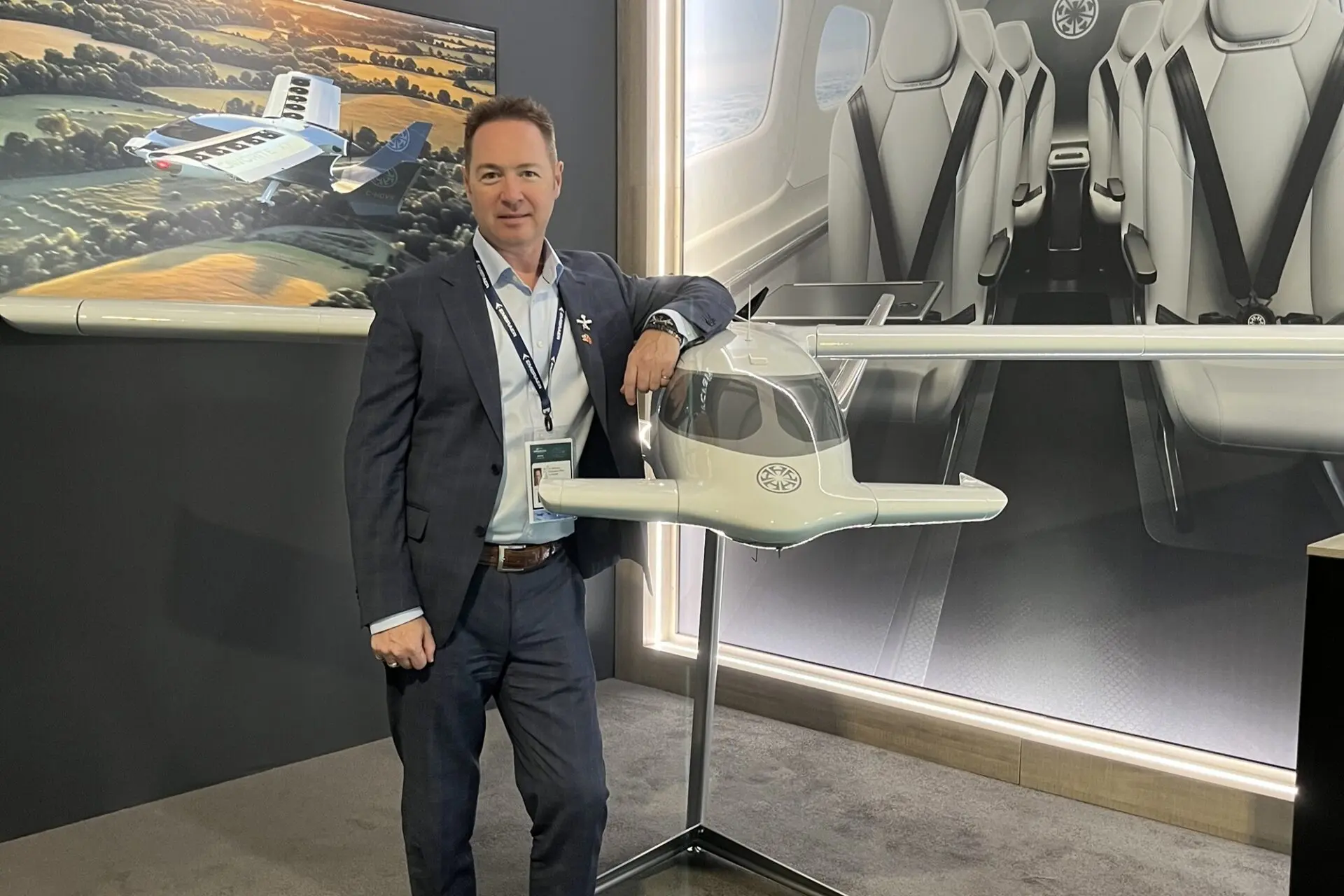
Horizon Aircraft CEO Brandon Robinson knows a few things about fast aircraft having flown CF-18 Hornet fighters in the Royal Canadian Air Force for two decades.
Continuing his passion for speed, it is the ability to travel quickly that Robinson believes will allow Horizon Aircraft’s Cavorite X7 to outmaneuver its rivals and shake up the helicopter industry.
Robinson and the Horizon team were out in force at this year’s Farnborough Airshow to sing the praises of its hybrid electric vertical takeoff and landing (VTOL) aircraft, something Robinson said was a little too early two years ago.
“We wanted to prove the technology which we’re doing right now,” he said. “We’re done on a half scale. We’re doing it on the full-scale aircraft. We’ll have a full-scale aircraft in the next six to nine months.”
As part of its air show appearance, Horizon Aircraft announced that Australia based startup V Star Powered Lift Aviation, which specializes in unique aviation solutions, placed an order for up to five Cavorite X7s with an option on 95 more in the future.
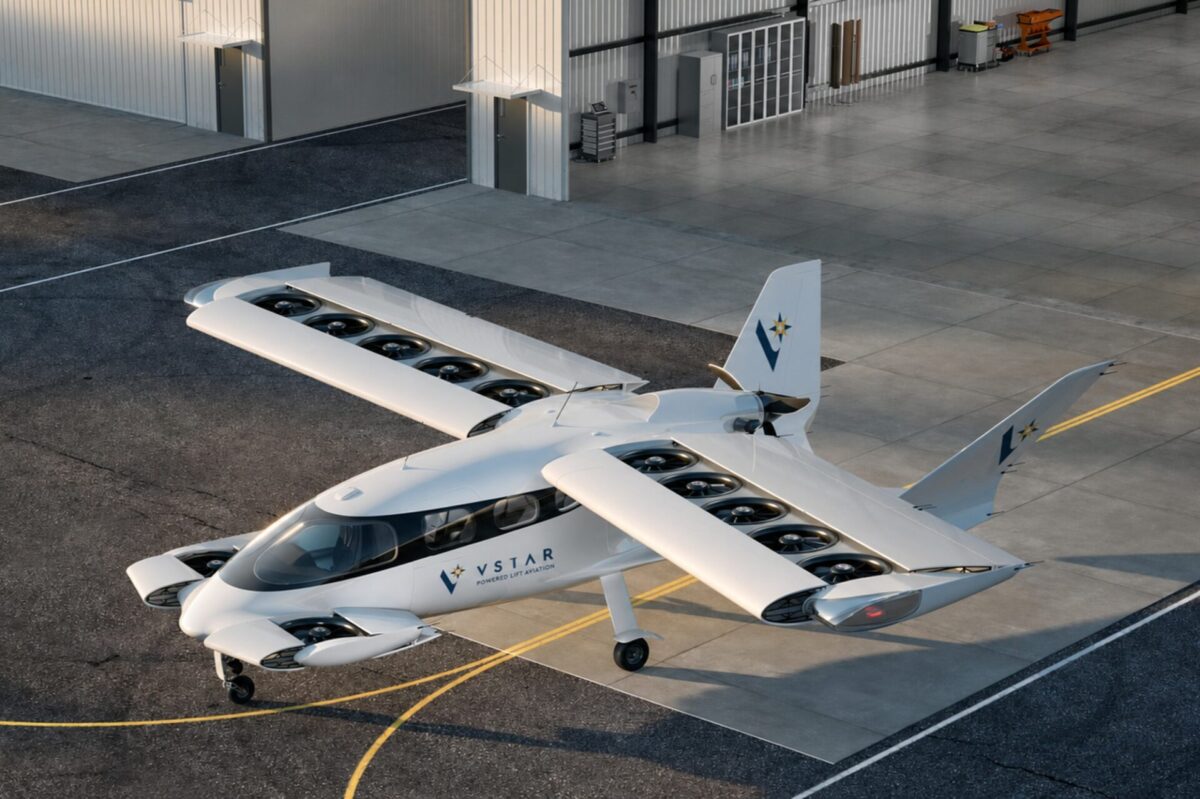
According to Robinson, Horizon could have “pre-sold hundreds of these aircraft already, but we didn’t want to play that game”.
“Once we got far enough along, it was more about partnerships with people who knew what they were doing,” he said. “We wanted to learn and partner with real operators.”
Robinson said that the people behind V Star already operate Bell helicopters and fixed wing aircraft in Australia.
“They have real operations in Australia, and so they know the route lengths, the details of what an operation that is successful would look like. We partner with those people that pass our high standard of operational savvy,” he explained.
Robinson praised V Star’s “forward, innovative mentality” in forming the collaboration between the two companies.
“There’s a lot of regional operators that don’t want to know about any of these,” he said. “They just want to keep flying their 60-year-old airplanes, and that’s it. They don’t want to even hear about advanced air mobility. The world is changing. There is new technology, and the world of us flying around in Cessna 172s for the rest of our lives training is going to come to an end fairly shortly.”
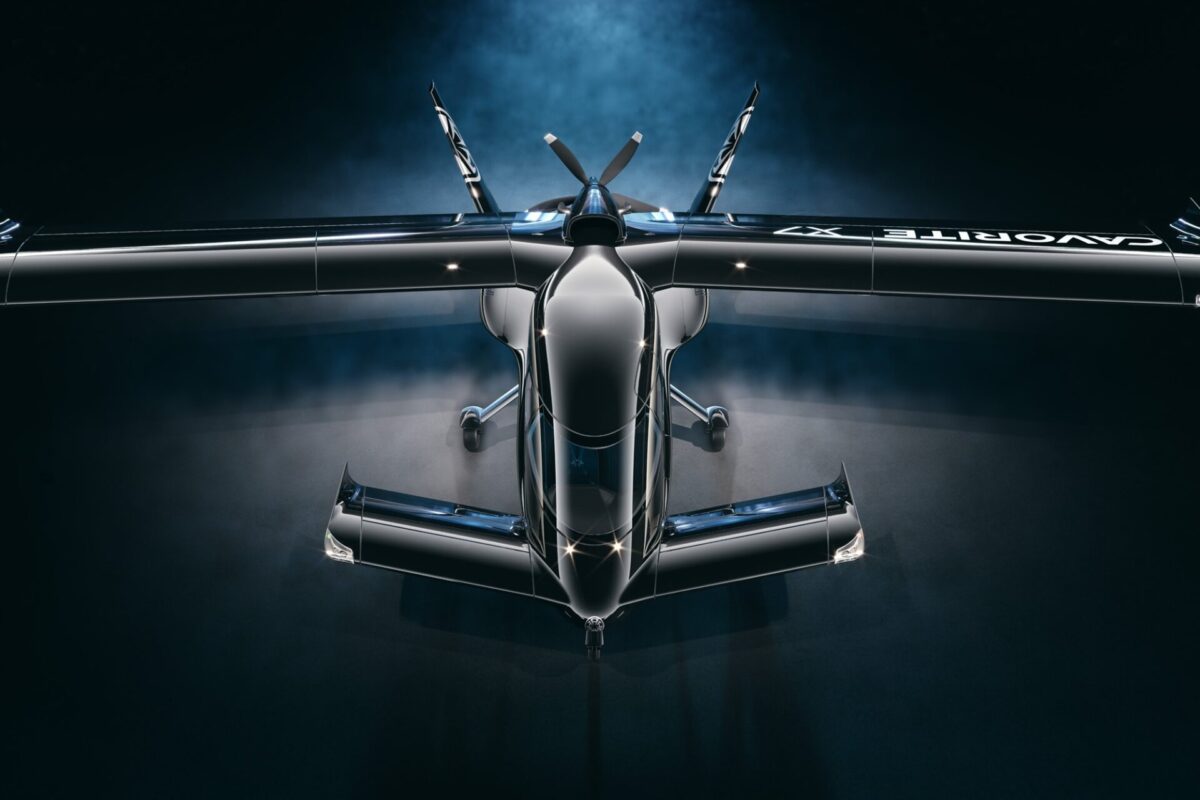
So far, Horizon has announced two other agreements for the Cavorite X7. JetSetGo signed a Letter of Intent (LOI) to purchase 50 aircraft with an option for 50 more and Discovery Air Chile plans to lease five X7s.
“We’re not saying we’re going to build thousands of these aircraft, so we have to build up this book to justify,” Robinson said. “If we build a machine that goes twice as fast as the helicopter and is about 60 to 70% cheaper and safer, we won’t be able to build enough of these things. We’re going to limit ourselves to two to 300 a year. That’s kind of the limit of small aircraft manufacturing capabilities.”
Robinson explained that above the 300 a year production mark Horizon would need to create “new processes” and “we don’t want to do that”.
“We’re going to be able to sell every single one of these that we produce, and we’re not that focused on building a giant order book to show the world it’s going to be awesome,” he added.
However, Robinson does concede that if the demand signal is even stronger than he thinks the company could scale up manufacturing capabilities and conversations have been held about that possibility.
Mission type deployment
The Cavorite X7 takes off like a helicopter using 12 electrically powered lift fans positioned in the wing. Upon reaching the correct height and speed the fans are covered then flies like a normal plane using a gas-turbine engine.
According to Horizon, its X7 can carry seven people, up to 800 km (more than double the distance of eVTOL aircraft) at a maximum speed of 450 kilometers an hour.
The aircraft’s proposed mission types include medical evacuation, defense, search and rescue, business travel, critical cargo and serving remote communities.
Initially, Robinson believes the X7 will be deployed for medical evacuation and emergency medical service.
“Imagine getting a patient at the hospital in half the time, from twice the distance in the golden hour,” he said. “Moving organs around in a much more efficient and faster manner. Half of Blade’s revenue in New York is moving organs around.”
Helicopter competitiveness
While eVTOL aircraft developers battle between themselves, Robinson has firmly set his sights on the helicopter sector, entering as a disruptor to the established industry.
“Helicopters are expensive, and they’re hard to maintain,” he explained. “They are hard to fly, and they crash a lot. [The X7] is like a commercial jetliner version of a helicopter that is just faster, cheaper, and way safer. Will it replace every single helicopter mission? No, because it doesn’t hover in one place for very long. But for half of the helicopters that just go from point A to point B around the world, I’d be worried if I was someone making those things.”
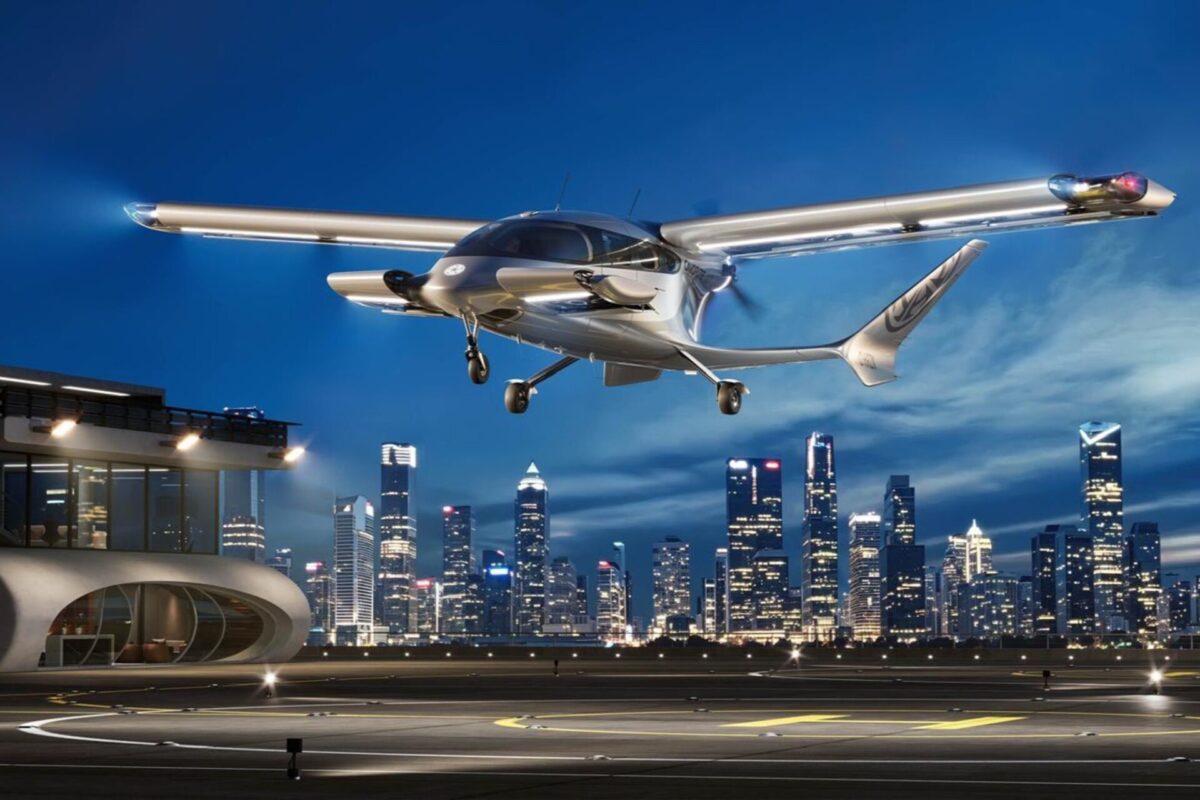
According to Horizon’s own data, a comparable helicopter is around 190 km/h slower than the X7, and its range is about 200 km lower.
Asked how the cost of an X7 will compare to a helicopter of a similar size, Robinson said it will be “slightly cheaper”.
“It’s going to be a similar cost to an equivalent helicopter,” he advised. “It has several advantages over a helicopter from an operational perspective that make it much cheaper to operate on a per hour and per mile basis, and that’s where your savings are going to be. You’re really going to make it up on the operational side.”
He added: “We don’t see modern eVTOLs as our competitors. We’re more regional, like city to city. That’s our strength. Longer range, faster speed, all weather operations, and a very complementary network that starts to get built out with some new technology, which is great.”
Vision for hybrid aircraft
Robinson co-founded Horizon in 2013 alongside his father, Brian Robinson, who was also a lifelong pilot and is now also the company’s Chief Aircraft Architect.
The company was founded around a separate prototype that they had an idea for, which eventually turned into the aircraft they named the X7.
Robinson said the plan for a hybrid aircraft was there “from day one”, something he says you can see in the aircraft architecture.
“You can see that the aircraft is designed like a normal single-engine turboprop aircraft that is built for commercial use from day one,” he said. “It’s not something that’s retrofitted with a hybrid system. It’s something that the hybrid system is part of a unified concept that came together.”
Robinson explained that the hybrid power architecture, and the concept in general, was the only way that “we could get the specifications required to build a better machine for regional travel”.
“We were right for our mission and our specifications and our users that we felt would really benefit from it. The all-electric folks envisioned something different,” he said. “Fundamentally, our mission is different. We’re three to 500 miles, not 30 to 50 miles. We’re 200 miles an hour, 250 miles an hour, not 100 miles.”
Defense capabilities
With eVTOL companies recently pivoting towards defense products, Robinson said this was also an area Horizon had planned for “right from the beginning”.
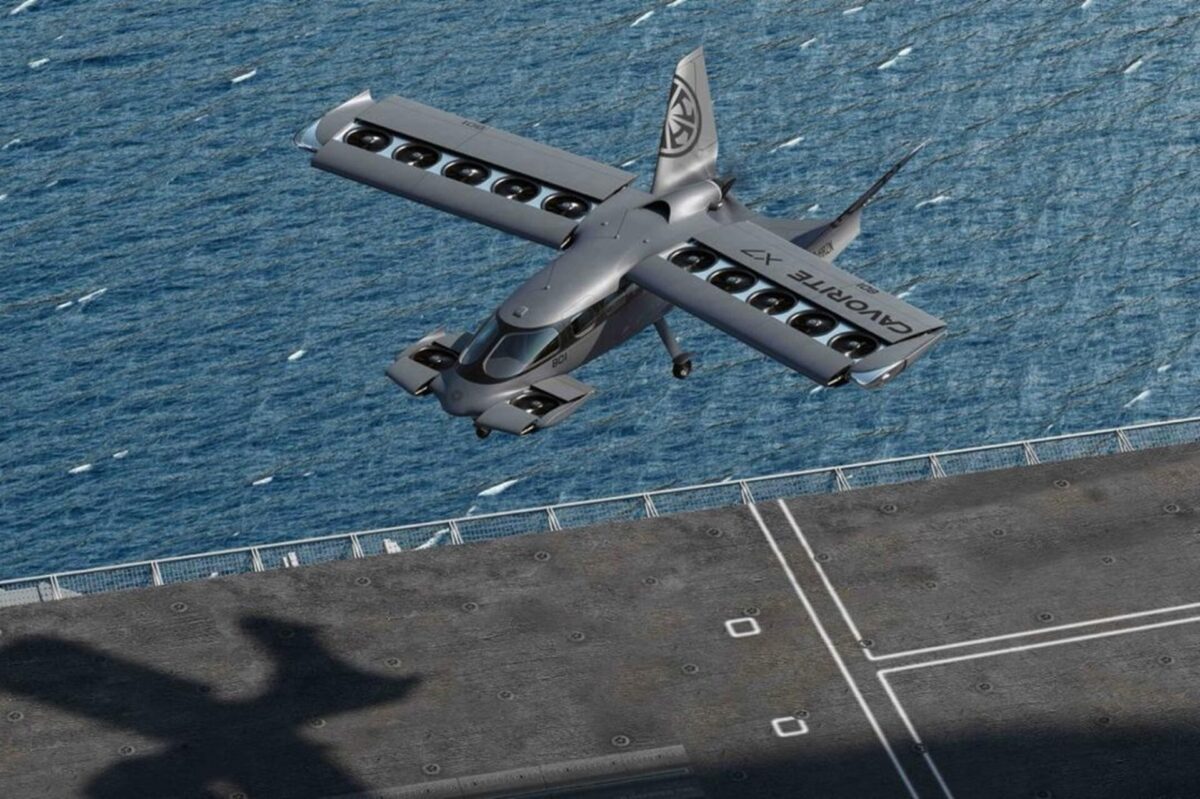
“When I say we planned it, I mean it’s just a no-brainer,” he said. “I was a Canadian Air Force pilot for 20 years. At the peak of my career, we were training in training missions. We were planning 70 aircraft NATO coalition missions where we’d go and try to rescue downed pilots from beyond enemy lines.”
Robinson continued: “Having a helicopter capability that’s twice as fast, 100 times quieter in overflight. Stealthier and safer. You put a bunch of special forces in one of these guys, and it’s just a better capability. It’s a machine that can do a thing better. Instead of waiting on a Black Hawk or Chinook to get everybody. Now that’s different. Those aircraft are larger; they can carry more people. But for a large subset of those missions, you don’t need that.”
First aircraft and next steps
Horizon will have an aircraft that is rolling out of the hangar next year and will begin initial ground testing and flight testing in the first and second quarters of 2027.
A second aircraft that the company is building will roll off the line “very, very quickly” afterwards.
The first will be a conventional takeoff and landing (CTOL) version and then a VTOL variant, like Beta Technologies also did.
“There’s a number of technical reasons why that makes a lot of sense from flight test and overall developmental schedules,” Robinson said. “Moving forward from that, we progress through flight testing, build out the envelope, and we work through our Transport Canada process with many positive gates that mark success.”
Horizon is planning for the first customer aircraft to arrive in early 2030.
According to Robinson, the X7 has been designed for autonomous flight, but the process is perhaps “not as easy as everyone thinks”.
“Is there a ground control station where there’s a pilot flying it autonomously?” he said. “Or do you press a green button, and it goes up, across, and down where it needs to go? That’s an additional layer of complexity on top of an already complex aircraft. So, there’s some work to be done there, but our aircraft is set up for that, and I think that’s a powerful thing.”