

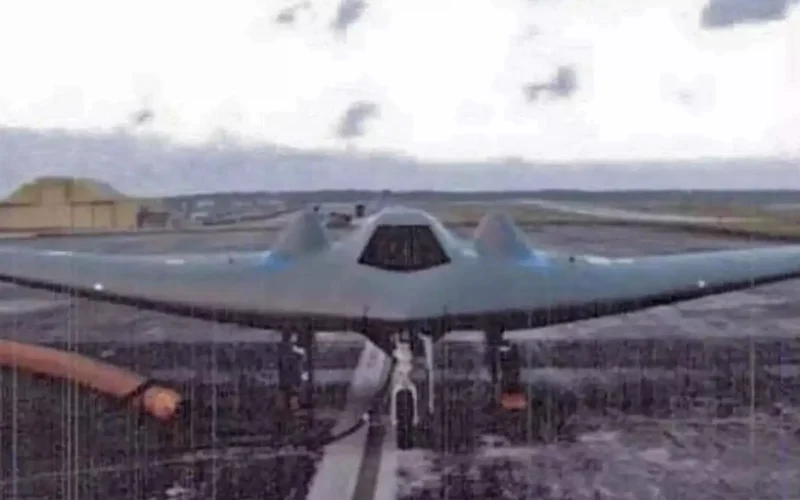
A rare deployment of the US Air Force’s RQ-170 Sentinel stealth unmanned aircraft played a supporting role in the dramatic US military operation that resulted in the capture of Venezuelan President Nicolás Maduro on January 3, 2026.
The mission, dubbed Operation Absolute Resolve, involved a broad coalition of U.S. military assets, including more than 150 aircraft spanning intelligence, surveillance, reconnaissance, electronic warfare, and strike platforms, in support of elite Army Delta Force commandos tasked with seizing Maduro deep inside Caracas.
Rare Sentinel deployment
Footage circulating on social media shows a flying-wing drone consistent with the RQ-170 Sentinel returning to the Roosevelt Roads airfield in Puerto Rico, suggesting the platform operated from the facility during the operation.
The RQ-170, developed by Lockheed Martin Skunk Works, is associated with high-end intelligence, surveillance, and reconnaissance missions requiring persistence and discretion in contested environments. Its design and sensor suite are widely linked to tracking high-value targets and supporting special operations forces with real-time situational awareness.
While the US Department of Defense has not officially confirmed the Sentinel’s involvement, the reported activity aligns with the aircraft’s tightly controlled operational profile, with public sightings remaining exceptionally rare.
Months of intelligence preparation
Speaking at a press conference in Florida alongside President Donald Trump, General Dan Caine, Chairman of the Joint Chiefs of Staff, said the operation was the culmination of “months of work” by US intelligence services aimed at understanding Maduro’s movements, habits, residences, and security arrangements. According to Caine, this intelligence picture was finalized in early December 2025.
The decision to launch the mission on January 3 was driven primarily by weather conditions. Caine said improved conditions on the evening of January 2 allowed US aircrews to operate through “mountains, ocean, and low clouds,” preserving surprise during the approach.
At 10:46 p.m. Washington time, Trump gave the order to execute the mission. Aircraft subsequently launched from 20 land and sea bases across the Western Hemisphere.
Air campaign and helicopter raid
More than 150 aircraft were involved, including bombers, fighters, intelligence platforms, surveillance drones, and helicopters, including aircraft from the 160th Special Operations Aviation Regiment. As the force approached the Venezuelan coast, aircraft flew at very low altitude, in some cases below 50 meters above the water.
According to Caine, US forces began dismantling and disabling Venezuelan air defense systems as the package neared the shoreline, conducting the first known US airstrikes on Venezuelan territory to ensure safe passage for the helicopters.
Footage of a US helicopter (possible USMC AH-1Z Viper) engaging ground targets with gun and rocket fire in Caracas, Venezuela. pic.twitter.com/mT5h1lnFkl
— OSINTtechnical (@Osinttechnical) January 3, 2026
The helicopter-borne intervention force reached Maduro’s compound at 1:01 a.m. Washington time. Ground forces moved rapidly to isolate the site and secure the objective. The helicopters came under fire during the insertion and returned fire in what Caine described as self-defense engagements. One helicopter sustained damage but was able to return safely.
Maduro and his wife, Cilia Flores, surrendered and were taken into custody. Trump later said Maduro attempted to reach a secure bunker within the compound but failed to do so. No US personnel were killed during the operation.
Extraction and exfiltration
During the withdrawal phase, fighter aircraft and drones provided air cover and protective fire as US forces departed Venezuelan airspace. Caine said additional self-defense engagements occurred during the exfiltration, but all personnel were able to return to their launch platforms.
Maduro and Flores were transported by helicopter to the amphibious assault ship USS Iwo Jima, boarding the vessel at 3:29 a.m. Washington time. They were eventually airlifted to Stewart International Airport in New York via Cuba.