

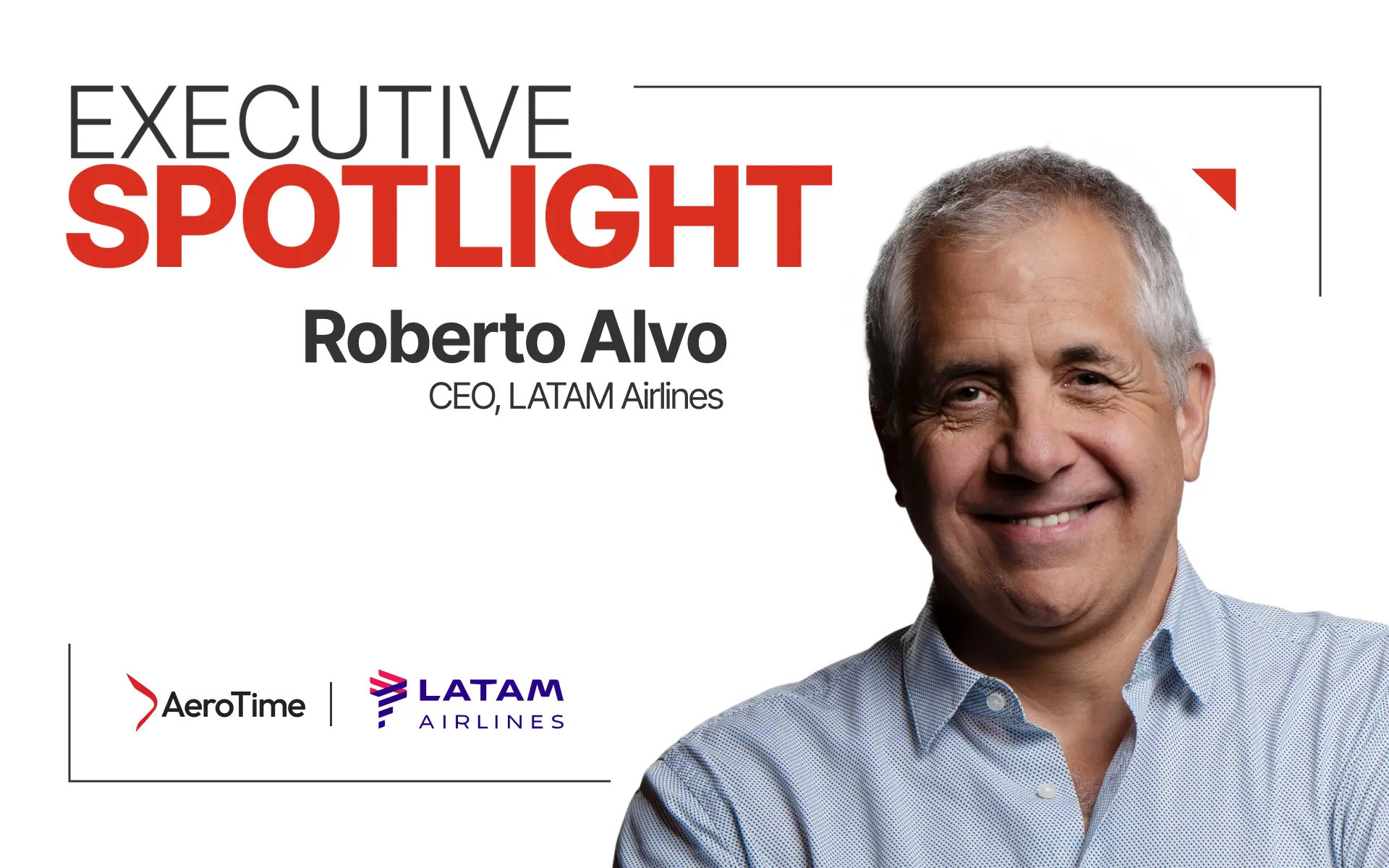
As Latin America’s largest airline group, LATAM is a remarkable example of cross-border integration. Born from the 2012 merger between Chile’s LAN and Brazil’s TAM, the airline brought together two national champions to create a genuinely pan-South American carrier. A remarkable achievement on a continent where economic instability, geographic barriers, and regulatory complexities have prevented airlines from achieving their full potential.
Nevertheless, and despite the bump in the road in the form of a COVID-related Chapter 11 filing in 2020, LATAM has managed to consolidate its position as one of the world’s largest airline groups. In 2024, LATAM carried around 82 million passengers and operated more than 340 aircraft. Its destination network spans 24 countries, which it serves from its three main hubs in Santiago de Chile (SCL), Sao Paulo (GRU), and Lima (LIM).
What’s more, under the leadership of CEO Roberto Alvo, LATAM has not only managed to leave Chapter 11 behind but has also embarked on several ambitious projects to strengthen the pivotal role the carrier plays in its region.
The last few months have seen a stream of announcements, from the launch of revamped premium cabins and services to new long-long haul aircraft orders, to a significant investment in a new regional aircraft fleet that aims to strengthen intra-regional connectivity. All of this, while also trying to lead sustainability
AeroTime was recently given the opportunity to have a thorough conversation with Alvo and review the main challenges and opportunities facing LATAM.
Alvo began his tenure in 2020, just as the airline was going through one of its most financially complex moments.
“When the pandemic started, we obviously tried to get support from governments, but they decided not to support us, unlike what happened in the northern hemisphere,” he said “At the end of the day, we realized we had to enter Chapter 11. It was the only way to imagine a LATAM that could come out strong after that crisis.
“We were a little over two years in Chapter 11,” he continued. “We emerged on November 3, 2022, and today LATAM is fully recovered. This year, as we’ve told the market in guidance, we’re probably going to be 15% larger than we were in 2019. During the pandemic period, we closed our domestic operation in Argentina. Apart from that, LATAM’s footprint is very similar.”
As of December 2025, LATAM has five home markets: Chile, Peru, Ecuador, Colombia, and Brazil. The airline also has a subsidiary in Paraguay, although its activity there is pretty much limited to linking its capital, Asunción (ASU), to its main hubs in Santiago (SCL), Lima (LIM), and São Paulo (GRU).
Additionally, LATAM is active in the cargo market through its subsidiaries in Brazil (APSA LATAM Cargo) and Colombia (LANCO). According to Alvo, cargo operations complement the core passenger transportation business, which represents around 90% of the group’s revenue.
While Alvo and most of his team are based in the Chilean capital, Santiago, Brazil is the group’s single largest market, representing around 45% of LATAM’s revenue. Chile is the next largest market with around 20%, and Peru is third at 15%.
“To give you an idea, South America has around 450 million people and some 220 of them are in Brazil. The Brazilian market, domestic and international together, is probably a little less than 50% of South America’s industry. It is also half of the continent’s surface area,” Alvo explained. “In fact, in almost any dimension you take, Brazil is half of South America. We have a 41% share in the Brazilian domestic market, which is the highest share we’ve had since 2003.”
LATAM is also a leading player in its other core markets.
“In Peru we have approximately 60% of the domestic market and 40-50% of the international one. In Ecuador we’re a little less than 50% of the domestic market and about 25% of the international one,” Alvo said. “In Colombia we’re smaller – 26% of the domestic and about 8% of the international market. While we don’t have domestic operations in Argentina, it is an important market for LATAM. We are the largest operator in terms of international passengers transported to and from Argentina, even if we don’t have a subsidiary there. We operate almost 35 international flights per day in Argentina.”
Building a cross-country operation across a region, which, unlike Europe or the United States, does not yet have a unified legal framework is not without its challenges.
“There are many open skies agreements between countries, but here you must get a certificate in every country, and you can’t necessarily operate from third countries to other places,” Alvo explained. “Unlike European conglomerates [Alvo was referring to IAG, Lufthansa Group and Air France-KLM – ed. note] LATAM decided to have a group of airlines all under the same brand and I think it’s one of the great decisions we made because it allows us to offer our passengers a single product, network and standard of service.
“It doesn’t matter if you fly between Quito and Guayaquil or between Rio and São Paulo or between Lima and Cusco,” he continued. “You’re always on something called LATAM, which is the same everywhere except, perhaps, for the accents spoken onboard.”
Alvo added that this allows LATAM to function “as one network” as well as simplifying operations “because we have centralized a large part of our functions.”
“So, in practice, while we have several air operator certificates (AOC) and subsidiaries, we operate as if it were just one,” he said.
“At LATAM we’ve learned to coexist with South America’s diversity, and I think one of the things that has helped us is having everything under one brand. LATAM is LATAM wherever we are,” he continued, before adding, jokingly, that the internal language of communication is what he referred to as “Portuñol,” a mix of Spanish and Portuguese, once again reflecting the cross-border composition of the business.
“I have meetings in Spanish. I have meetings in Portuñol. I have meetings in Portuguese throughout the day,” he said. “We don’t make a big deal about it.”
What is LATAM’s market position?
According to Alvo, the model used by low-cost carriers is no different to the model seen in Europe or in the United States.
“It’s a very simple model with practically no amenities in which they try to sell you all the add-ons. It’s a textbook case. I think low-cost carriers have space in South America, but at LATAM, we are neither low-cost nor ultra-low-cost,” he said. “LATAM’s objective at the end of the day is to try to deliver a product and give our customers options.”
Alvo highlighted just what it is that sets LATAM apart from its low-cost competitors.
“One of the things I think we’ve learned to do well in countries like Chile and Peru, for example, where we are the only non-low-cost carrier, is to define what the non-low-cost product is. We don’t necessarily need to over-invest in that product. For example, we don’t have screens in airplane seats. We try to optimize the product for the segment of people who want to fly with a different experience,” he said. “In that sense, for example, we deliver Premium Economy, which is like European business with a blocked seat, but we don’t have those first class seats like US carriers. And we have in that Premium Economy a curtain that allows us to define the size of the class based on where we want to go and everything else.”
“So, we invest quite a bit in the product, but we make sure that investment is what the market is willing to pay without having to define a product that’s too luxurious for a customer profile in a region of the world that’s a bit poorer than other regions. We have bundles that have different characteristics. The basic is just the ticket, but you can add flexibility, seat selection, baggage, etc. You can build your product à-la-carte and from the bottom up. So, when I talk about optionality, that’s it.”
Alvo highlighted that LATAM is also focused on soft service elements.
“I really like the word ‘dependability,’ which means being reliable operationally and every time you face a situation, we can answer and respond to you. We leave on time. And if something happens, that’s beyond our control – cancellations, storms, whatever – we know how to maintain and care for the dignity of the people who fly with LATAM, so that they feel we’re doing everything possible to take care of them.
“So, at the end of the day, it’s the network, the product, the people, the focus on the customer, our frequent flyer program,” he said. “We have the seventh [largest] program with the most members in the world, with 53 million members.”
LATAM recently unveiled a revamped Premium Business class as well as a new Premium Economy product, the first in Latin America and has also invested US$360 million to retrofit its B787 fleet with new business class cabins.
“We’re finishing the [B787] -8s and -9s. We went for a 1-2-1 configuration, with lie-flat seats. Before we had a 2-2-2 configuration,” Alvo said. “By the end of next year, we’re going to have all our 787-8s and 787-9s retrofitted. We have already retrofitted the 767s that fly in Peru and the 777s that fly in Brazil.”
The entire long-haul fleet will feature the new business standard, with premium cabins, Alvo said, and will soon be installed with Wi-Fi.
Making sense of LATAM’s fleet plans
Earlier in 2025, LATAM announced a major order for up to 74 Embraer E195 aircraft (24 firm orders and 50 options). The rationale for this order, which will add a new aircraft type to LATAM’s fleet, appears to be the need to increase connectivity in regional markets.
“The first planes will go to Brazil, but some of the options may go to other countries in the region. South America has 200 cities of between 200,000 and 500,000 inhabitants. Half of those are in Brazil. And if you look at those cities, at the number of trips per inhabitant, South America is quite an immature market. In Europe you have about three trips per inhabitant on average per year, here it’s more like 0.6. In Chile is a bit higher, with a bit more than one trip per inhabitant. Other countries have less. But when you break that down by cities, you realize that the large capitals are quite well connected and have one or one and a half trips per inhabitant. The small cities have 0.1 to 0.2. So, in general, those medium cities have been very under-connected!”
Even when accounting for the realities of South America’s travel demand, Alvo sees plenty of upside in second and third-tier markets across the region.
“It’s true that our region, unlike Europe, is much more centralized. Santiago is Chile’s capital and a third of its people. Lima is the same in Peru. But that doesn’t mean there isn’t a lot of potential in the regions,” he said “So, the regional aircraft allows us to extend and consolidate the reach of our network. We think we can add 35 more cities to our network with those regional aircraft and [that] will allow us to strengthen our hubs.”
So, what does the hub map look like?
“We have Guarulhos (GRU) and Congonhas (CGH) as important hubs in Brazil, as well as Lima (LIM) in Peru and Santiago (SCL) in Chile. In Brazil we also have Brasilia (BSB) and Fortaleza (FOR) as additional hubs, and we see the ability to connect much better mid-sized cities within each country or even regionally as there is sometimes international traffic within the region,” Alvo explained “For us, regional doesn’t mean smaller, it means international within the region.”
The E195s that LATAM will receive have roughly the same capacity as the A319s it currently operates. However, Alvo noted that the operational parameters are quite different.
“It’s basically a plane of the same size. The difference is that the E195 has much newer technology. Being a lighter aircraft, it has higher operational efficiency. So, it’s not that we don’t have the right size aircraft for many of these markets. What happens is that we need more efficient aircraft to be able to justify entering them,” he said. “That’s what the E195 gives us. So, the added fleet complexity is quite a minor issue because we’re not entering a different fleet size segment than what we already operate. We have 40 A319s today and we’re adding 24 E195s. We know how to operate them and have many routes for this size of aircraft.”
Another aircraft that will considerably expand LATAM’s envelope of possibilities is the Airbus A321XLR, of which the Latin American group has five on order. But how does LATAM plan to deploy them?
“The XLR works well from several places in the region – from Lima or Brasilia, for example, to the United States. It also allows you to fly to practically any city in the United States from Fortaleza. It could be an aircraft that enhances our connectivity to the United States and the Iberian Peninsula a little further. We’re still evaluating what will be the best application for the first A321XLRs, but we haven’t announced this yet. We expect them in 2027.”
AeroTime was also given the opportunity to discuss LATAM’s long-haul fleet renewal and the order, announced in October 2024, for 10 B787s (plus five options).
“We took advantage of Chapter 11 to simplify our fleet a bit. The truth is that we have more widebody aircraft in South America than the sum of all other widebody operators in the region. It’s quite a large fleet for the region, but it’s relatively small compared to the world’s largest companies,” Alvo explained. “We’re talking about 65 widebodies, and the truth is that having four models in a fleet of that size seemed like an unnecessary complexity to us.”
Alvo said the carrier spent some time analyzing whether to go with the 787s or the A350s, before deciding to keep the former.
“Both are very good,” he said. “But for LATAM’s footprint, we concluded that the 787 was the right aircraft.”
LATAM also keeps a number of older B767s. How do they fit into this fleet strategy?
“Today they only operate from Lima, which is closer to the United States. Even if they’re long-range aircraft, they operate routes averaging six hours,” Alvo said “We expect to continue operating them until the end of the decade, and then most likely they will be replaced by 787s, or we’ll see if there’s any other alternative. But today we have nine of these aircraft flying.”
Interestingly, LATAM is a rather unique case of an airline having left one of the three major alliances to go it alone. The Latin American airline was once a member of oneworld . However, when Delta Air Lines became one of its major shareholders in 2019, LATAM left without joining SkyTeam, an alliance in which Delta is a prominent member.
“We left oneworld in 2019 following Delta’s investment and the set-up of our JV [joint venture]. The relationship is extraordinarily good. The truth is I’m very happy, very grateful to have a partner like Delta, which is a great partner not only because of the company and its characteristics but also because of how we work together,” Alvo said. “It’s truly a pleasure, and in that sense we’re very happy.”
But would LATAM consider joining SkyTeam?
“We always retain the option to participate in an alliance, but it’s not our priority and, therefore, it’s not in our short-term plans,” Alvo explained “What we have is a network of bilateral agreements with companies that are relevant to our markets.
“We have historical cooperation with IAG, particularly with Iberia. We exited oneworld, but we maintain relationships with almost all its partners. We still have codeshares with Qantas, for example, and with Japan Airlines. And we have a commercial agreement with Lufthansa, which date back to the time when TAM was a member of Star Alliance before it merged to form LATAM.”
Alvo also referred to the close relationship LATAM has with Qatar Airways.
“Qatar, like Delta, has 10% of the company, but we don’t have a JV. We have a commercial agreement; we have codeshares and an intense level of cooperation. We even have agreements in the frequent flyer program, and we are Qatar’s distributor for the region. They fly to São Paulo and use LATAM’s network from São Paulo, from Guarulhos, to distribute within South America.
“The relationship is also very good, but South America is just at the other extreme of the world and, in general, the size of the market is much smaller than flying to the United States or to Europe. In that sense the cooperation is more limited, simply because of the size of the market.”
Switching back to the Delta investment and partnership, we talked about what the Joint Venture with Delta has represented for LATAM.
“Firstly, LATAM’s network and Delta’s are complementary. Delta had a relatively small operation to our region, and we didn’t operate to Atlanta. And if you look at a map of the United States, two-thirds of South America-United States traffic is east of the Mississippi, and Atlanta is the best location to connect for those two-thirds of traffic. So, the beauty of the Delta-LATAM JV is that we’re basically connecting our 130 destinations throughout the region with the 200-something destinations Delta has in North America, combining the best entry points in São Paulo, Santiago, and Lima with Atlanta.
“We also fly to Los Angeles, Boston, and New York obviously. So, first, the JV gives passengers the ability to decide basically how to connect from any point in North America to any point in South America. We also have mutual recognition when it comes to the frequent flyer program. If you’re Delta Medallion Diamond, for example, we recognize you as Black Signature which is our top tier here, and vice versa. You have all the frequent flyer accumulation and redemption.”
So, what are the future growth vectors for LATAM?
“Look, first of all as I already said a while ago, this region is still immature. Just to give you an idea, we have the number of trips per passenger that existed in Europe or the US in the 1980s. So, we still see a lot of growth potential within South America, both to connect South America with itself and to connect South America with the world. And if you look at Airbus and Boeing reports, in general Latin America is always the market with the highest growth potential after Asia,” he said, before reiterating his belief in the size of the opportunity ahead.
“Over the coming decades, the possibility to continue developing the industry here is gigantic. LATAM’s home is South America, and that’s where we are concentrating our operations, and we’ll continue to do so. We have hubs that are well positioned geographically to allow us to connect flows within the region and to the world,” he added.
“I’ll give you a fact that every time I think about it surprises me. Chile is the most developed domestic market in South America, more than one passenger per inhabitant, but the route in Chile that carries the most passengers is Santiago-São Paulo, more than any domestic route within Chile. And those are two of our most important hubs. So, with regional aircraft, with the XLR, with the fleet plan we have, we see still a very important growth potential to connect the region with itself and with the world.”
Again, the new fleet acquisitions are expected to play a central role in realizing these opportunities.
“We have the widebodies to be able to expand our networks. We have the XLR that allows us to enter smaller markets in Europe and the United States that can’t necessarily be justified with a widebody. We have regional aircraft that allow us to generate polarity in the network. So those are the three major growth avenues plus the order we have with Airbus,” Alvo explained “We still have almost 100 aircraft due to arrive between now and the end of the decade.”
He continued: “Our three hubs fulfill different functions. Guarulhos connects South America with Europe and with the eastern United States. Lima connects South America with the Caribbean, with the western United States, and with Asia mainly through Los Angeles. Santiago has the best geography to connect South America with the South Pacific.”
On sustainability
Sustainability is an area of particular interest for Alvo. The airline recently stated that it has managed a 10% reduction in carbon intensity expressed in grams of CO2 equivalent per revenue passenger kilometer (gCO2e/RPK). LATAM is also taking an active interest in the development of Sustainable Aviation Fuel (SAF) in South America, a region which so far has lagged other areas of the world in this space.
“Unlike Europe and the United States, the region unfortunately does not yet have public policies associated with SAF consumption,” he explained. “Having said that, I think the European model of mandates is the wrong model for the region. We are a relatively poor region that doesn’t have the capacity to absorb the costs associated with having to load SAF mandatorily. So, I think the great dilemma that societies in our part of the world have is how to balance caring for the environment and reducing emissions with economic progress.
“What we don’t have in this region is a public policy that tries to balance these two things and that allows the industry to develop in the medium and long term while at the same time reducing its emissions.”
Alvo highlighted that, despite these obstacles, LATAM has laid out a sustainability strategy and is starting to act on it.
“In 2021 we announced that we would seek to use 5% SAF by the end of the decade. We didn’t do it as a commitment, but to signal our intention, because at that moment not a drop was being produced. And we said that we were going to privilege SAF produced in the region to also try to generate an industry here. Guess what? Still not a single drop is produced.”
Alvo also explained that LATAM has other projects in the field of sustainability.
“I don’t like the idea of buying carbon offsets because I feel that if you go out and buy carbon offsets on the market and say you reduced your emissions, did you really reduce them? No. But we want to get involved,” he said. “So, we have a project in Colombia. We set it up ourselves, together with 700 families, to preserve an area of the eastern plains of northeast Colombia, which is a floodable zone threatened by monocultures, mainly rice and corn.
“There are 250,000 hectares today that are owned by these families, who have committed to not switching to monocultures, and to care for the species. All of this is obviously certified, and we buy the offsets from this project. So, in this way we get involved in a place where we can believe that the projects have additionality – if not, we don’t do it in any way. And while it’s not the cornerstone of our long-term strategy, it’s the way in which we can advance.”
“We set ourselves two other goals. One, eliminate the use of single-use plastics in all our operations. We made a mistake because we said 100% and we realized that 100% doesn’t exist, but there are still solutions,” Alvo explained. “I’m sure we’ve done our best here. And we are also committed to reducing our waste to landfill by 75% by 2027. This is the other way in which we’re trying to contribute to environmental care while we try to find a way to be able to start buying SAF at a cost that allows us to remain competitive without passing on the full cost to our customers.”
The US is a major market for LATAM. Has the airline noticed any effect from the tightening of border policies?
“We operate from the Southern Cone mainly. Migratorily it’s much less exposed to the United States than Central America or Mexico. Therefore, the impact of the American government’s policies has probably been felt less because we have fewer migratory flows,” Alvo explained. “What we have seen is a drop in demand from Chile, mainly to the United States. Chile is the only country that has a visa waiver with the United States, and there have been concerns at some point that Chile could lose this. But as of today, it hasn’t lost it.
“The signals from the American government are even positive, but it’s the only place where we’ve seen a relatively limited impact on flight demand. Otherwise, the truth is, all these things haven’t had a viable effect on our operation.”
LATAM is also quite a large cargo operator, not only in its region, but by global standards.
What are the drivers of this business?
“South America has about 6% of world cargo traffic. The cargo business is a bit different. The big importing countries are normally on the Atlantic, Brazil and Argentina when it’s doing well, while the big exporting countries are those of the Pacific, Chile, Peru, Colombia, and Ecuador. They import goods – spare parts, phones, manufactured goods, and they export raw materials, such as salmon, flowers, asparagus, that kind of thing, so to understand cargo you have to think that you have to go down through the Atlantic and up through the Pacific – that’s the flow. It’s a market where we have close to 50% market share to the United States and about 30% to Europe.”
Once again, the looming threat of tariffs and border closures came up in the conversation.
“Except Brazil, which has a 50% tariff that Trump put on a while ago because of the Bolsonaro issue, the other countries in South America basically maintain a 10% tariff agreement with the United States, which hasn’t impacted exports from the region today,” he said. “And Brazil, while it has very high tariffs, is importing more than exporting, therefore, it doesn’t affect much.
“The big emerging market we’ve had in cargo is cross-border e-commerce. There are many e-commerce companies coming from China today, like Shein and others. Today it is the fastest-growing segment but continues to be relatively small. It’s approximately 15% of total volume.”
Alvo didn’t appear to be too concerned about the potential disruption that a trade war between the US and China could bring to the global cargo market.
“The big world cargo market is Transpacific, which is from China mainly to the United States, and must be about 35% of world traffic. But we’re isolated from this China-United States dynamic because the products that come to the region at most transit through the United States. They come mostly through Europe. This is the thing from Asia to South America; it doesn’t matter if you come from the left or from the right, it’s more or less the same distance, which makes it a bit easier to move flows. If there are any customs problem in the United States, they come through Europe.”
Looking ahead
To conclude the conversation, AeroTime asked Alvo to share his view on the future of LATAM over the next decade.
“I see high growth potential. I think the industry can grow 5-6% per year in terms of traffic in the next three to five years,” he said “The regulatory issue always exists, but this is a region that for many decades was very closed. Today it’s totally open. So that stopped being an issue.”
“For me, the most important challenge we have is how to continue developing the business while, at the same time, advancing in an emissions reduction agenda. South America is gigantic; between Santiago and Bogotá there’s a six-hour trip. The whole length of Chile is the same as Lisbon to Moscow. There are mountain ranges, deserts, and jungles – so the big challenge for the coming years is, how do we balance this equation? How do we make the industry reduce its emissions but at the same time do so without affecting connectivity in many societies?
“Many communities here depend on-air transport,” he added “Take Manaus, a city of two million inhabitants stuck in the middle of the Amazon. Without air connectivity, Manaus wouldn’t exist. So, this is the most important challenge for me. I feel that at LATAM, as the most important airline group in South America, we have a responsibility to lead on this path. That’s why we’ve made the commitment to try to develop while caring for the environment.”