

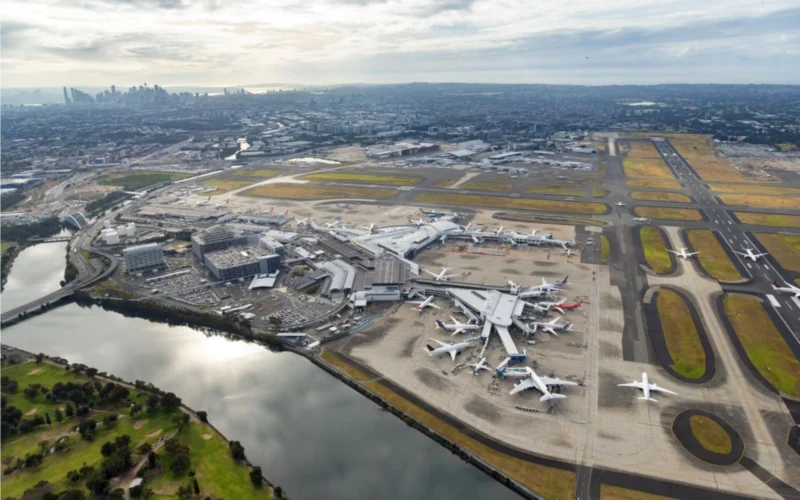
Sydney Kingsfordsmith International Airport (SYD) experienced significant disruptions on January 15, 2026, with dozens of domestic flights being cancelled or delayed due to a shortage of air traffic controllers.
At least 30 Qantas and Jetstar flights were cancelled, along with approximately 10 Virgin Australia services. Upward of 25 flights scheduled between 06:30 and 21:40 local time were affected, primarily impacting domestic routes.
Sydney Airport was forced to implement severe restrictions on departures, limiting takeoffs to one per runway every six minutes.
Last-minute staff absences
Airservices Australia, the government agency responsible for managing Australian airspace, attributed the disruption to last-minute staff absences that reduced the number of trained air traffic controllers available.
“Airservices has briefed airlines on the need for air traffic controllers to implement spacing intervals for aircraft arriving and departing Sydney today to safely manage operations while a number of our local staff are on short-notice sick and carers leave,” an Airservices spokesperson told The Australian.
Broader industry workforce crisis
The staffing shortage reflects a wider crisis that has plagued Australian aviation since the COVID-19 pandemic. One incident highlighted the severity of the issue, when an air traffic controller in Brisbane Airport (BNE) was found asleep at his desk during a night shift on December 9, 2022.
According to a report released by the Australian Transport Safety Bureau in September 2024, the controller was discovered dozing in front of his console, covered by a blanket while still wearing his headset. The safety bureau found that the controller was fatigued by back-to-back night shifts. Investigators concluded that a lack of resources within Airservices had compromised safe rostering practices.
In a report by Financial Review, Transport Minister Catherine King blamed the staffing shortages on a coalition government policy introduced during the pandemic that encouraged air traffic controllers older than 56 to retire early with lump-sum payments.
“It was a short-sighted decision,” King said. “While Europe and the US are thousands of controllers short, air traffic controller numbers in Australia are now back at pre-COVID levels.”
Airservices Australia reported that it had recruited 91 air traffic controllers over the past year, exceeding its target of 85.
US controllers recruited amid American staffing crisis
As Australia works to address controller shortages, Airservices Australia has been actively recruiting experienced air traffic controllers from the United States, offering competitive packages that emphasize a better work-life balance.
The migration reflects stark differences in working conditions. More than 41% of US controllers work 10-hour days for six days straight, according to the National Air Traffic Controllers Association. By contrast, the average work week in Australia is approximately 36 hours, with shorter standard weeks, more predictable patterns, and guaranteed weekends off.
The US Federal Aviation Administration is operating with a 3,800-controller shortage, according to the National Air Traffic Controllers Association, resulting in mandatory overtime and less recovery time between shifts.
In late 2024, Australia began allowing the hiring of controllers from overseas under a special agreement. Airservices Australia’s pay scales are roughly comparable to FAA rates when converted to US dollars, with the agency emphasizing improved lifestyle and working conditions as key recruitment incentives.