

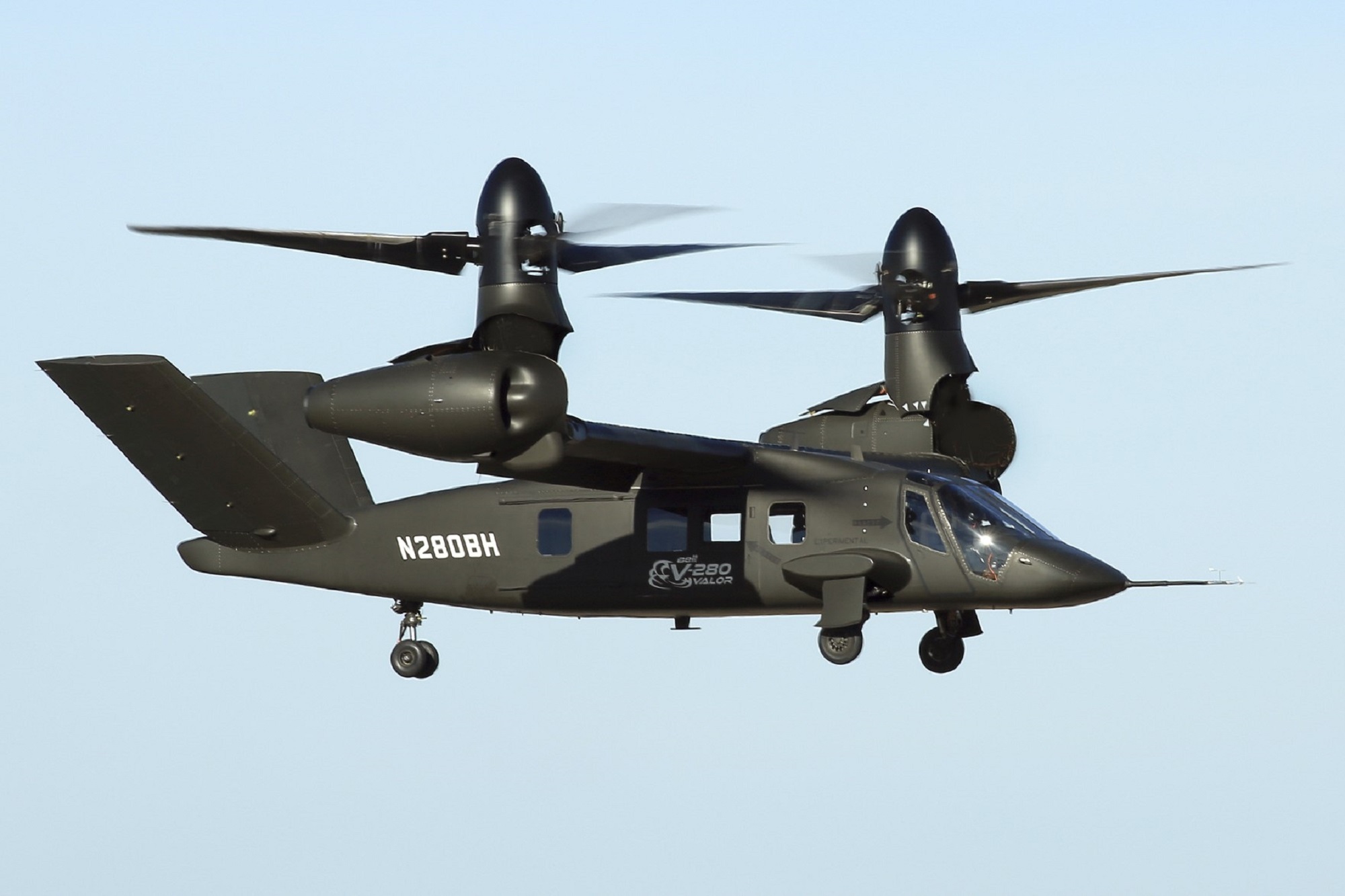
The US Army has formally assigned a common name to its next-generation tiltrotor: the MV-75 will be known as the Cheyenne II, Bell Textron announced on April 15, 2026.
The designation ties the Future Long-Range Assault Aircraft (FLRAA) program to one of the most ambitious, and most cautionary, chapters in US Army rotorcraft history.
The Cheyenne II name honors the Northern Cheyenne Tribe of Montana and the Cheyenne and Arapaho Tribes of Oklahoma, the two federally recognized Cheyenne nations. The choice is consistent with the US Army’s long-standing practice of naming helicopters after Native American tribes, a convention that produced the Apache, the Kiowa, the Chinook and the Black Hawk, the UH-60 fleet the MV-75 is designed to replace.
The Mission Design Series itself was revealed in 2025. The “MV” prefix denotes a multi-mission vertical-lift airframe, while the “75” commemorates the US Army’s founding year, 1775.
Colonel Jeffrey Poquette, FLRAA Project Manager, framed the naming as both a tribute to the Cheyenne tribes’ service and heritage, and a direct nod to “the bold vision of the AH-56 Cheyenne,” with the “II” meant to signal a new generation of US Army aviation.
The ghost of the AH-56
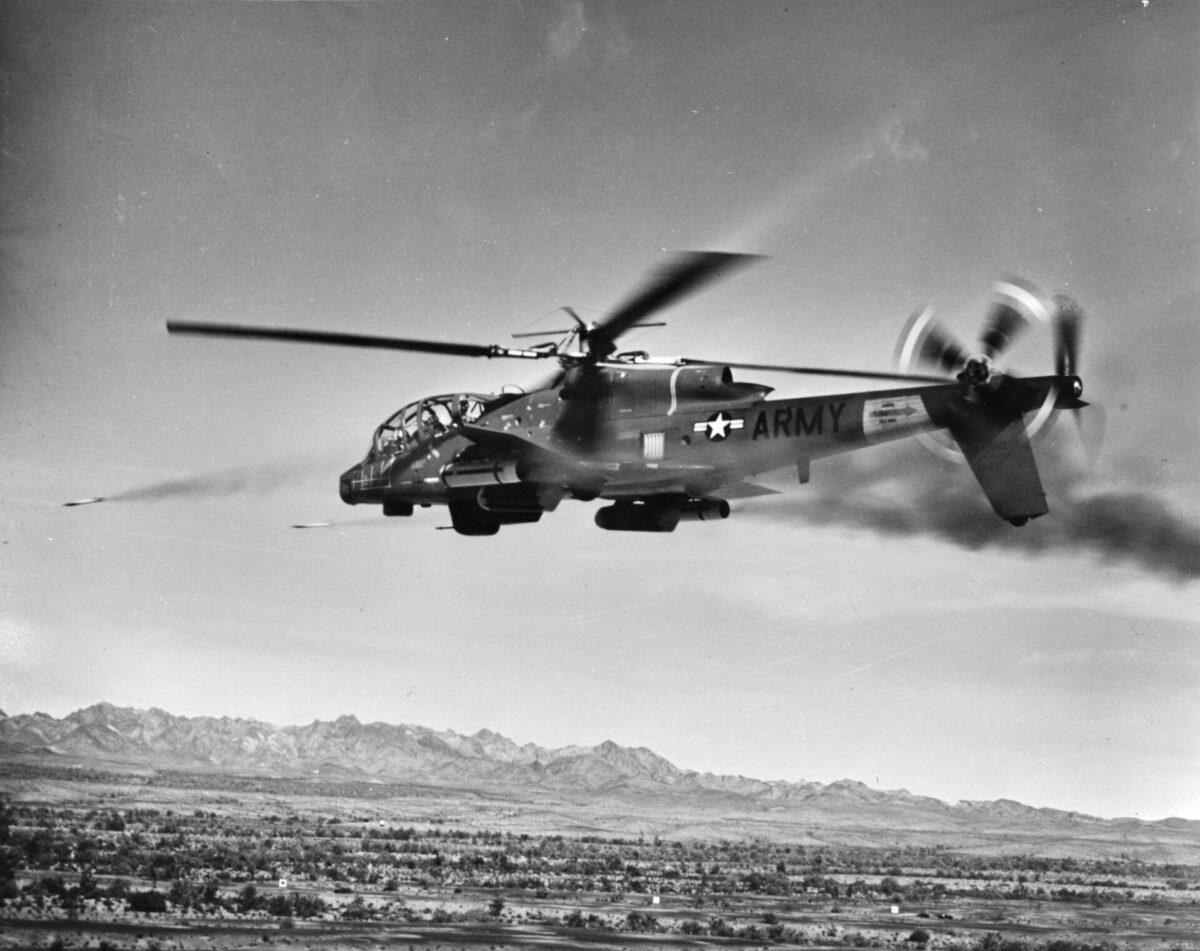
The original Lockheed AH-56 Cheyenne was a compound helicopter developed in the 1960s against the US Army’s Advanced Aerial Fire Support System requirement.
It featured a rigid rotor, stub wings and a tail-mounted pusher propeller, and demonstrated speeds above 200 knots, faster than any production rotorcraft of its era. A fatal crash in March 1969, persistent rotor-oscillation issues and rising unit costs led the US Army to cancel the production contract in May 1969, and the full program in August 1972. The attack-helicopter role it was meant to fill was taken up in the interim by the Bell AH-1 Cobra, and later by the Boeing AH-64 Apache.
The AH-56 has long been remembered within US Army aviation as a program whose technical ambition outpaced its industrial and political environment. Bell and the US Army are positioning the MV-75 as the delivery on that earlier promise: a rotary-wing platform that meaningfully breaks the speed-and-range envelope of conventional helicopters.
An accelerating industrial baseline
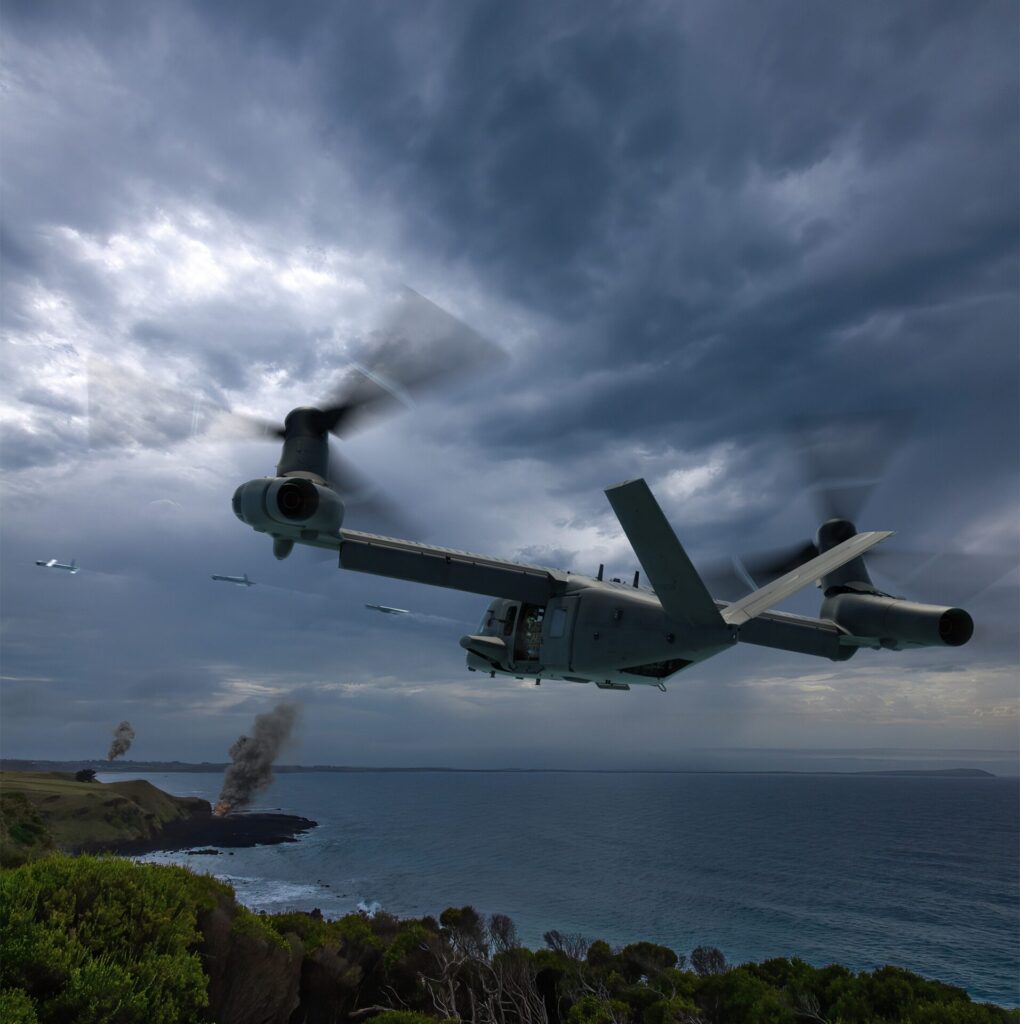
Based on Bell’s V-280 Valor demonstrator, the MV-75 is designed to cruise at around 300 knots with a combat radius roughly double that of the UH-60, carrying up to 14 troops and four crew. The US Army selected the tiltrotor over the Sikorsky-Boeing SB-1 Defiant compound helicopter in December 2022, with an initial $1.3 billion development award. The broader FLRAA effort is expected to replace more than 2,000 Black Hawks over the coming decades, with a potential lifetime value above $70 billion and a first production delivery targeted for around 2030. The 101st Airborne Division at Fort Campbell, Kentucky, has been identified as the first operational unit.
Ryan Ehinger, Bell’s Senior Vice President and FLRAA Program Director, said the naming comes “as we are accelerating assembly and production” toward delivery of the first test aircraft.
Rolls-Royce began ground testing the AE 1107F turboshaft engines that will power the tiltrotor in December 2025, and Collins Aerospace was awarded contracts on April 13, 2026 to supply five onboard systems, including main power generation, the interconnect drive system and the SmartProbe air data system.