

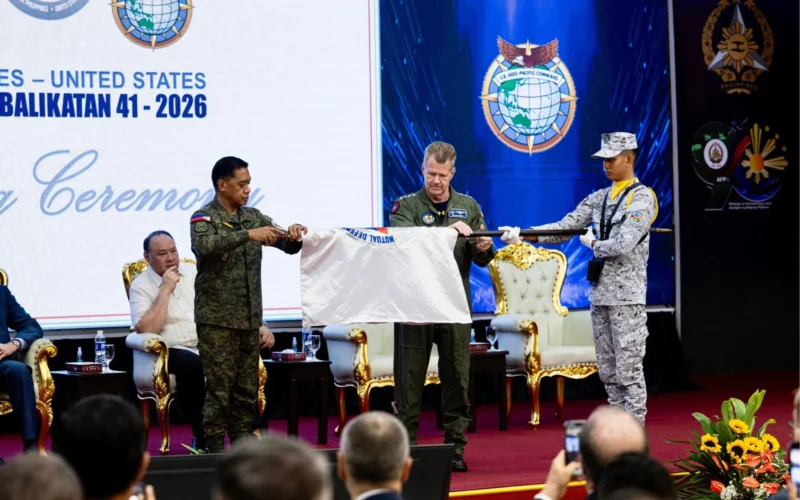
The Australian Defence Force supported Philippine air surveillance efforts during the 41st iteration of Exercise Balikatan (April 20-May 8, 2026) through subject-matter expert exchanges focused on mobile radar systems.
A five-person Australian team, led by an electrical engineer and supported by four communications electronics technicians, delivered training on deployment, maintenance, and logistics during a combined conference at Wallace Air Base in the Philippines.
The sessions covered tactics, techniques, and procedures, including site selection, preventive maintenance, and sustainment. The goal was to help Philippine Air Force crews refine their own processes and strengthen their ability to support their radar capability over time.
Exercise BALIKATAN 2026 saw 7 nations stand shoulder to shoulder! 🇦🇺🇵🇭🇺🇸🇨🇦🇳🇿🇯🇵🇫🇷 🤝
— Marc Innes-Brown (@AusAmbPH) May 8, 2026
Over three weeks, Australia was proud to stand with @TeamAFP and partner nations to deepen interoperability, military-to-military ties and national partnerships. pic.twitter.com/bBAblQDqIt
Similar systems, shared learning
The Philippine Air Force operates the TPS-P14ME mobile radar, while Australia uses the TPS-77. Both systems are designed for air surveillance and defense, making the exchange a natural fit.
Flying Officer Ben Silverwood, an electrical engineer from 114 Mobile Control and Reporting Unit, led the lessons on radar deployment and sustainment. He said the training focused on giving Philippine personnel the tools to maintain their systems effectively in the field.
“It’s about giving them the processes to support and sustain their capability,” Silverwood said.
A two-way exchange
The exchange was not one-sided. Philippine Air Force personnel also shared their own maintenance approaches, allowing both teams to learn from each other.
Silverwood said the first few days were focused on Australian-led instruction, followed by demonstrations from the Philippine side on how they conduct their own operations.
“Being able to share our information and also get insight into the different ways they do things has been very beneficial,” he said.
A rare opportunity
For the Australian technicians involved, the deployment offered a valuable chance to work overseas. Silverwood noted that opportunities like this are uncommon for personnel in their field.
Working closely with the Philippine Air Force also strengthened relationships between the two services, he said, and highlighted the importance of shared knowledge in building regional defense partnerships.