


In our recent feature on Albrecht Dürer Airport Nuremberg (NUE), we explored how one of Germany’s mid-sized regional airports has managed to carve out a thriving niche, despite being sandwiched between two of Europe’s busiest hubs.
Among the distinctive advantages that set Nuremberg apart is its status as one of the very few airports in Germany that is licensed to operate around the clock. It is precisely this 24/7 capability that has made it the country’s foremost base for medical air services.
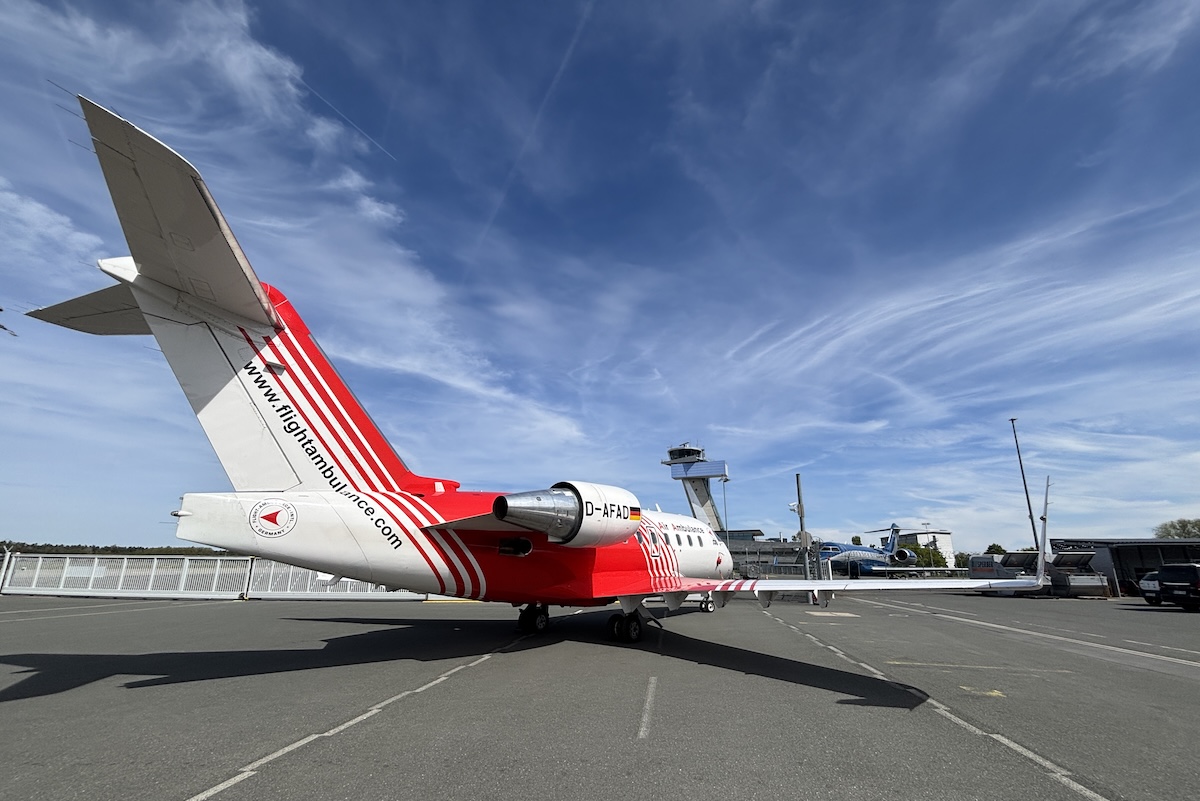
This segment of the aviation industry has come into sharp focus recently. When an outbreak of Hantavirus struck the cruise ship MV Mobius off the coast of Tenerife, medically equipped aircraft from several countries converged on the island to evacuate over a hundred passengers who had been placed in isolation.
Whether or not any of those flights passed through Nuremberg, the scramble to fly those people home in the proper medicalized environment illustrated the sort of missions in which one of the companies based at Nuremberg engages practically on a daily basis.
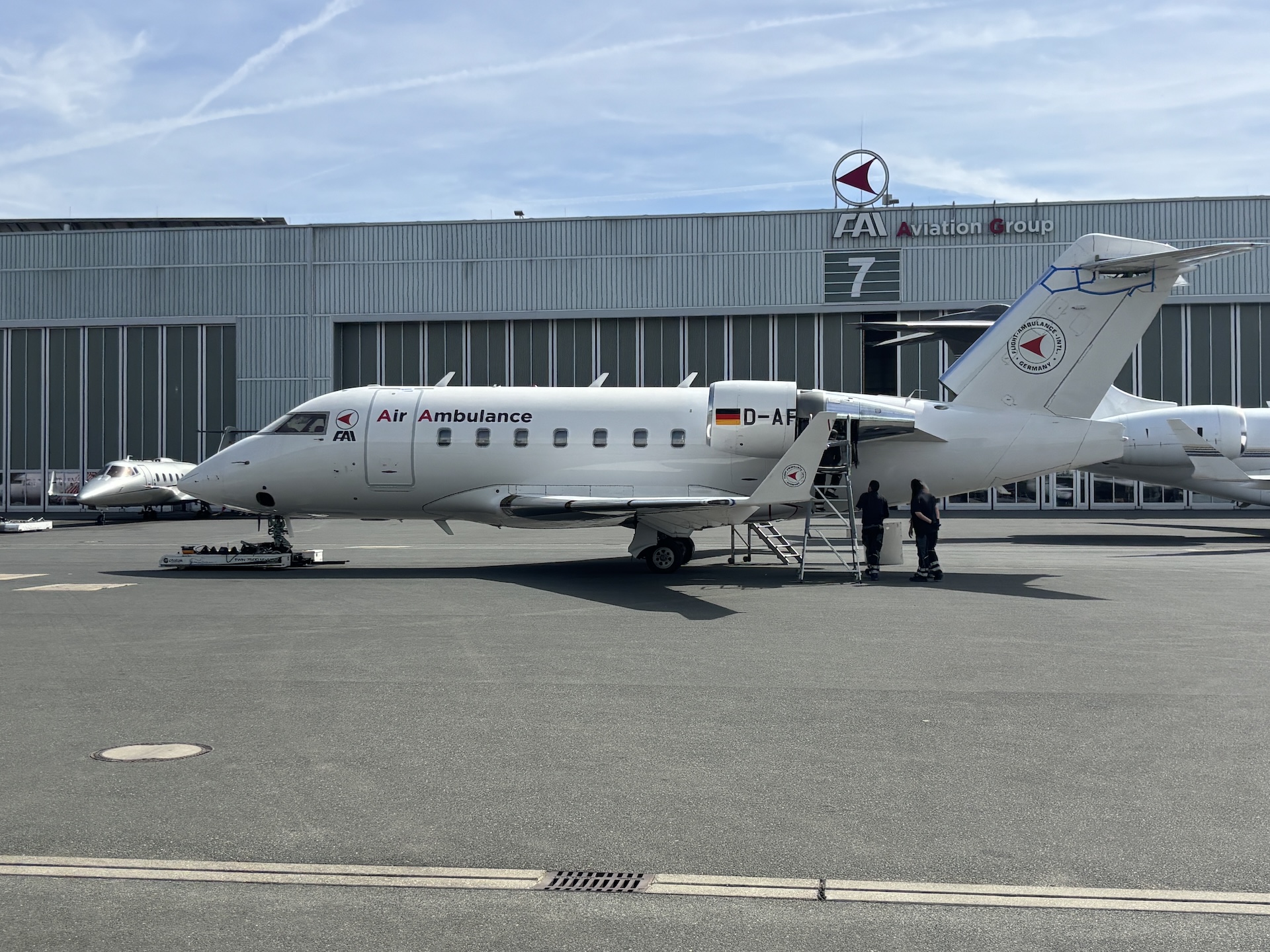
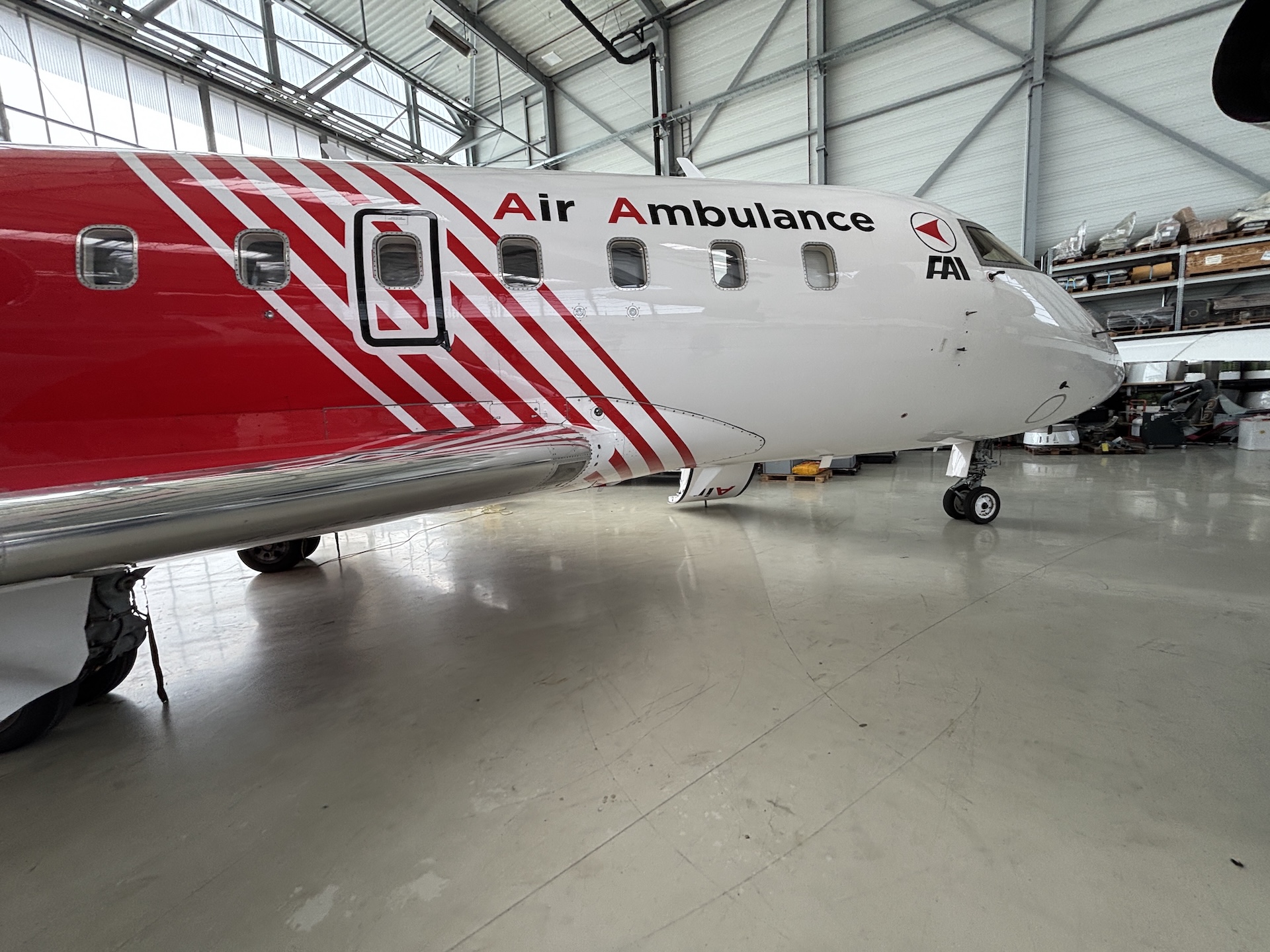
FAI Aviation Group was founded in 1986 by Siegfried Axtmann, a local entrepreneur from Nuremberg. He started the company with a single helicopter and progressively built it into one of Germany’s largest providers of air ambulance and private aviation services.
FAI stands for Flight Ambulance International, and though the air ambulance remains one of the group’s core activities, FAI has expanded into two further areas: executive jet charters and maintenance, repair and overhaul (MRO).
AeroTime was at Nuremberg Airport to meet with FAI Aviation’s managing director, Georg Gruber, to try and understand how the company has built its business across all three domains and, more generally, to better comprehend the unique dynamics that underpin them.
How does the air ambulance business work?
“The air ambulance business is super interesting,” Gruber said. “Everything is very last minute, ad-hoc. All our crew members – the pilots, the flight attendants, the paramedics – they’re all literally on standby close by, here in Nuremberg, because they need to be at the airport within approximately one hour whenever someone calls us.” He explained that FAI’s aircraft must be ready for take-off within two hours of being notified of a new mission.
This is where things get interesting for FAI’s team, because the company’s radius of action is truly global. A single evacuation flight can mean securing lots of different permits and documents in virtually no time.
“It depends on where we are going to,” he said. “If it’s the US or Europe, it’s easy because we just need landing rights and we can fly. When it comes to Africa or to Asia, the flight needs a lot of preparation, it needs a lot of time to get all the permits. And how you do that? If you have an in-house operation, like we do, we can take care of it. So, as soon as we receive the flight confirmation, we immediately request all the overflight permits, landing permits and so on.”
“For medical operations, it’s way easier to get all the permits, because they know it’s urgent, and you will get even overflight permits or landing permits even on a weekend.” Gruber explained.
Even in such cases, though, it’s not all plain sailing.
“If we needed to go to South Africa to pick up a patient, for example, we would need at least six to 10 overflight permits to even get there – and, of course, the landing permit. So, basically, for such an operation, we would need probably 12 to 24 hours before the activation, before being able to take off and fly.”
Being able to operate 24/7 is therefore a big asset and one of the reasons Nuremberg Airport is such an important air ambulance hub. “The ambulance business is 24/7. Sometimes we receive an activation at 02.00, and we need to go immediately.”
Gruber went on to underline how most German airports won’t allow operations at night, even in case of medical emergency.
“The 24/7 is it not waived in other places, even if you have an emergency. It’s really crazy. But all those big airports, Frankfurt, Munich, Berlin, Hamburg…are not open,” he added.
“That’s the biggest advantage we have here [at Nuremberg Airport], and that’s the reason we’re so happy here.”
While it has many commonalities with the executive jet business, primarily the technical servicing of the aircraft, the air ambulance business model, in which insurance companies are the main customers, differs a lot from the executive charter one, in which FAI Aviation caters mostly to individual customers.
FAI shares Nuremberg Airport with another prominent German air ambulance operator, Aero-Dienst, although Gruber doesn’t see it as a competitor, since each company caters to its own constituency. Aero-Dienst operates primarily for ADAC, which is Germany’s largest automobile club as well as an insurance services provider with millions of members throughout the country.
“They are mainly focused on European business and we are operating worldwide. We’re even going to New Zealand. These are missions which, logistics-wise, are big. For example, we would need three sets of crew to get there [to New Zealand],” Gruber said.
Plus, there is no shortage of work for both operators. “We fly basically every day,” he confirmed.
Enter the executive jet business
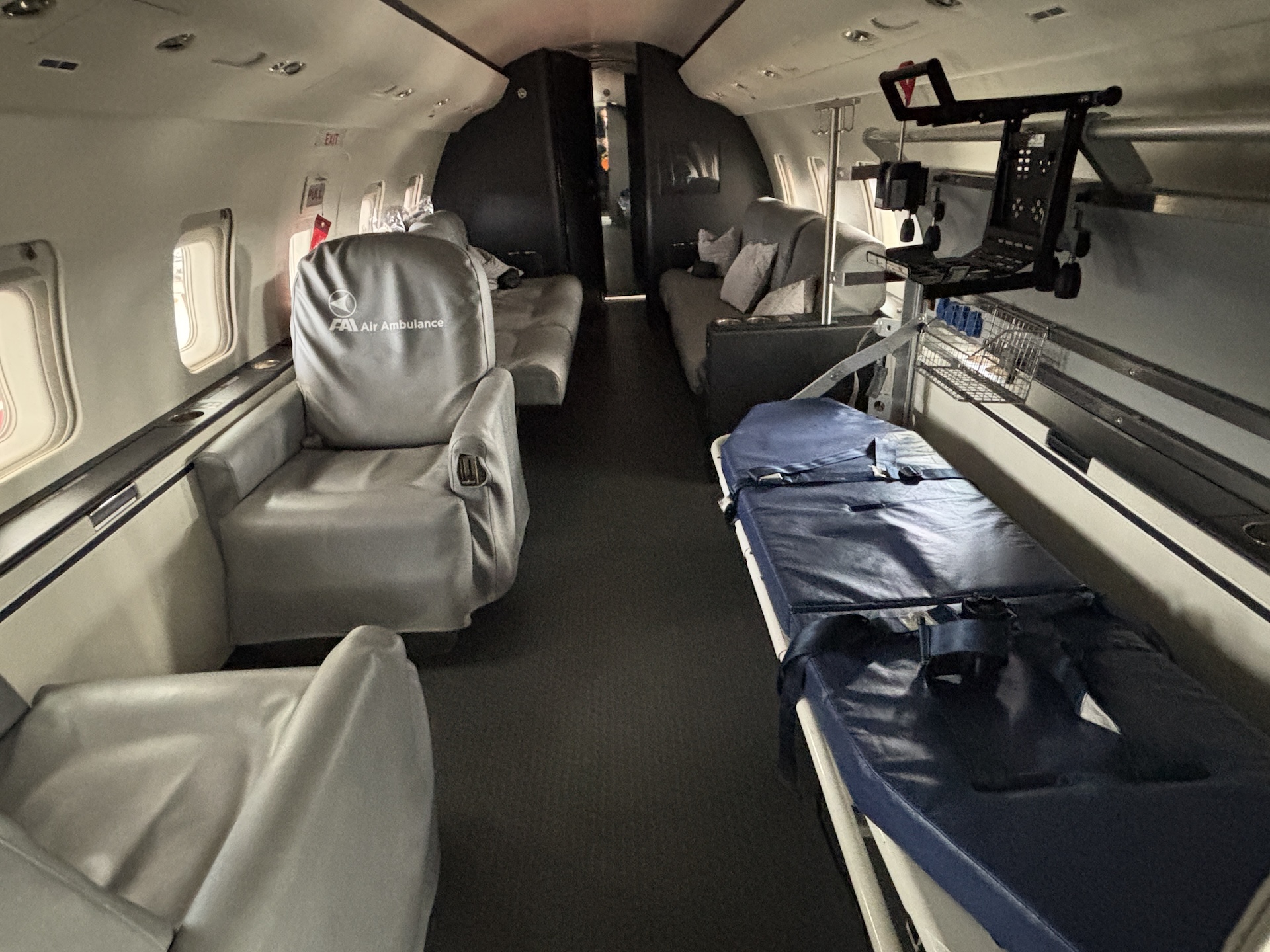
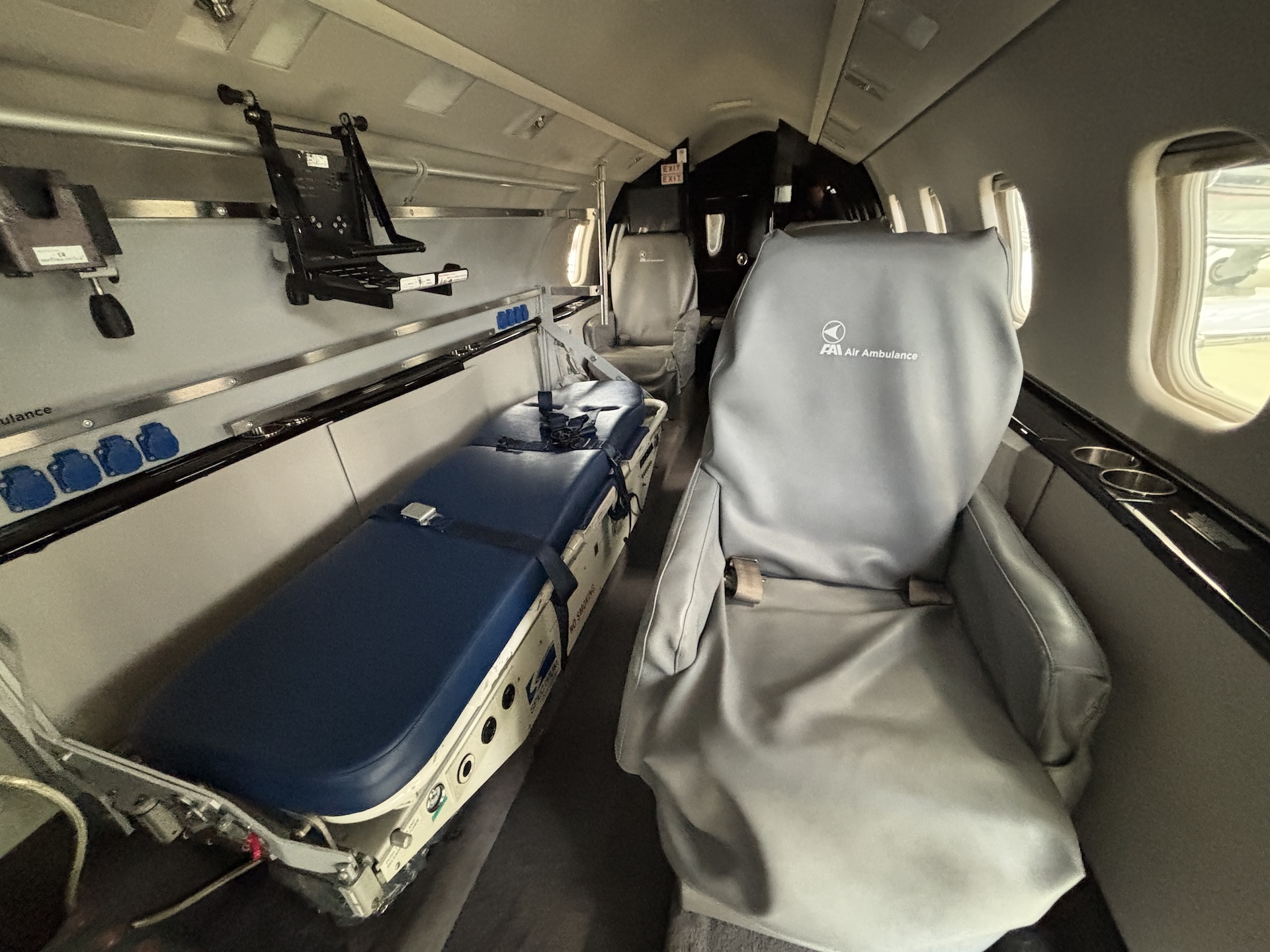
FAI has grown its executive jet charter business in parallel to the air ambulance side, since each of these arms of the company operates dedicated fleets (aircraft dedicated to ambulance services are fitted with a lot of special equipment inside). Plus, the MRO division supports both, as well as other external Bombardier operators.
The business model is clear from the name adopted by the firm’s private aviation division: ‘FAI Rent-a-Jet’.
“What we are doing is charter on demand,” Gruber said. “We have five Global Express classics and one Global 6000 as well as Learjets 60 XR dedicated to VIP charters. All of them are 100% available for charter.”
Gruber takes pride in the fact that FAI has an entirely owned fleet. The company gets about 90% of its mission requests through brokers, unlike other charter operators that are often taking care of someone else’s aircraft and making it available for rent when it is available.
“The biggest advantage we have compared to other operators is that we don’t need the owner’s approval. When a broker is asking you for a flight, most other operators will first need to ask the owner if he’s willing to make the aircraft available for the mission. We don’t need to, because right now, every single aircraft in our fleet belongs to us. We used to manage some aircraft for their owners, but after COVID we shifted our focus to our own operation, and that was the beginning of a tremendously successful VIP charter operation. We used to have only three [Bombardier] Globals in our fleet and now we have already six – five classics and a Global 6000.”
This is a fleet in transition, though, as FAI Aviation is looking to replace its classic Learjets 60s for Learjets 60XRs, the Challenger 604 for Challenger 605s and the Global Express classics with Global 6000s.

The one thing that is almost sure to remain is the preference for Bombardier aircraft.
“We always used to have Bombardier aircraft, and we really like them, we stick with them. It makes sense to have everything from one manufacturer, because we have everything here, and this will be doing a lot of like business for third party operators as well. We’re the biggest German operator of Bombardier.”
Increasingly, the Bombardier Global is becoming the workhorse of FAI Aviation, which has been upgauging from the smaller Learjets as it focuses on the long-haul VIP transport market.
“We used to have five dedicated charter Learjets. And during COVID, we said, ‘Okay, we think we should change our strategy and focus primarily on long-range jets and long-range missions’. It’s the same workload – exactly the same work – but at least five times the profit,” Gruber explained.
But is the demand there for this type of missions?
“It’s tremendous. The demand is really, really good. And since COVID, year after year, we are definitely killing it. Year after year, we have higher revenue. Compared to last year, we are up 30%.”
Gruber emphasized how fundamental the US market is for this type of business.
“In some parts of the world, the concept of flying private is a lot more normalized than it is in Europe. We’re focusing primarily on the US, Canada, the Caribbean and South America.”
Gruber also explained that another distinctive aspect of FAI’s operations is the amount of work that goes into optimizing schedules, so that empty legs – when an aircraft flies empty to reposition for a new mission – are very rare.
“We are selling one-ways to those places and, of course, back to Europe. That’s our strategy, and it always pays off. We never fly an empty leg without passengers from the US, for example, back to Europe. We always try to combine it. It’s like playing Tetris. It’s super difficult, because you really need to see how you can combine those legs,” Gruber said, before praising FAI’s team for their skill in this matter.
This is also one of the reasons that, even if it operates globally, FAI has made a deliberate choice to concentrate on flights between Europe and the Americas.
“Sometimes we have requests going to Africa, to Asia, even going to Australia. And of course, we are also performing those missions, but because it’s not our core market, we need a return trip. So, let’s say, for example, tomorrow we are flying to Bangkok and three days later we’re flying back. We need to calculate a double rotation in case there are more days in between. Otherwise, you’re flying to Bangkok tomorrow and need to stay there for a few days. I can’t let my aircraft stay there, parked. Most of the time we are not getting those missions because there are other operators that will just park the aircraft there for two weeks. That’s not our concept.”
Gruber shared that the firm’s Globals are averaging 100 hours of flight per month a high number for industry standards “It remarkable!” he exclaimed emphatically.
“We want to utilize our aircraft, we want to fly,” Gruber said. “That’s the reason why our main focus is westbound, to the US, Caribbean and Canada, because there is more flux of people there. The US market is enormous. For them, it’s like driving a cab.”
“They’re flying all the time to Europe, back and forth. Wealthy businessmen, entrepreneurs, celebrities, sports stars, family vacations – we have all those kinds of people on board. And it’s really fascinating,” he added, quantifying the share of American passengers as close to 80%.
“The US is definitely the number one market when it comes to private relation in Europe, the top destination for the Americans is the UK. Teterboro to England is always like a race track. And, of course, in the summer months, Americans love Europe. They’re coming to Spain, going to Ibiza to Palma de Mallorca, Malaga, Southern France, and, of course, Italy. Yeah, Americans love Italy!”
This contrasts with European attitudes to private aviation, though.
“Europeans in general are definitely more scared to spend so much money on the private jet. If we were to depend on German customers. I think one Global would be enough. We wouldn’t need six!”
Gruber does not rule out expanding the scope of the company’s operations as the company acquires more Global 6000s.
“Executive aviation is definitely getting bigger, it is still growing, and with more available Globals, we can try and be successful in other areas. Let’s say, for example, Asia, the Middle East, or Africa especially – I think Africa is a very big market as well. And South America is a new and upcoming market.”
FAI operates in the Middle East, but primarily with its ambulance fleet – not so much when it comes to charters.
“The Middle East is difficult, because if travelling from Europe you don’t need a Global Express or a Global 6000, you can easily fly with a [Bombardier] Challenger, a [Embraer] Legacy or a [Embraer] Praetor. And of course, it’s way cheaper to fly with a Challenger or a smaller aircraft. So, it is a tough, but still super interesting market, especially because fuel prices in the Middle East are definitely lower than, for example, in the US.
For us, the Middle East is really for the ambulance business. We have a lot of customers in the Middle East that fly, for example, to the US, for medical reasons.”
Investing in product and marketing
How does FAI cater to such a demanding clientele? Gruber shared some details of the company’s value proposition.
“All of our aircraft received a refurbishment in the last couple of years. All the cabins are state-of-the-art. They have the newest entertainment system, the newest management system on board. We have ultra-high-speed Wi-Fi. That’s another very important fact, because people need Wi-Fi. Everyone is on their phones, checking WhatsApp, emails….and if they’re going with kids on vacation, they need to stream some movies or play games.”
“Also, our flight attendants are super well trained, super well selected,” he said. “We really do everything we can to fulfil every wish a client has. For example, if a client says, ‘my favourite restaurant is Cipriani,’ what we can do is, get our flight attendant go to Cipriani and order food there, bring it to the aircraft, and serve it on board. So, it’s really a customised, tailor-made service what we’re offering.”
FAI has also had a close association with the McLaren Formula One team, which it sponsored for some time.
“That was really a tremendous, fruitful relationship. We flew the team, the drivers, Zak Brown, their CEO, and we did it for six years. We just stopped recently, after last season. And it was really the best we could have imagined, because they won the World Constructors’ Championship and Lando Norris won the Formula One championship. So, it was really great. And I think everyone in the industry knows us by now. FAI was already a brand before McLaren, but those six years have helped us tremendously, inside and outside the industry. We even had a three-minute sequence on Netflix when Lando Norris and George Russell were talking on our jet while they were flying from London to Nice.”
One factor that Gruber sees as potentially slowing down growth in the executive aviation business is the continued geopolitical conflict and the related volatility in oil prices. He dismissed the notion that the executive jet crowd is insensitive to oil price fluctuations.
“They are used to know what they are paying,” he said. “They knew exactly what they paid last year and compared to this year, it’s almost like a 20 or 25% increase, and this is something where people are actually not really happy about it, of course. The last month was still very good, even though we already had higher prices and the costs really exploded.”
Regardless of what happens in global geopolitics and its effect on executive charter demand, Gruber plans to keep growing FAI’s other two businesses as well – particularly the MRO business, the further development of which he sees as a priority.
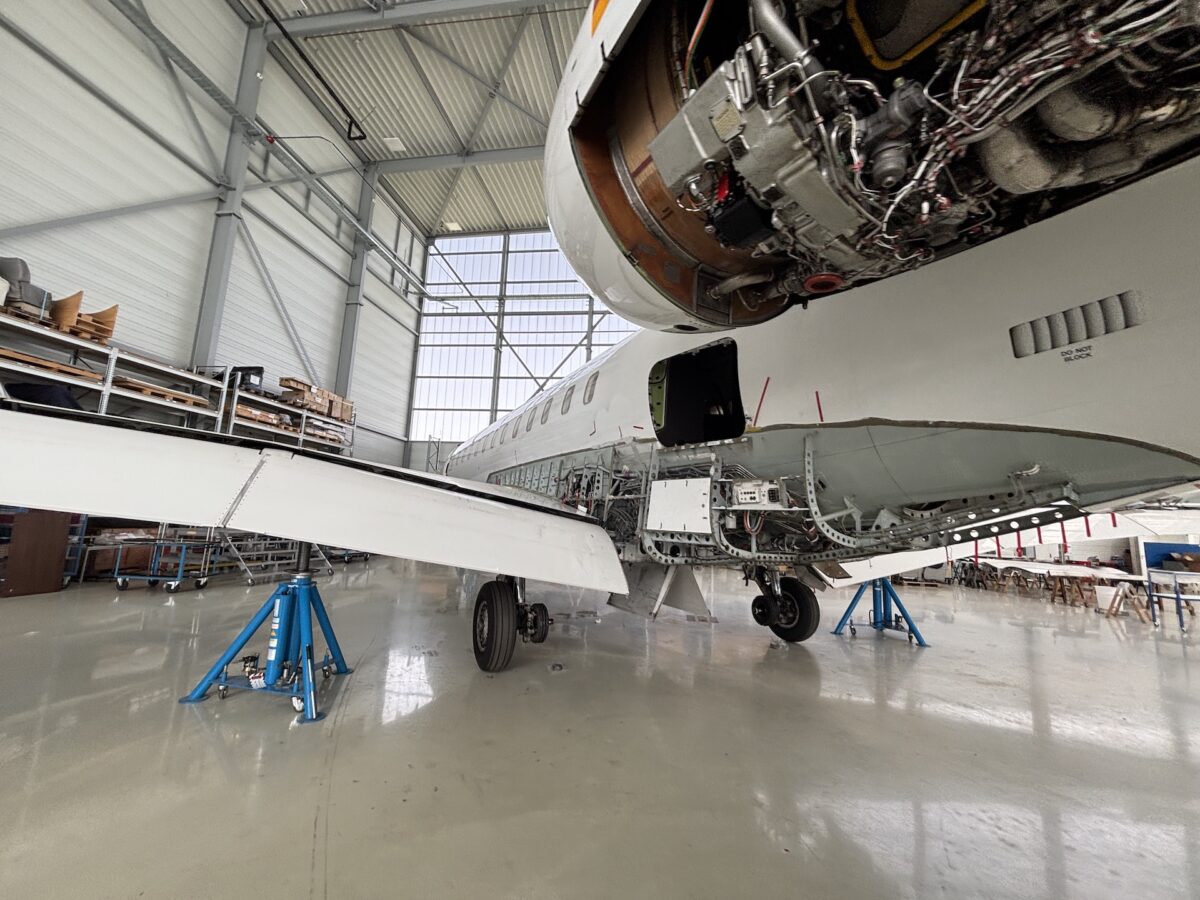
“The MRO business is really well known now in the private aviation industry,” he said. “A lot of third-party operators are coming to us and we’re very proud of that. So, we definitely want to expand it.”
As for the air ambulance business, though, Gruber acknowledged that this is a mature market where organic growth is difficult.
“It’s difficult, but you never know,” he concluded.