

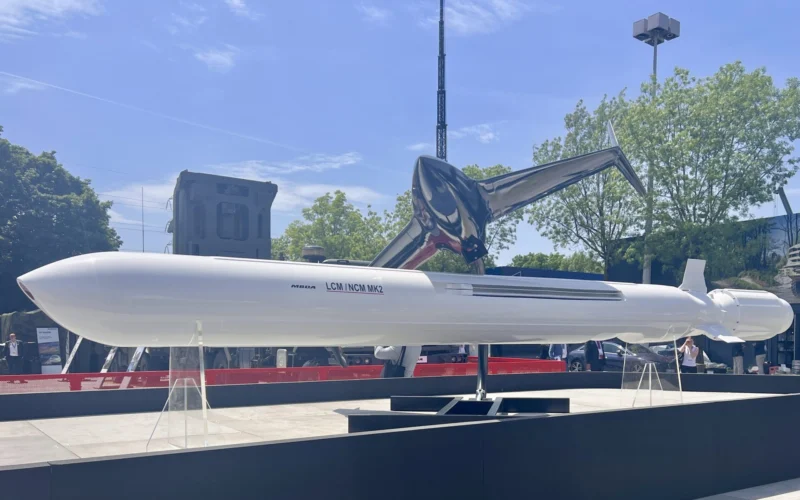
MBDA presented a complete version of its Land Cruise Missile (LCM) system for the first time at Eurosatory 2026, which opened in Paris on June 15, 2026.
The reveal pairs the ground-launched system with the new-generation Naval Cruise Missile MK2 (NCM MK2) and positions the European group for a deep-strike market that has expanded sharply since Russia’s full-scale invasion of Ukraine.
MBDA describes the LCM/NCM MK2 as the only European combat-proven sovereign deep precision strike option available in the near term.
A ground-launched version of a combat-proven naval missile
The LCM is a land-based adaptation of the NCM, known in French service as the Missile de Croisière Naval (MdCN), which equips French Navy FREMM frigates and Suffren-class submarines.
MBDA developed the weapon as France’s answer to the US-made Tomahawk after Paris was unable to acquire the missile back in 2002. Drawing on the same family as the air-launched SCALP cruise missile, it entered service with the French Navy in 2017 and offers a range of more than 1,000 kilometers (620 miles).
The naval missile earned its combat-proven label in April 2018, when the FREMM frigates Aquitaine, Provence, and Languedoc fired three MdCN rounds at a Syrian chemical weapons production site in a strike coordinated with the US and the UK.
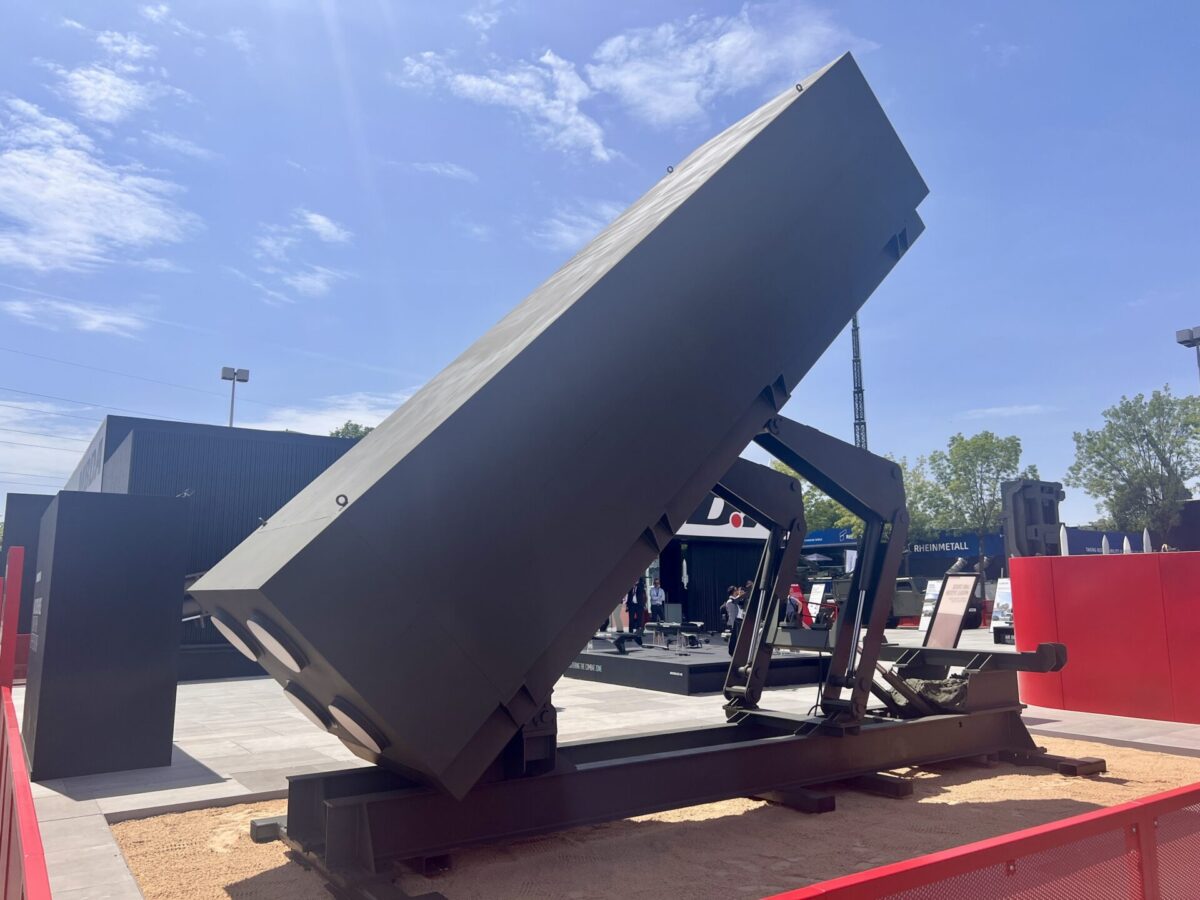
The complete system shown at Eurosatory integrates the LCM / NCM MK2, which MBDA says will improve survivability, range and lethality, including in hostile and GNSS-denied environments. The launcher displayed alongside the missile at Eurosatory 2026 carried four canisters, each housing one missile.
Saturation drones to open the way
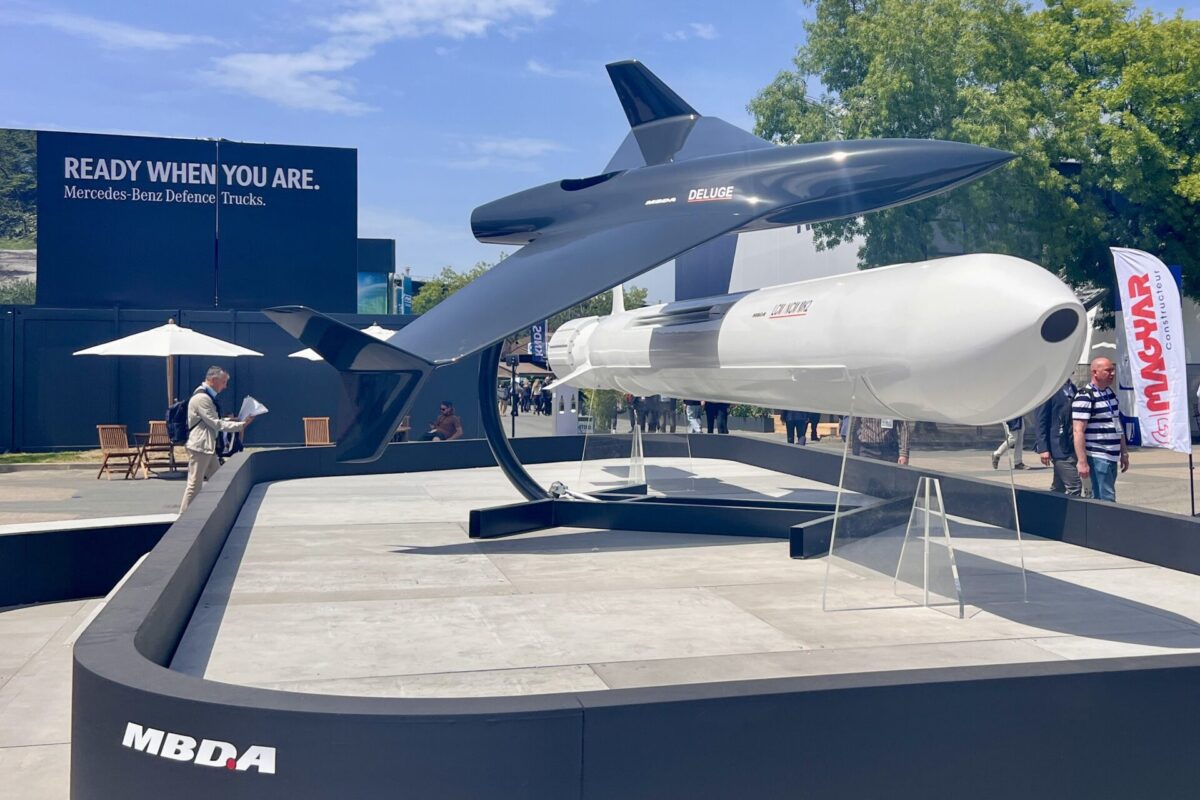
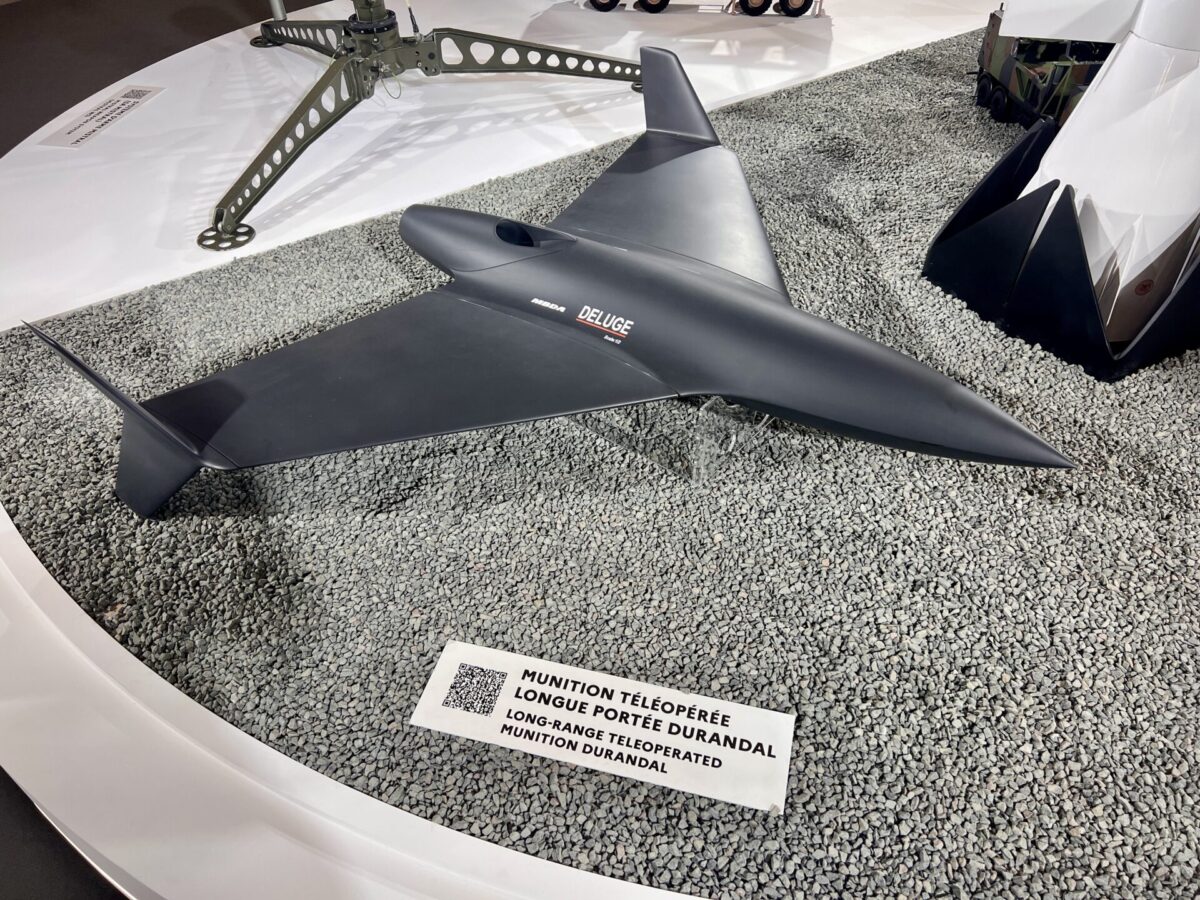
MBDA paired the LCM with Deluge, a low-cost one-way effector it formerly called the One Way Effector. The turbojet-powered drone has a three-meter wingspan, a 50-kilogram-class payload, a speed of about 400 kilometers per hour (250 miles per hour), and a range of up to 500 kilometers (310 miles). Launched from the ground in coordinated salvoes, it is designed to saturate and expose enemy air defenses so that higher-end weapons such as the LCM can reach their targets.
France’s DGA placed the first Deluge order, which it designated Durandal [after the legendary sword of Roland in medieval French epic literature – ed. note], on January 22, 2026. The concept draws on Ukraine’s experience with Shahed-type attack drones, which have shown how cheap systems used in volume can complicate air defense planning.
The European long-range strike push
The LCM sits above MBDA’s lower-cost Crossbow, an 800-kilometer system shown in 2025, and could feed into the multinational European Long-Range Strike Approach (ELSA), approved at the July 2024 NATO summit in Washington.
That initiative groups France, Germany, Italy, Poland, Sweden, and the UK around a future weapon exceeding 2,000 kilometers and is intended as a capability independent of the US, though it is unlikely to field before the 2030s. Several governments, including Germany, have signaled they want nearer-term options while ELSA matures.
Other European companies used Eurosatory 2026 to position themselves in the same emerging deep-strike market, including the Soframe, Thales and ArianeGroup team behind the X-Fire launcher and its proposed B-Strike ballistic capability.
France is separately advancing ground strike through its FLP-T program. It announced having entered exclusive negotiations with the Safran-MBDA team for the Thundart rocket at Eurosatory on June 15, 2026.