

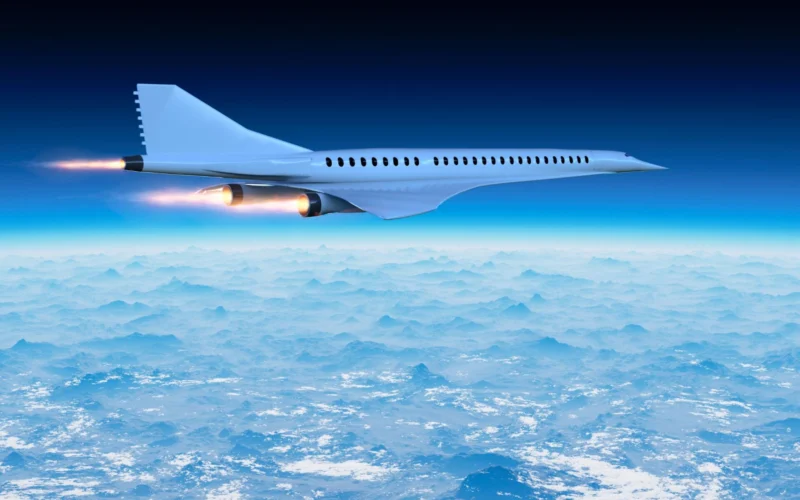
The Federal Aviation Administration (FAA) has proposed a new rule that would set the stage for civil supersonic flights over the continental United States, a step toward lifting restrictions that have been in place since the 1970s.
US Department of Transportation (DOT) Secretary Sean P. Duffy announced the proposed rule on June 30, 2026, saying advances in supersonic technology now make it possible to operate these aircraft without producing a disruptive sonic boom on the ground.
🚨COMING SOON: SUPERSONIC FLIGHTS ✈️
— Secretary Sean Duffy (@SecDuffy) June 30, 2026
The @FAANews is clearing the way for supersonic technology to take the skies at MACH 1 SPEEDS ‼️
The airspace is about to get faster… Welcome to the Golden Age of Travel 👇 pic.twitter.com/GK59TPQknR
What the rule does
The proposed rule establishes a noise-based certification standard for supersonic aircraft. The FAA plans to follow up with a second rule in the latter part of 2026 that would set landing and takeoff noise standards.
Together, the two rules are intended to give manufacturers the guidance they need to finalize aircraft designs and move toward commercial operations.
The FAA said it aims to finalize both rules by mid-2027.
The science behind quieter supersonic flight
Aircraft flying at supersonic speeds travel at Mach 1 or higher, roughly 770 miles per hour or more. Commercial airlines today typically fly between 550 and 600 miles per hour.
One technique being explored to reduce sonic boom noise is called Mach cutoff. This approach uses a combination of aircraft design, atmospheric conditions, speed, and altitude to bend and refract the sonic boom back into the atmosphere, significantly reducing its impact at ground level.
The FAA said it is working with the International Civil Aviation Organization (ICAO), NASA, industry partners, and academic institutions to inform the development of supersonic noise standards.
The new golden age of travel
Secretary Duffy framed the announcement as part of a broader push to advance American aviation technology.
“Restoring supersonic flight over land isn’t just about speed, it’s about unleashing American innovation and ushering in a Golden Age of Travel,” Duffy said.
FAA Administrator Bryan Bedford said improvements in aerospace engineering, materials science, and noise reduction have made it possible to revisit the decades-old ban.
“This means we can ultimately repeal the ban from the 1970s on supersonic flight over US territory while minimizing noise impacts to residents in communities along the route and near airports,” Bedford said.
An executive order also calls for the FAA to work with foreign aviation authorities to establish safety agreements for the international operation of supersonic aircraft.
If the rules are finalized as planned, manufacturers could begin bringing next-generation supersonic planes to market, potentially cutting travel times significantly for passengers and cargo.