
Seoul Incheon (ICN)
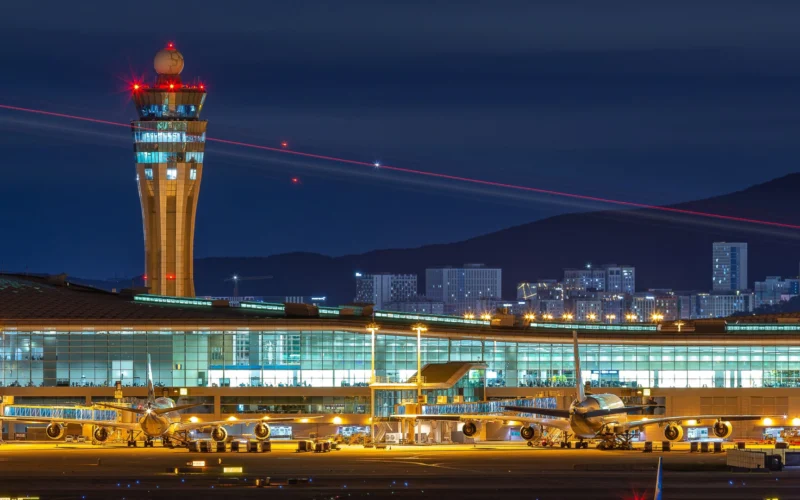
Seoul Incheon (ICN) at a glance
Seoul Incheon is South Korea's global gateway and the world's third-busiest airport for international passengers, handling 71.2 million travelers in 2024 with sharp growth continuing through 2025. Built on reclaimed tidal land and opened in 2001, it has spent two decades collecting service awards while funneling transpacific and Southeast Asian transfers through Korea.
Its moment is now: the Phase 4 expansion completed in December 2024 lifted capacity to 106 million passengers, third-largest in the world, precisely as Korean Air absorbs Asiana into a merged mega-carrier hubbed at Terminal 2. Incheon's bet is that a bigger home airline plus expanded infrastructure lets it pull long-haul connecting traffic from Chinese and Japanese rivals.
Hub & base airlines
| Airline | Role | Terminal |
|---|---|---|
| Korean Air | Primary hub, absorbing Asiana | Terminal 2 |
Terminals & infrastructure
Incheon's two great terminals sit on reclaimed land between islands west of Seoul, connected by an automated people mover and consistently rated among the world's best for service. The Phase 4 expansion completed in December 2024 added a fourth runway's full use and stretched Terminal 2, lifting capacity to 106 million passengers, the third-largest of any airport on Earth.Full specifications
Frequently asked questions
The Phase 4 works completed in December 2024 raised annual capacity to 106 million passengers, making Incheon the world's third-largest airport by capacity.
Korean Air, from Terminal 2, where it is consolidating the network of Asiana following their merger into a single mega-carrier.
Its position between North America and Asia, Korean Air's network and consistently top-rated transfer facilities make it one of the world's premier connecting hubs.