
Hong Kong International (HKG)
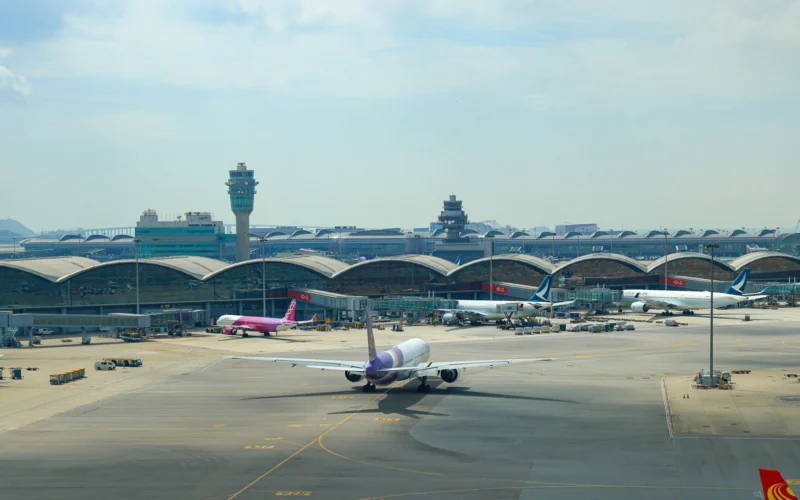
Hong Kong International (HKG) at a glance
Hong Kong International Airport is the world's busiest cargo airport and one of Asia's essential passenger hubs, handling 61 million travelers in 2025 as its recovery from the pandemic era's longest isolation gathered pace. Opened in 1998 on the flattened island of Chek Lap Kok, its Foster-designed terminal remains a landmark of airport architecture.
The airport enters its next era with the Three-Runway System completed in November 2024, a HK$140 billion expansion that lifts ultimate capacity toward 120 million passengers, and an expanded Terminal 2 coming online through 2025. For hub airline Cathay Pacific, back to full strength with more than 100 aircraft on order, the new runway is the growth headroom its rebuild requires.
Hub & base airlines
| Airline | Role | Terminal |
|---|---|---|
| Cathay Pacific | Primary hub and home base | Terminal 1 |
Terminals & infrastructure
Built on the levelled island of Chek Lap Kok, HKIA completed its Three-Runway System in November 2024, the HK$140 billion project that raises long-term capacity toward 120 million passengers, with Terminal 2 reborn as a full departures-and-arrivals building. Norman Foster's Terminal 1 remains one of the world's great airport halls, and the airport is the planet's busiest for cargo.Full specifications
Frequently asked questions
Its position at the heart of Asian manufacturing and e-commerce flows, plus Cathay's and dedicated freighter networks, keep it first in the world for air cargo tonnage year after year.
A HK$140 billion expansion completed in November 2024 that added a third runway on reclaimed land, raising the airport's long-term capacity toward 120 million passengers.
Cathay Pacific, from Terminal 1, alongside its low-cost sibling HK Express and cargo arm Air Hong Kong.