
Madrid Barajas (MAD)
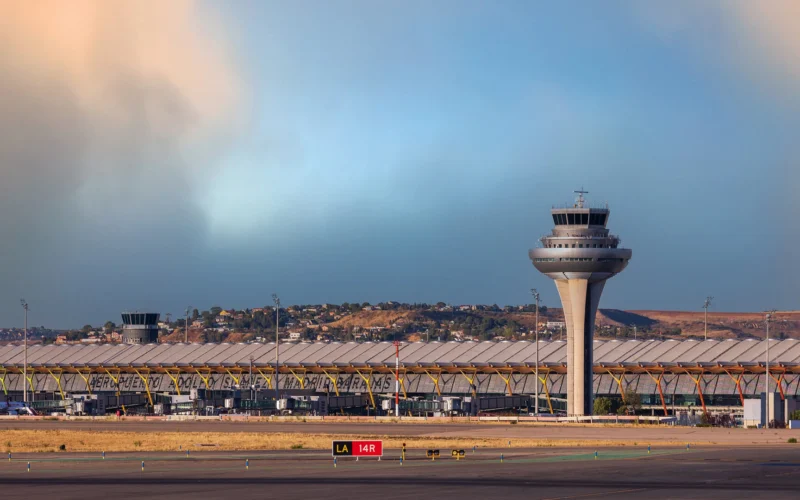
Madrid Barajas (MAD) at a glance
Adolfo Suárez Madrid-Barajas (MAD) is Europe's bridge to Latin America: 68.2 million passengers in 2025, a record, moving through Spain's capital hub 12 kilometers from the city center, where Iberia's Terminal 4 banks the continent's largest network of South and Central American connections. Three-quarters of its traffic is international, the profile of a pure intercontinental gateway rather than a domestic airport that grew.
Barajas holds an advantage most European giants would trade anything for: room. Four runways and a vast site give it physical capacity Heathrow and Schiphol can only envy, and operator Aena is investing billions to push the airport toward 90 million passengers, a plan that would make Madrid the decisive southern hub of European aviation just as its slot-capped northern rivals hit their walls.
Hub & base airlines
| Airline | Role | Terminal |
|---|---|---|
| Iberia | Primary hub, Latin America gateway | Terminal 4 and T4S |
Terminals & infrastructure
Terminal 4 with its satellite T4S is the showpiece, Iberia's oneworld home and among Europe's most admired terminal buildings, while T1-T3 host SkyTeam, Star Alliance and the low-cost carriers. Four runways in two parallel pairs give Barajas structural capacity its slot-bound northern rivals lack, and Aena's multibillion-euro expansion plan targets 90 million annual passengers.Full specifications
Frequently asked questions
A record 68.2 million passengers in 2025, up 3% on 2024, with international traffic above 51 million, making it Spain's busiest airport and one of Europe's five largest.
Language, history and geography concentrate Europe-Latin America flying on Madrid, where Iberia's Terminal 4 hub operates the continent's largest network to South and Central America.
Yes, unusually for a major European hub: four runways and available land underpin Aena's expansion plan toward 90 million passengers, capacity Heathrow and Schiphol cannot physically match.