
Keflavik Airport (KEF)
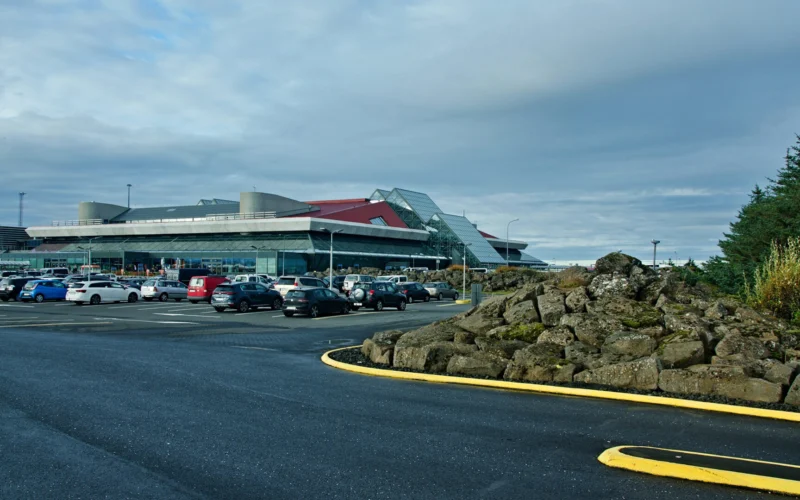
Keflavik Airport (KEF) at a glance
Keflavík International (KEF) is an entire country's gateway and a hub for two continents at once: 8.3 million passengers in 2024, more than twenty times Iceland's population passing through a single terminal on a lava plain 50 kilometers from Reykjavík. Built as a US military airfield in 1943, it now hosts Icelandair's mid-Atlantic wave system, where morning arrivals from North America meet afternoon departures to Europe.
No major airport lives closer to raw geology: the Sundhnúkur volcanic eruptions of recent years flared within sight of the runways, testing contingency plans without ever closing the airport, while Iceland's tourism economy, which Keflavík effectively meters, held its breath. Operator Isavia's expansion program is steadily widening the terminal to match traffic that has multiplied fivefold since 2010.
Hub & base airlines
| Airline | Role | Terminal |
|---|---|---|
| Icelandair | Home hub, transatlantic wave system | Leifur Eiru00edksson Terminal |
Terminals & infrastructure
Everything runs through the single Leifur Eiríksson Terminal, expanded in phases by Isavia as traffic quintupled since 2010, with two intersecting runways built to military dimensions in the 1940s. The airport's connection banks are timed for the mid-Atlantic model: North American red-eyes arrive at dawn, European departures follow, and the pattern reverses in the afternoon.Full specifications
Frequently asked questions
8.3 million passengers in 2024, the second-busiest year in its history, remarkable throughput for a country of under 400,000 people.
Iceland sits halfway between Europe and North America, so Icelandair banks connecting waves over Keflavík, often with free multi-day stopovers that feed the country's tourism economy.
The Sundhnúkur eruptions occurred within sight of Keflavík but never closed it; operations continued under contingency planning while nearby Grindavík was evacuated.