


Captain George Kamal is preparing to leave Kenya Airways on September 30, 2026, but he insists the airline’s turnaround strategy does not depend on who occupies the chief executive’s office.
“It doesn’t depend on me, or doesn’t depend on anyone,” Kamal, who also chairs the African Airlines Association (AFRAA), told AeroTime during the Aviation Africa Summit in Nairobi on September 9 and 10, 2026. “It depends on the process we have in place.”
Kenya Airways announced Kamal’s resignation on September 1, 2026, citing personal reasons, less than nine months after he moved from Chief Operating Officer to Acting Group Managing Director and CEO.
Kamal said he made the decision in July 2026 so that he could support his mother through an illness. He intends to continue working and stressed that any announcement of a new position should not be interpreted as the reason for his departure.
“I cannot afford to sit home,” he said.
The airline’s board appointed Company Secretary Habil Waswani as acting CEO effective September 15, while it searches for a permanent successor.
Kenya Airways targets 60 aircraft by 2032
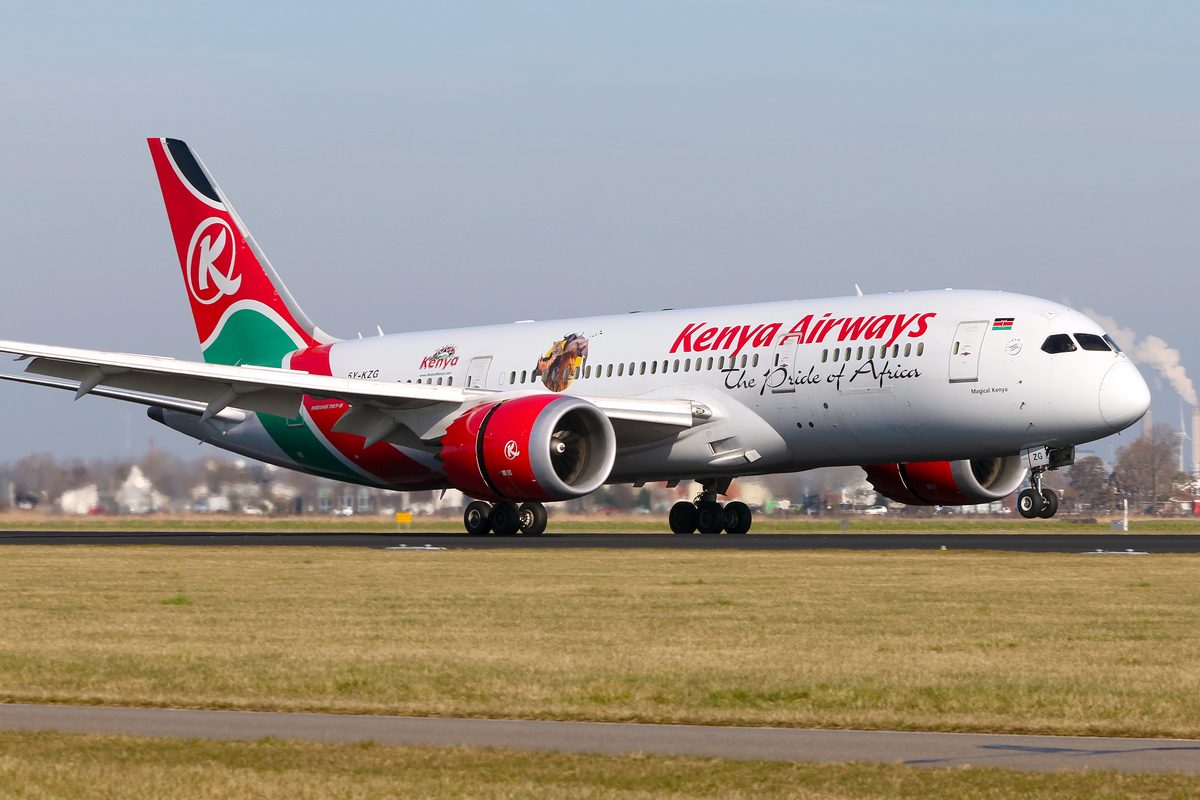
At the center of Kamal’s confidence in the transition is Project Kifaru, Kenya Airways’ turnaround program, now in its second iteration.
The airline is approaching the end of a two-and-a-half-year stabilization phase, with approximately six months remaining. Its immediate priority is to return grounded aircraft to service before pursuing fleet expansion.
“We cannot stay in this phase forever,” Kamal said.
The next phase envisages expanding the fleet to 60 aircraft by 2032, followed by further additions through 2035.
Returning aircraft to service remains a pressing challenge. Engine maintenance delays kept three of Kenya Airways’ nine Boeing 787-8 Dreamliners out of operation for extended periods in 2025, contributing to the airline’s return to losses.
The financial pressure continued into 2026. On August 25, Kenya Airways reported a pre-tax loss of KSh15.92 billion (approximately $123 million) for the first half of the year, compared with KSh12.17 billion in the corresponding period of 2025. The airline cited higher fuel costs and spare parts shortages.
Kamal also confirmed that onboard Wi-Fi remains part of the carrier’s plans. Kenya Airways is targeting a launch in the second quarter, although he did not specify the year.
The service would be free for passengers, with advertising intended to cover the cost. Kamal cautioned that implementation dates could shift depending on external developments, including the geopolitical situation in the Gulf.
“It’s still part of the strategy we have,” he said.
Why Kamal wants African airlines to cooperate, not compete
Beyond Kenya Airways’ own recovery, Kamal identified fragmentation as one of the biggest obstacles facing African aviation.
Connections between parts of the continent remain so inefficient that traveling from North Africa to Kenya can take longer than flying from Nairobi to the United States, he said. In some cases, neighboring countries separated by an 11- or 12-hour drive require an air journey of 21 hours.
For Kamal, the solution is closer commercial cooperation between African airlines.
“We are not here to compete with each other. We are here to collaborate,” he said. “I don’t have an aircraft to cover all the 54 countries of Africa.”
He argued that airlines can extend their networks through codeshare agreements and block-space arrangements, purchasing capacity on one another’s flights without having to deploy additional aircraft.
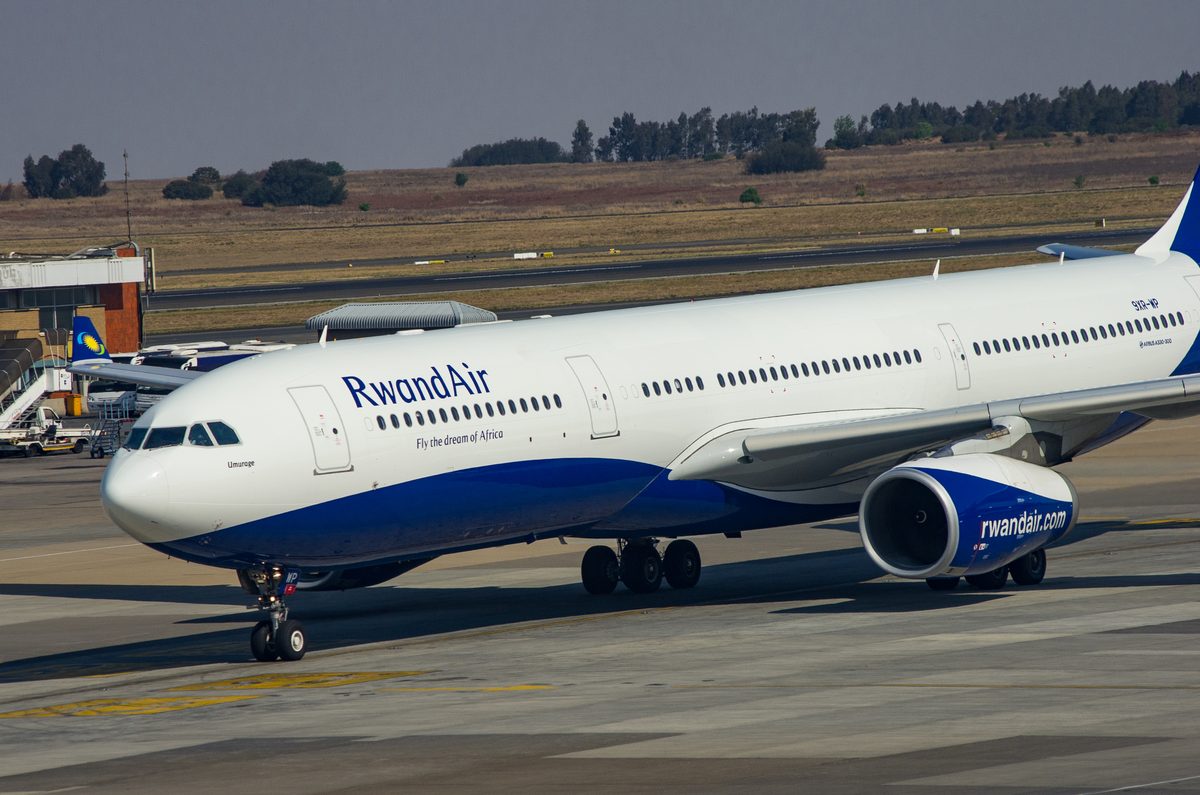
As an example, he cited an agreement with RwandAir reached during the Aviation Africa Summit. According to Kamal, the two airlines agreed to extend their respective codes to destinations beyond their hubs, opening up additional connections across their networks.
Kenya Airways has pursued similar arrangements with international partners, including a codeshare agreement with Qatar Airways launched in October 2025.
Different African hubs, different markets
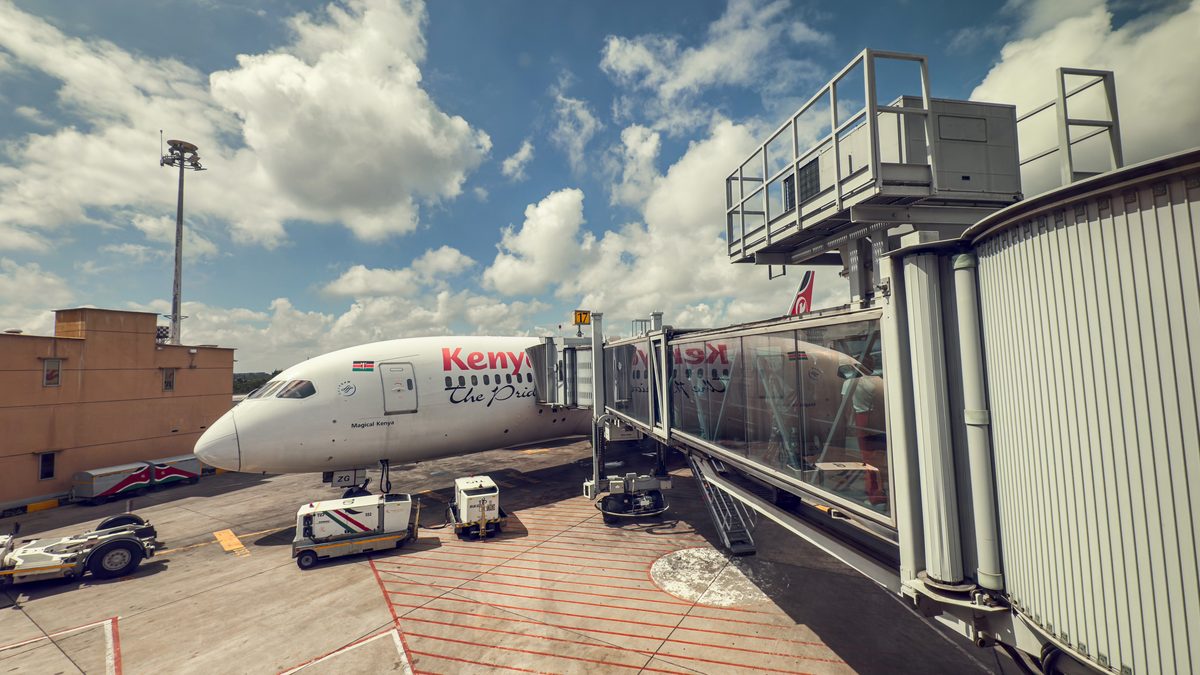
Kamal also challenged the assumption that East Africa’s major airline hubs must compete for the same passengers.
He pointed to differences in their traffic profiles. Ethiopian Airlines relies more heavily on connecting passengers through Addis Ababa (ADD), while Nairobi’s Jomo Kenyatta International Airport (NBO) has a more balanced mix of connecting and point-to-point traffic. RwandAir, meanwhile, operates from a landlocked market with different traffic flows.
Kenya’s particular advantage, Kamal argued, lies in its combination of maritime, road and air connections, creating opportunities for multimodal freight transport alongside passenger services.
He noted that Kenya Airways already cooperates with Ethiopian Airlines on cargo.
“Everyone can win,” he said.
Time, cost and certainty: three priorities for African aviation
Asked what African aviation needs to get right over the next five years, Kamal identified three priorities: time, cost and certainty.
Time refers to the administrative processes that determine whether airlines can launch and sell flights. Landing permits and airport slots must be granted sufficiently early for carriers to put tickets on sale and build demand.
Cost means reducing the financial burden on passengers, particularly by removing taxes, levies and passenger service charges on travel between African countries.
Certainty, meanwhile, means ensuring that airlines can rely on commercial agreements and ground-handling arrangements when operating across national borders.
Kamal argued that lower fares could also unlock substantial demand from passengers who have never flown before.
He cited a Boeing 777 flight to Mombasa (MBA) for which tickets were sold at KSh6,600 (approximately $51), close to the price of a train ticket. The aircraft filled with passengers who had previously never traveled by air, he said.
For Kamal, the example illustrates how more affordable air travel could expand the market rather than simply redistribute passengers between existing carriers.
Although he is leaving Kenya Airways, Kamal will continue serving as AFRAA chairman, a position from which he intends to promote closer cooperation and improved connectivity across the continent.
“I am standing for it, and I will advocate for it,” he said.