


Kenya Airways has emerged from one of the most challenging periods in its history with a remarkable turnaround for the company’s fortunes.
In 2024, the airline posted a net profit of 5.4 billion Kenyan Shillings (approximately US$42 million), its first profit in over a decade, marking a dramatic recovery following consecutive losses. This transformation, driven by the so-called Project Kifaru, has shifted the focus to operational excellence, diversification of revenue streams, and rigorous cost management.
With the aim of leaving the crisis years behind, Kenya Airways has embarked on a five-year fleet expansion strategy aimed at increasing its aircraft count from 34 to 59 planes by 2032. The carrier has also announced plans to raise around US$500 million to fund future growth. In December 2025, Kenya Airways also announced it had requested governmental authorization to operate a small secondary hub outside of its home country, at Kotoka International Airport in Accra (ACC), Ghana, basing there of its Embraer E190 aircraft.
In addition to its goal of becoming an airline of note in Africa, Kenya Airways also plans to diversify by developing other revenue streams, such as its in-house maintenance, repair and overhaul (MRO) and training capabilities, as well as boosting its air cargo business.
December 2025 was a period of change for Kenya Airways. CEO Allan Kilavuka stepped down after six years at the helm, during which he presided over the airline’s turnaround. George Kamal, who held the role of Chief Operating Officer since 2023, was subsequently appointed acting CEO of Kenya Airways.
Kamal is an industry veteran, who, in addition to years of experience as a commercial pilot, has held senior leadership roles at airlines such as Etihad Airways, Air Arabia, and Iraqi Airways.
A few days before the leadership change, AeroTime met with Kamal and his team in Nairobi to learn more about the new acting CEO’s vision for Kenya Airways. We also had an opportunity to take a close look at a carrier that, true to its motto of “The Pride of Africa”, aims to serve as one of the continent’s leading airlines.
Kamal began our conversation by highlighting the strong international orientation of Kenya Airways and the role it plays in connecting Africa to the rest of the world.
“Kenya Airways is one of the anchor airlines in Africa and one of the oldest in the region,” he said. “We started as a regional airline for Africa. However, we have managed to spread our wings. We’re part of SkyTeam and are currently working on more routes.”
“We currently serve more than 45 destinations in Africa, as well as Paris (CDG), London, flying daily both to Heathrow (LHR) and Gatwick (LGW), plus Amsterdam, New York (JFK). The European routes are important for cargo,” he explained. “The flower business, for example, is booming, not only towards Amsterdam, but other destinations as well.
“We also fly to the Middle East, to Dubai (DXB) and Sharjah (SHJ), the latter only for cargo. in Asia we fly to Mumbai (BOM), Guangzhou (CAN), Bangkok (BKK)[…] and we’re looking to expand further.”
Kamal underlined the importance of ease of access in cementing Kenya’s role as hub for the region and beyond.
“Our goal, our mission, and vision is to connect people and markets, and to make it viable for everyone to connect. We don’t want travel to be only for those that have lots of money,” he said. “We also want the middle or lower middle class to be able to travel, as well. You want them to be onboard our aircraft, not on the road. So, we have flights to most of countries around Africa.”
“The country [Kenya] is visa free for all Africans, and for many other nationalities it’s visa on arrival. Others have the eTA [Electronic Travel Authorization – ed. note], you just go online and book it, and you get your visa within the same day, or the next, and you can come in. This opened up a number of possibilities. Last year [2024] we carried 5.2 million passengers. It was a record year for us.”
Leaving the crisis behind
Network expansion is just one aspect of a more comprehensive transformation project called Kifaru, which was launched in 2020 and is now in its second iteration.
Referring to the airline’s recent downsizing, Kamal said: “Project Kifaru is based on growth. We are now moving forward aggressively in the market. We had to shrink first to be able to grow.”
2024 was also a pivotal year for Kenya Airways, as it managed to return a profit (5.4 billion Kenyan Shillings, approximately US$42 million) for the first time in a decade.
Kamal also talked proudly about how the airline had posted a positive EBITDAR of 14.5 billion Kenyan Shillings (approximately US$112.5 million) for 2024, the carrier’s best results since 2012.
“The good thing about EBITDAR, with an R for ‘rental,’ is that it gives a measure of the resilience of the company, of the health of its operational business,” he said. “So, we’ve done a good job!”
The positive results of 2024, however, were somehow countered by a loss of 12.2 billion Kenyan Shillings (US$94.6 million) in the first half of 2025.
Kamal attributed the drop to to the temporary grounding of three of its nine B787s, which resulted in a 14% drop in passenger numbers compared to the same period the year before. The grounding is related to the GEnx-1B engine issues, which have impacted Dreamliner operators globally.
“Our [B787] aircraft are all the same vintage so, they’re almost at the same number of cycles, and they all needed to go to the shop more or less at the same time,” he explained. “The major issue was turnaround time. Due to the unavailability of spares the engines stayed up to 120 days on the ground, instead of the usual 60 to 70 days. Add to this, a single engine costs US$14 million. It’s a cash drain, as well. You have your assets on the ground, while you are incurring a fixed cost, like rentals, which don’t stop running.”
At the time of our conversation, Kenya Airways had managed to reactivate one of the three affected Dreamliners, with Kamal expecting the other two to follow suit as soon as spare engines could be secured.
Further fleet plans
Interestingly, the airline is also seeking to retrieve a Boeing 777 currently on lease to Turkish Airlines.
“We want it back to support the network,” he explained. “To have more capacity, for example, when a flight is cancelled and we need a spare aircraft.”
Kamal, who added that, given that the airline will add a new aircraft type, it may as well get a second B777.
“It does add a bit of complexity, that’s why we’re looking to lease another B777. It depends on market availability,” he added, before going on to reveal that the airline may use these larger aircraft to add capacity on its London route. “We are also looking at a number of routes for the 777. We’re looking at a few routes. London, for example, because the demand for business class is stronger, and [the aircraft] it’s got flatbeds, and it can take more passengers.”
One might be used for Heathrow, he said. But this is yet to be confirmed.
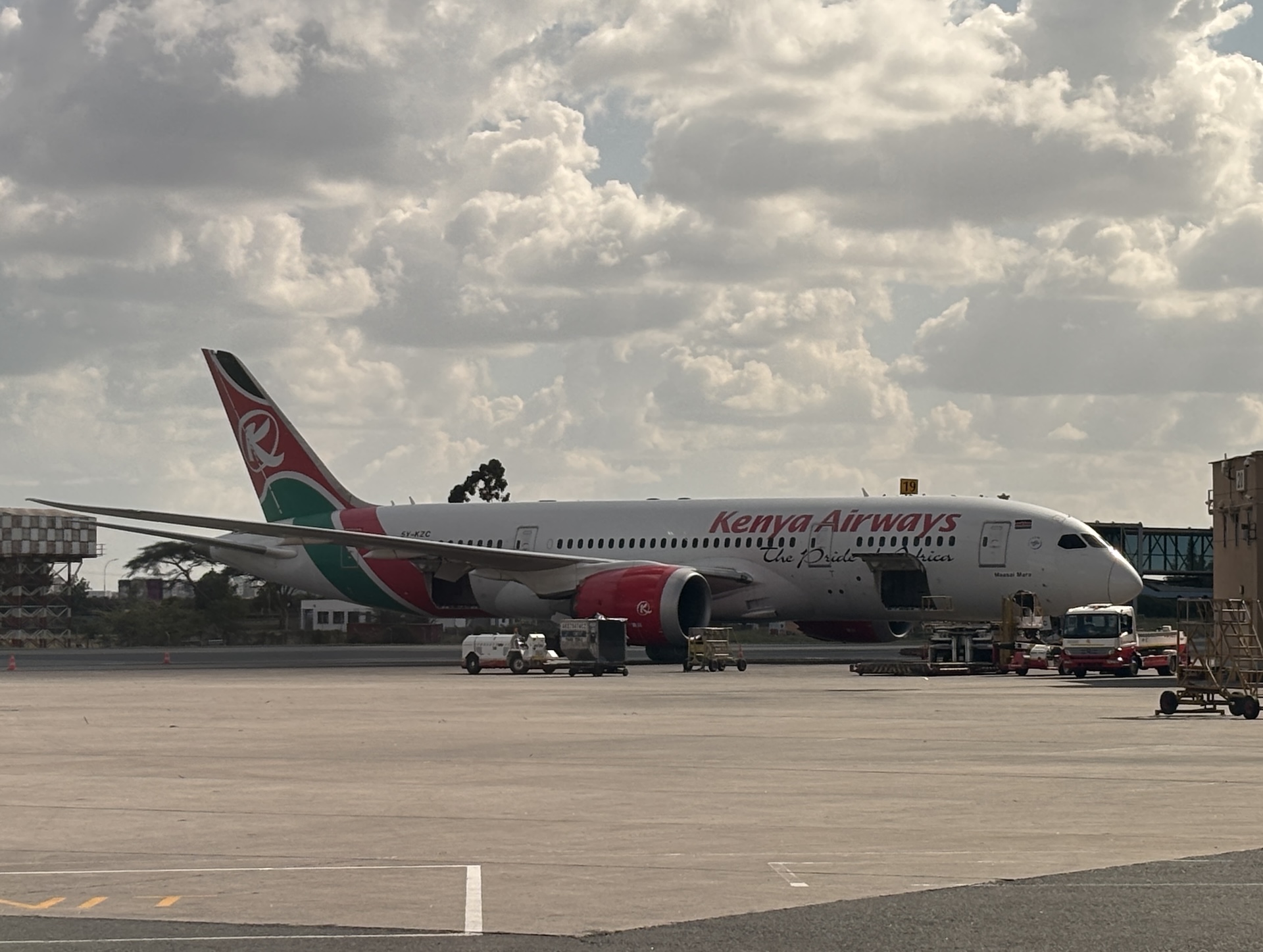
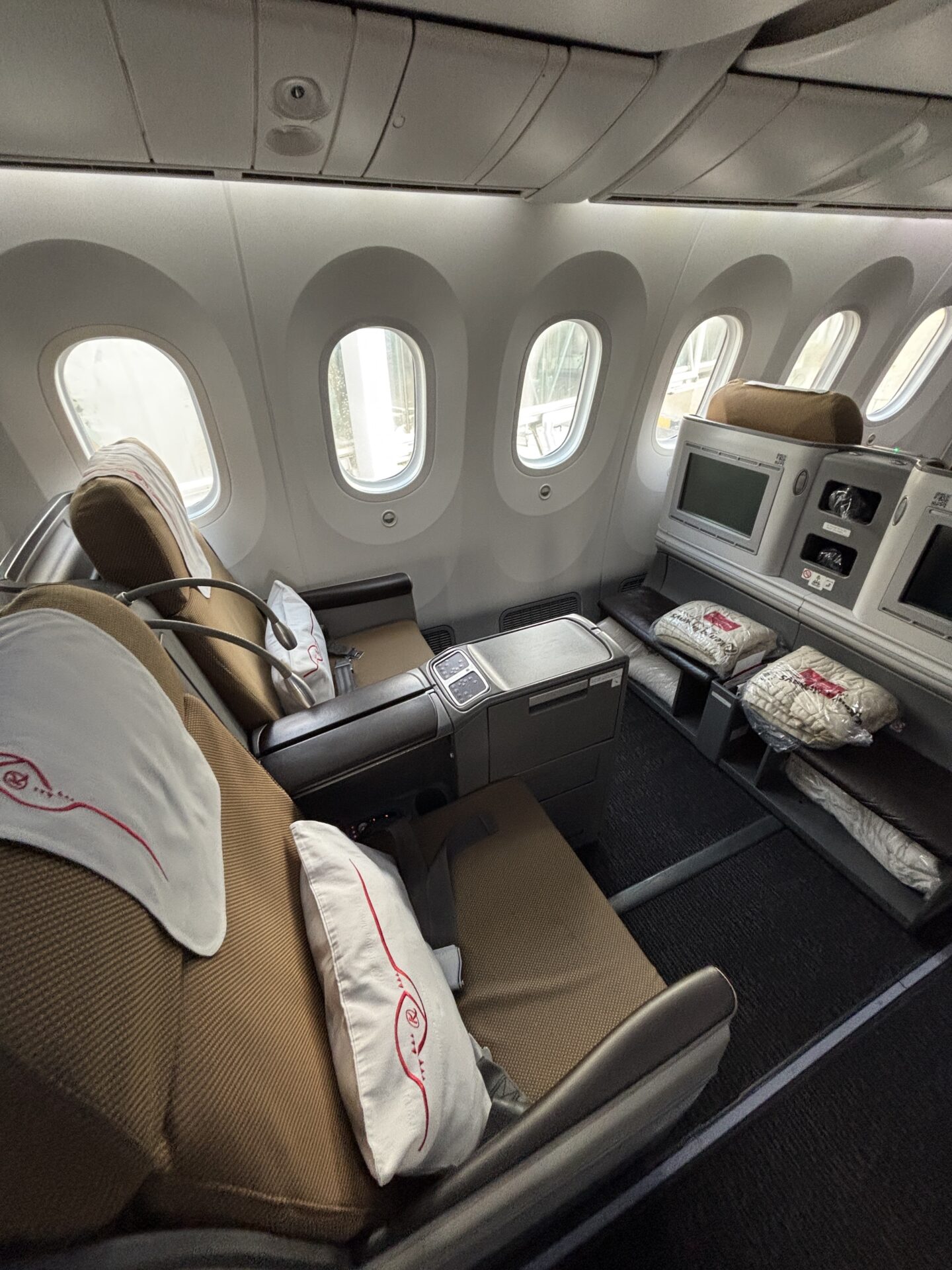
Kamal shared that Kenya Airways is also looking at expanding its long-haul network as soon as all the Dreamliners and the B777 become available. A second destination in Asia and a potential new US destination are also currently being considered, although the bulk of the expansion will take place in Africa.
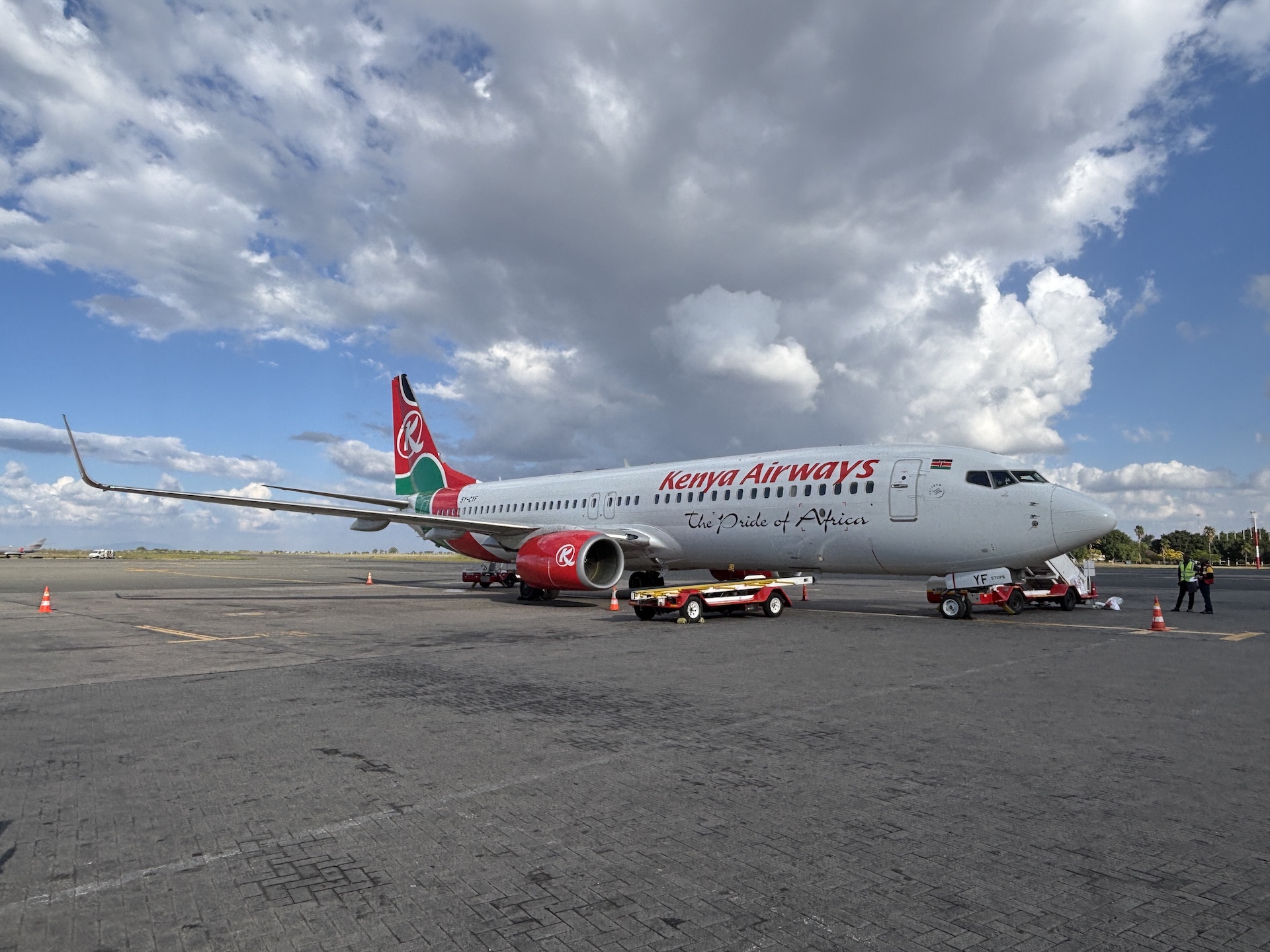
Kenya Airways also plans to readjust its narrowbody fleet by disposing of most of its Embraers and upgauging by adding Boeing 737s. Shortly after this interview was conducted, Kenya Airways also confirmed it was considering using three of its E190s to set up a secondary hub in Accra, Ghana, for operations in West Africa.
“We sold four Embraers last year, and we managed to get one B737-800,” he said. “Now, for next year [2026], we are looking to add two leased B737-800s and three B737 MAX 8 aircraft.”
“What we want to do, slowly throughout the years, is start phasing out the Embraers and replace them with a bigger aircraft,” he continued. “Don’t get me wrong, Embraers are not bad, they are very good aircraft, they are very good as route openers.”
Kamal then revealed the surprising reason behind the decision to switch to larger aircraft.
“In Africa, people fly with a lot of luggage so when you come into Nairobi, if you want to connect to any of our short-haul destinations served by Embraers, what happens is the following: I can take either 55 passengers with all their luggage or 98 passengers, but with only one piece of luggage plus hand luggage. So, it leaves a lot of packages and baggage behind, and it significantly impacts our customers, which then start complaining.”
At this point in the conversation, after AeroTime mentioned the piles of luggage we had seen ready for check-in at the Kenya Airways counter at Dubai International Airport (DXB) when boarding for Nairobi. Kamal explained that, depending on the fare or the loyalty program status, Kenya Airways allows travelers to carry up to three bags.
“It’s good for the passengers, but this becomes an issue if you need to connect to a shorter haul flight operated by the Embraer aircraft,” he said, explaining that this can lead to situations in which not all bags can be loaded onto the aircraft.
“Even if the bag doesn’t get lost, it’s a pain,” he continued. “You can’t just book a ticket knowing your bag is not going to be there when you land. So, we decided to go bigger. That’s why we’re looking for 737s, to cover routes now flown by Embraers, to use them on those routes that are now mature.
“But we will keep four Embraers, which are on lease now,” he added, “to be route openers and use them on thin routes.”
Over the long-term, Kenya Airways is looking to expand its fleet even further. The number of aircraft inducted into the fleet may actually be larger than the difference, since the airline is also looking to replace the Embraers and some of its older B737s.
“But this depends on the market, which is very volatile,” Kamal explained. “When you look for aircraft today, it’s very difficult. We must be careful. So, the fleet plan evolves with the market. As a company, we have to be very agile and update our plans based on market availability.
“We have to move fast to try to get as many aircraft as we can. That’s what we were doing today.”
Strategic partnerships
Kenya Airways also aims to expand its international footprint through partnerships with other carriers.
In addition to its well-established SkyTeam membership (KLM is actually one of the airline’s long-standing shareholders with 7% of its capital), Kenya Airways signed a codeshare agreement with Qatar Airways in 2025 on routes between the two respective countries. The two airlines also agreed to exchange expertise and cooperate in areas such as training and ground handling.
As a result of this deal, Qatar Airways operates three daily codeshare flights between Doha (DOH) and Nairobi and Kenya Airways does the same on its flight between Mombasa (MBA) and the Qatari capital.
Remarkably, both carriers are part of rival alliances. Kenya Airways is a SkyTeam member while Qatar Airways is part of oneworld. Kamal explained that Kenya Airways sought and obtained approval from SkyTeam for this partnership.
“My passengers used to be able to fly to 45 destinations. Today with Qatar Airways, we are much more open, particularly when it comes to flying eastwards to China and Asia on routes we could not support on our own.”
“This is a major problem in Africa,” he continued. “If every airline goes alone, how much can you grow your fleet? Where can you go? To every country in the world? You cannot. So, our goal is to get our passengers from Nairobi to everywhere in the world with the minimum cost for both them and us.”
He added: “We think Qatar Airways is a good carrier and we had the opportunity to work with them. We’re open to everyone.”
Qatar Airways also has close links to another East African airline, RwandAir. However, Kamal does not see any issues with this.
“We actually see them as partners,” he said. “For example, we do maintenance for RwandAir. We are competing, but it’s actually more about complementing each other.”
Developments in air cargo
During our conversation with Kamal, we also touched upon another important component of Kenya Airways’ business: air cargo.
The airline operates its own dedicated cargo center at Jomo Kenyatta International Airport, which handles freight carried on its own aircraft but also for third party operators and other logistics firms.
The center has two separate facilities. One handles general cargo, ranging from electronics and spare parts to minerals, such as gemstones. Within this facility there is a specific IATA-certified temperature-controlled section which can handle up to 340 tons of pharmaceuticals per week.


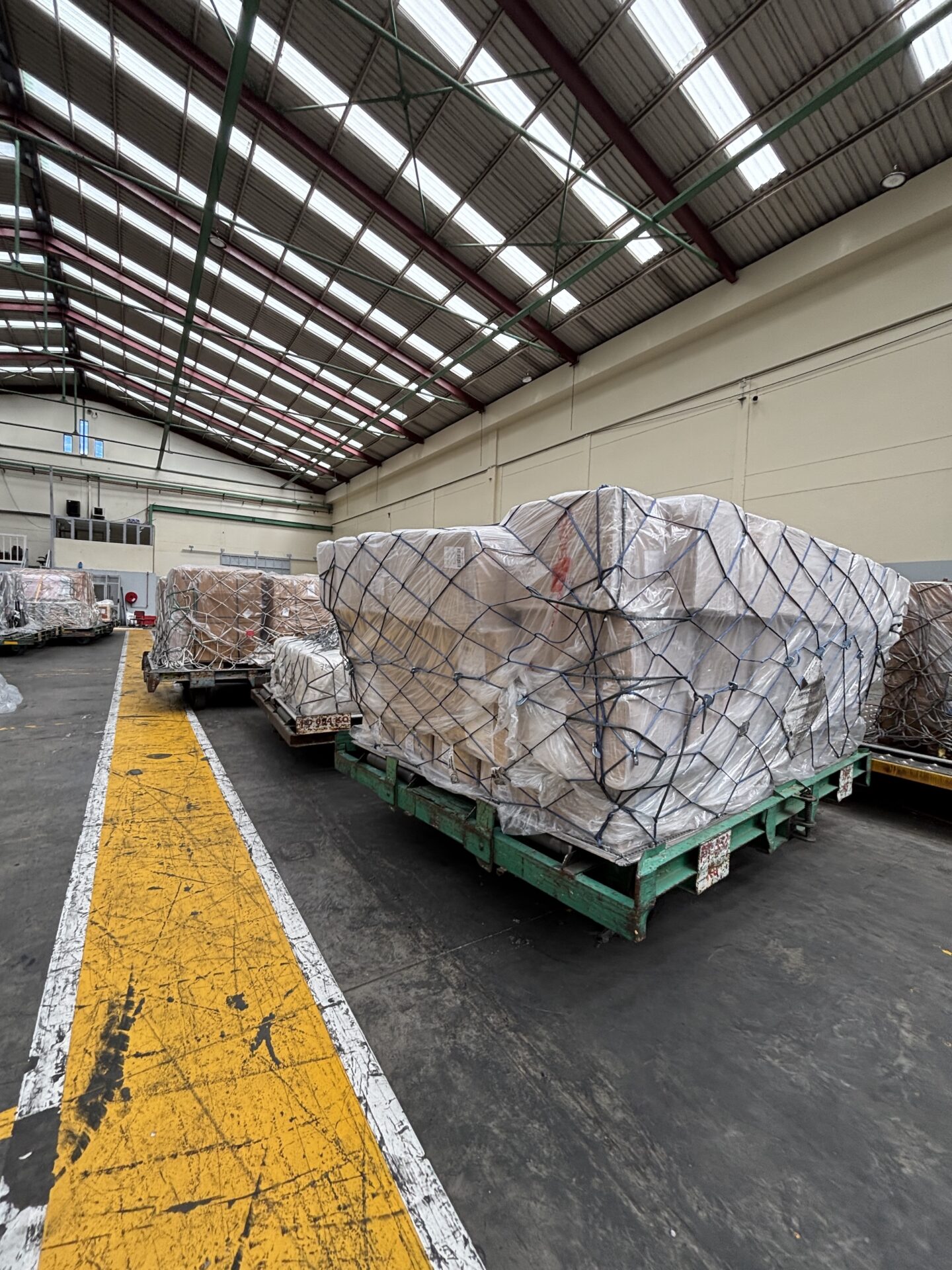
The other is a dedicated building that handles perishables, a major currency-earner for the Kenyan economy. This facility, which AeroTime also visited, is always kept at temperatures of between 8 and 2 C and handles some 420 tons of fresh produce per day. Every evening lines of trucks deliver fresh produce to be loaded onto waiting aircraft, which then depart mostly for Europe and the Middle East throughout the night and early morning. Some Amsterdam-bound passenger flights, for example, may carry some 15 tons of cut flowers in their bellies.
Kamal explained that another reason for Kenya Airways’ desire to obtain B777s is the additional belly cargo capacity they would bring.
“Cargo is extremely important for us. Today, we only have about 11% of market share at our own hub; that is, of the cargo that goes in and out of Nairobi. This is with four dedicated cargo aircraft, two B737-800SF and two B737-300 Classics, plus the belly capacity in the rest of the fleet. So, what are we looking for? The long range, that’s coming up in 2026. We are aiming to reach up to 30% of market share.”
MRO excellence
Kenya Airways has also been developing a diversified portfolio of ground-based businesses centered around its base at Jomo Kenyatta International Airport in Nairobi. These ventures not only support the airline’s own operations but also generate revenue by serving third-party customers across the African continent and beyond.
One of the crown jewels of this ecosystem, which extends far beyond traditional airline operations, is the MRO operations center, which has established the airline as a continental leader in this field.
The carrier takes particular pride in its MRO center having become not only a carrier of note in Africa, but also in having achieved some world-class performance metrics that rival the best facilities.
Kamal shared that the airline has achieved remarkably high schedule reliability rates, some of the highest in the world for aircraft types like the B737 and the E190 and maintains one of the highest aircraft utilization rates worldwide.
Kenya Airways’ EASA Part 145 certified MRO facility is capable of performing comprehensive maintenance for the entire Kenya Airways fleet, including Boeing 737s, 787 Dreamliners, and Embraer E190s, performing all procedures up to C-check level. What’s more, its capabilities extend beyond its own operations, with the facility serving as the only approved service center for E-Jets in Africa. According to Kenya Airways’ MRO managers, this strategic capability is one the airline intends to maintain even as it reduces its own Embraer fleet.
Looking ahead, Kenya Airways plans to expand its MRO operations with the construction of a new, much larger greenfield facility. This will also improve integration with regular airport operations, further cementing the airline’s position as Africa’s premier aviation maintenance provider.
Diversifying revenue streams
During our visit to Kenya Airways’ facilities in Nairobi, Kamal also guided AeroTime through the diverse ecosystem of businesses the airline is building on the ground. These encompass ground handling services at Nairobi Airport, which the airline provides for both its own operations and third-party carriers, to more unusual ventures in areas such as advanced air mobility (AAM), education, hospitality, and medical services and even bottled water.
Plans include developing a full-scale hospital for medical tourism, based on the airline’s existing aviation medical center, as well as the construction of a 300-room hotel with both airside and landside access, for which Kenya Airways is currently looking for investors.
The airline is no stranger to the hospitality industry. The five lounges it manages throughout the airport (three of which are based in the international terminal), are already revenue centers contributing to profitability. Recognizing this potential, Kamal explained that Kenya Airways is exploring opportunities to add even more lounges at strategic locations within the airport.


The airline has even ventured into the beverage industry with its own water brand KQuench, which is bottled within its premises and is onboard its flights and lounges as well to other airlines and retail supermarkets. Interestingly, Kenya Airways is also investing in a recycling plant to turn the discarded plastic bottles into fuel to power its ground support vehicles.


Another of Kenya Airways’ fully owned ventures, albeit of an entirely different sort, is Fahari Aviation, a subsidiary focused on drone operations and AAM.
Fahari Aviation is already bringing in revenue through its work in filming, aerial mapping, and agriculture, with its drone performing missions such as aerial seeding or crop spraying. Fahari is also the platform through which Kenya Airways is preparing for the electric vertical takeoff and landing (eVTOL) revolution that promises to transform urban transportation across traffic-clogged African cities.
Training excellence at the Pride Center
Kenya Airways is also taking the training of its staff, whether pilots, crews, or technicians, into its own hands.
Its training activities are concentrated in the Pride Center, a modern campus located near the airport. This facility trains the airline’s crews and pilots while offering broader educational programs to the aviation community. As an Approved Training Organization (ATO), the center operates simulators for the Boeing 737NG and Dash 8 Q400, with plans to add Boeing 737 MAX simulators in the future.


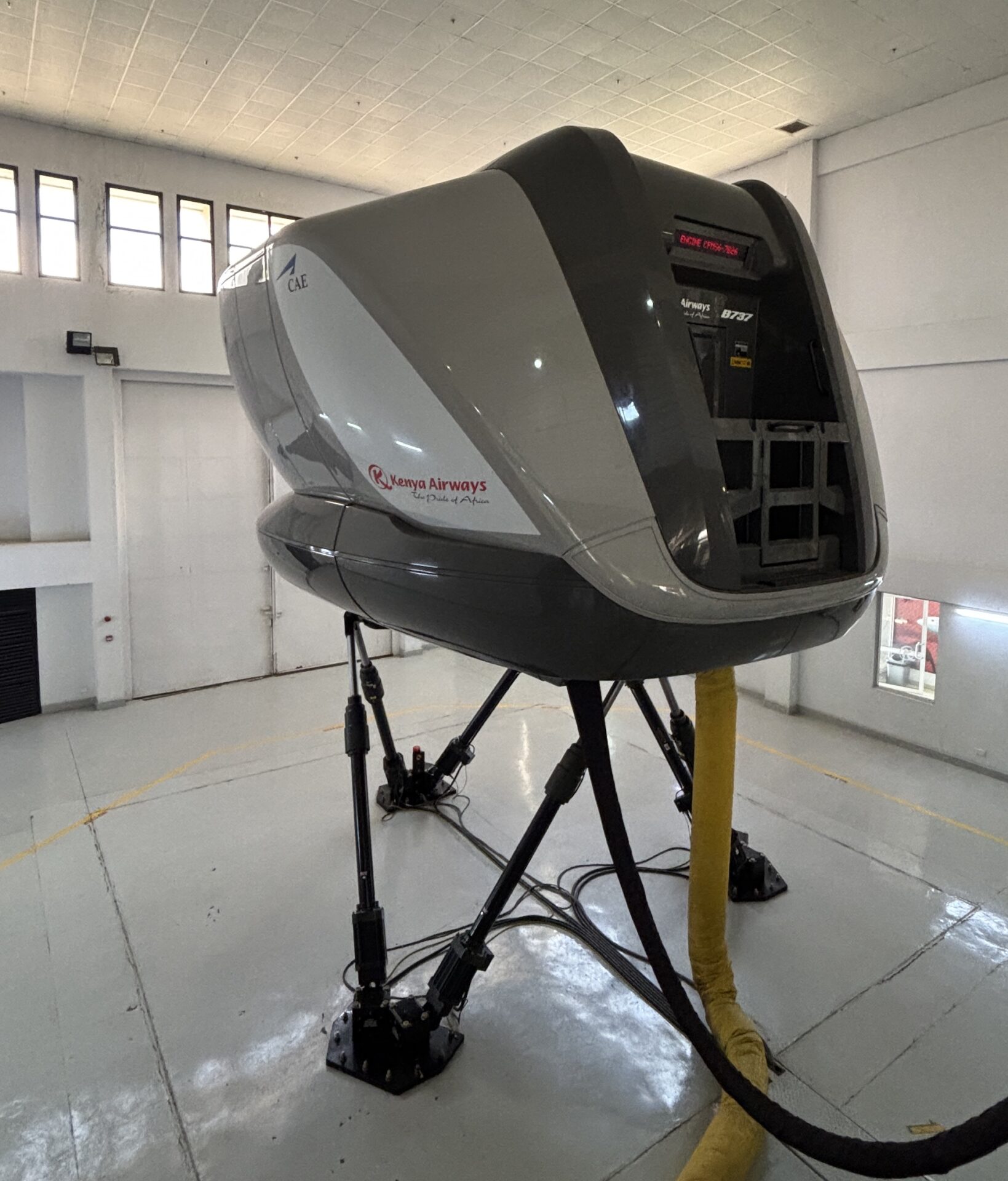
Keny Airways’ vision, as explained by Kamal, is to broaden the scope of the Pride Center to be able to offer a wider range of courses. With this aim, Kenya Airways signed a deal with London Metropolitan University to establish the university’s first international campus in Kenya.
Through this partnership Kenya Airways will offer undergraduate and graduate degrees in aviation management, engineering, as well as courses on artificial intelligence (AI) applications. Three cohorts of Kenya Airways staff are already enrolled, and plans are in place to expand these programs to external students.
“We have left the crisis behind, and we are now moving forward,” Kamal reiterated, underlining the optimistic outlook with which Kenya Airways is now facing its future.
5 comments
I am impressed by the development of Kenya Airways and its associated activities.
This is wonderful. Bright future for THE PRIDE OF AFRICA. Once KQ Always KQ.
Impressive! KQ steadily regaining it’s past glory.
This is such an amazing plan, hope for a good future. As an ex Pride star, I hope for more opportunities in cabin crew sector.
I’m a shareholder in this company and in the previous AGM we were promised that KQ will be providing quarterly financial statements but they have not done so please give quarterly results so that we can keep our hopes alive in this company.