
Chicago O'Hare (ORD)
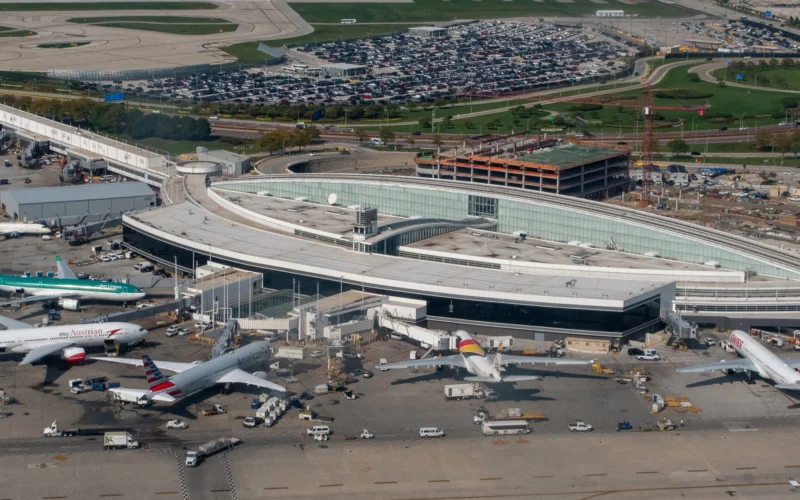
Chicago O'Hare (ORD) at a glance
Chicago O'Hare is the world's busiest airport by aircraft movements, reclaiming the number one spot in 2025 with 84.8 million passengers flowing through the rare arrangement of two competing hub carriers: United Airlines, whose global headquarters sits downtown, at Terminal 1, and American Airlines at Terminal 3. Eight runways, more than any other airport, make the operation possible.
Once notorious for delays, O'Hare spent two decades untangling its crossing runways into parallel ones, and is now midway through O'Hare 21, the multibillion-dollar programme whose centerpiece Global Terminal will replace Terminal 2 and let international passengers connect without changing buildings, defending Chicago's role as America's inland gateway.
Hub & base airlines
| Airline | Role | Terminal |
|---|---|---|
| United Airlines | Primary hub and home base | Terminal 1 |
| American Airlines | Hub | Terminal 3 |
Terminals & infrastructure
O'Hare's eight runways, the most of any airport in the world, were reconfigured over two decades into six parallels that let it lead the planet in aircraft movements. United hubs at Terminal 1 and American at Terminal 3, a rare dual-hub arrangement, and the O'Hare 21 programme is replacing Terminal 2 with the O'Hare Global Terminal to bring international connections into the heart of the airport.Full specifications
Frequently asked questions
Its eight runways, six of them parallel, are the most of any airport and the product of a two-decade modernization that untangled the old crossing layout, making O'Hare the world leader in aircraft movements.
Both United, at Terminal 1, and American, at Terminal 3, one of the only major airports where two rival network carriers operate full hubs.
Chicago's multibillion-dollar expansion, centered on the O'Hare Global Terminal replacing Terminal 2, designed to unify domestic and international connections.