
London Heathrow (LHR)
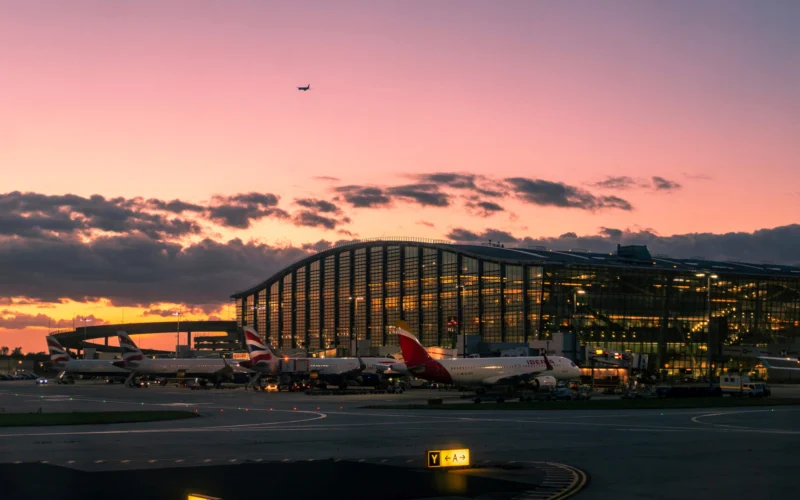
London Heathrow (LHR) at a glance
London Heathrow is Europe's busiest airport and the world's second-busiest for international passengers, handling 84.5 million travelers in 2025 on just two runways that operate at more than 99% of capacity. Opened in 1946 on the site of a wartime airfield, it has grown into the United Kingdom's front door, dominated by British Airways from its Terminal 5 fortress.
Capacity is Heathrow's defining story: with no room to grow, slots trade for millions and every disruption cascades, as a 2025 substation fire that closed the airport for a day demonstrated. The third-runway plan, revived in 2025 with UK government backing, promises relief in the 2030s but faces the same environmental and political battles that have stalled it for decades.
Hub & base airlines
| Airline | Role | Terminal |
|---|---|---|
| British Airways | Primary hub, about half of all slots | Terminals 5 and 3 |
| Virgin Atlantic | Hub | Terminal 3 |
Terminals & infrastructure
Heathrow's four terminals sit between two parallel runways that operate at over 99% capacity, the constraint that defines everything about the airport. Terminal 5 is British Airways' home, Terminal 3 hosts Virgin Atlantic and much of oneworld, and the Elizabeth line now links all terminals directly to central London. A third runway plan, resubmitted in 2025 with government backing, would be the biggest expansion in the airport's history.Full specifications
Frequently asked questions
It operates just two runways at over 99% capacity, the busiest two-runway operation in the world, so there is no slack for growth or disruption.
British Airways holds about half of all slots, operating from Terminals 5 and 3, and Virgin Atlantic hubs at Terminal 3.
A revived expansion plan was submitted in 2025 with UK government support, but planning, legal and environmental hurdles mean any new runway is unlikely to open before the mid-2030s.