Los Angeles International (LAX)
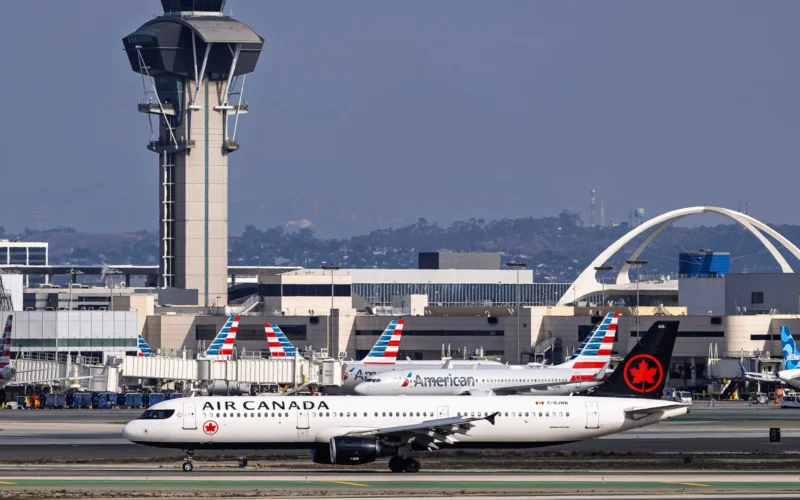
Los Angeles International (LAX) at a glance
Los Angeles International Airport is the principal gateway between the United States and the Pacific, one of the world's ten busiest airports with 76.6 million passengers in 2024 and the rare field where Delta, American and United all operate hubs, alongside Alaska and Southwest bases. Its nine-terminal horseshoe has been both icon and bottleneck since the jet age.
LAX is completing the largest airport modernization in US history, some $30 billion of works crowned in 2026 by the Automated People Mover that finally links terminals to Metro rail and a consolidated car rental center, ending the airport's infamous traffic loop just in time for the 2026 World Cup and the 2028 Los Angeles Olympics.
Hub & base airlines
| Airline | Role | Terminal |
|---|---|---|
| Delta Air Lines | Hub | Terminals 2 and 3 |
| American Airlines | Hub | Terminals 4 and 5 |
| United Airlines | Hub | Terminals 7 and 8 |
Terminals & infrastructure
LAX's nine terminals form the famous horseshoe around the Theme Building, with the Tom Bradley International Terminal hosting most long-haul carriers and all three US majors running hubs on the property. The $30 billion modernization crescendos in 2026 with the Automated People Mover finally connecting terminals to rail and a consolidated rent-a-car center, timed for the World Cup and the 2028 Olympics.Full specifications
Frequently asked questions
Uniquely among US airports, all three network majors, Delta, American and United, operate hubs there, joined by big Alaska and Southwest operations.
A $30 billion modernization delivers its centerpiece in 2026: the Automated People Mover train connecting the terminal loop to Metro rail and a new car rental hub, ahead of the World Cup and 2028 Olympics.
Geography and network mass make it the leading US gateway to Asia, Australia and the Pacific, with more trans-Pacific seats than any other mainland US airport.