
Tokyo Haneda (HND)
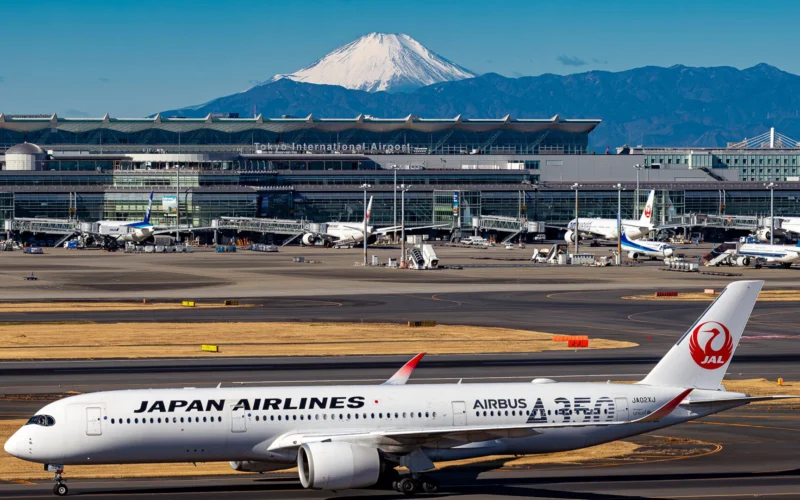
Tokyo Haneda (HND) at a glance
Tokyo Haneda, officially Tokyo International Airport, climbed to third-busiest airport in the world in 2025 with 91.7 million passengers, a milestone of Asia-Pacific's travel resurgence and Japan's record inbound tourism boom. Just 14 km from central Tokyo on the shore of Tokyo Bay, it pairs mega-hub scale with a convenience no rival of its size can match.
Haneda is the shared fortress of Japan's two great airlines, ANA and Japan Airlines, whose domestic shuttle networks and reopened long-haul routes make its four runways some of the most intensively scheduled in the world; Narita, an hour further out, handles the overflow. With slots effectively full, Haneda's growth is a game of aircraft size and precious new allocations.
Hub & base airlines
| Airline | Role | Terminal |
|---|---|---|
| ANA | Primary hub | Terminal 2 |
| Japan Airlines | Primary hub | Terminal 1 |
Terminals & infrastructure
Haneda's three terminals sit on Tokyo Bay landfill barely 30 minutes from the city center, the proximity that makes it the world's most convenient mega-airport and Japan's premium gateway. Four runways in a crossing layout handle a delicate mix of dense domestic shuttles and rebuilt long-haul flying, with slot allocations at Haneda among the most valuable in world aviation.Full specifications
Frequently asked questions
It sits just 14 km from central Tokyo, about 30 minutes by train or monorail, unheard-of proximity for an airport handling more than 90 million passengers.
Haneda is the close-in airport favored for domestic and premium international flights; Narita, 60 km out, handles much of the long-haul overflow and low-cost traffic.
Both ANA, at Terminal 2, and Japan Airlines, at Terminal 1, run their principal domestic and international hubs there.