

The latest review by the National Transportation Safety Board (NTSB) into the presence of drugs in the systems of fatally injured pilots in the US reveals that one in four tested positive for drugs deemed “potentially impairing”.
On May 14, 2026, the NTSB published the 2018–2022 Update to Drug Use Trends in Aviation, which covered civil aviation accidents between 2018 and 2022.
The report stated that 52.8% of fatally injured pilots tested positive for at least one drug of any type, while 27.7% tested positive for two or more.
The most frequently detected included cardiovascular medications, sedating antihistamines, nonsedating over-the-counter drugs, cholesterol-lowering medications, prostate or erectile dysfunction drugs and illicit drugs.
Perhaps more concerning, 28.6% of pilots who had been killed tested positive for drugs which have the potential to cause impairment.
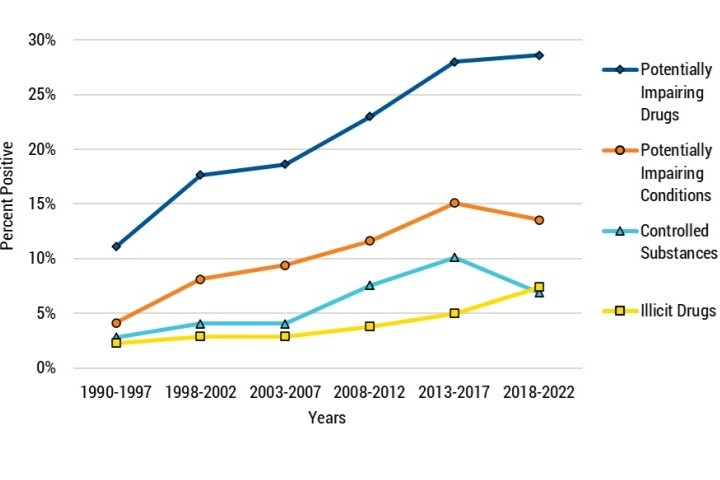
The sedating antihistamine medication diphenhydramine remains the most detected potentially impairing drug, following findings from previous studies covering 2013-2017 and 1990-2012.
Illicit drug detection increased to 7.4%, driven primarily by increases in delta-9-tetrahydrocannabinol (delta-9-THC), the primary psychoactive chemical in marijuana.
Other findings of note included the fact that drug presence was lower among pilots conducting Part 135 operations than among those operating in general aviation.
“The report emphasizes that the presence of drugs identified through toxicology testing does not necessarily indicate pilot impairment. Instead, the study documents trends in drug detection and provides context for understanding factors that may affect aviation safety,” the NTSB said.
During the five years between 2018 and 2022, 984 flying pilots were fatally injured in aviation accidents in the US. Of those, 930 pilots (94.5%) had available toxicology test results and were included in this research update.
“This research update showed a continued increase in overall drug presence among fatally injured pilots compared with the results of previous NTSB reports that examined the periods 2013–2017 and 1990–2012. Changes in drug test sensitivity and protocols may have contributed to some of the observed increases,” the NTSB added.
The report can be read in full on the NTSB website.
1 comment
It’s not surprising that Part 135 pilots have fewer fatal accidents than the non-commercial general aviation population. Random drug testing is a quick step to accountability among Part 135 pilots. Duh!