

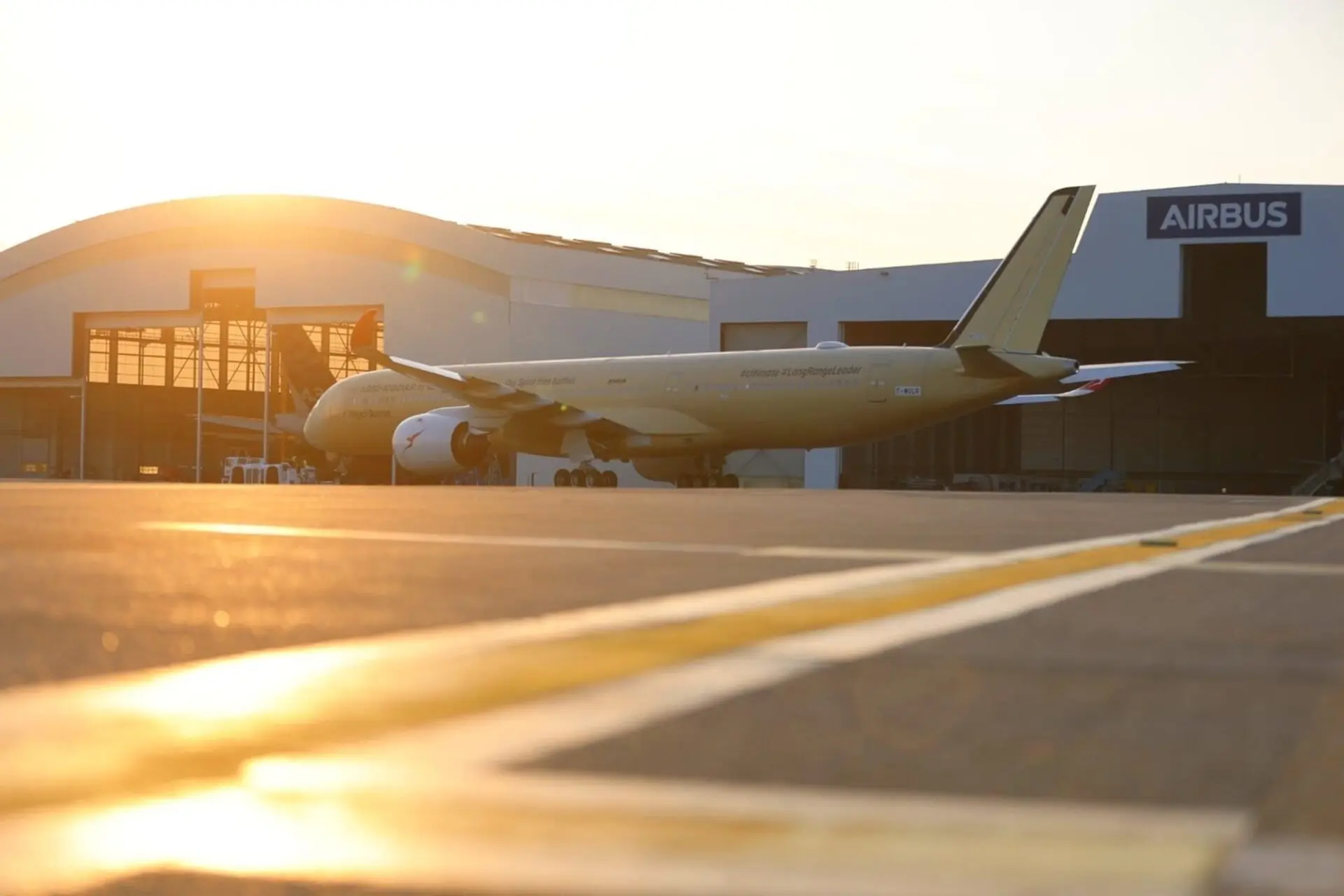
Airbus has completed a 24-hour long-endurance test flight of Qantas’ upcoming A350-1000ULR aircraft after landing back in Toulouse from Melbourne.
The A350-1000ULR departed Australia at 17:27 on July 27, 2026, flying transpacific over the US and Canada, and landing back in France on July 28, 2026, at 09:52.
According to Flightradar24 data, the marathon flight lasted 24 hours and 23 minutes, an incredible achievement for the Airbus and Qantas staff who have worked on Project Sunrise.
Separately, Airbus wrote in a social media post that the direct flight from Melbourne lasted 24 hours and 24 minutes, covering 12,460 nautical miles.
As over 120,000 people tracked the flight on Flightradar24 coming into land in France, the A350-1000ULR added to the nervous excitement with a quick go-around.
History made.
— Airbus (@Airbus) July 28, 2026
After a 12,460NM (23,075.92 km) / 24 hours 24 minutes direct flight from Melbourne 🇦🇺, the #A350-1000ULR arrives home in Toulouse 🇫🇷.
Watch the journey on @FlightRadar24: https://t.co/tzKbCjsfFM#Ultimate #LongRangeLeader pic.twitter.com/pTjoOuhqpb
The flight out to Melbourne Airport (MEL) left Toulouse-Blagnac Airport (TLS) on July 23, 2026, and landed the following day after a more than 19-hour excursion.
The test A350-1000ULR, currently registered F-WULR and named Vega, is the first of 12 that will eventually be delivered to Qantas. Handover of the first aircraft is scheduled for April 2027.
The aircraft have been designed with a rear center fuel tank, increasing its range by about 1,000 nautical miles.
Analysts and engineers at Airbus have been using the two test flights to examine a range of systems and acquire huge amounts of data on every aspect of the journey.
Qantas is particularly keen to understand how the long-haul flight will affect passengers with the revenue route between Australia and the UK becoming the longest commercial operation in the world.
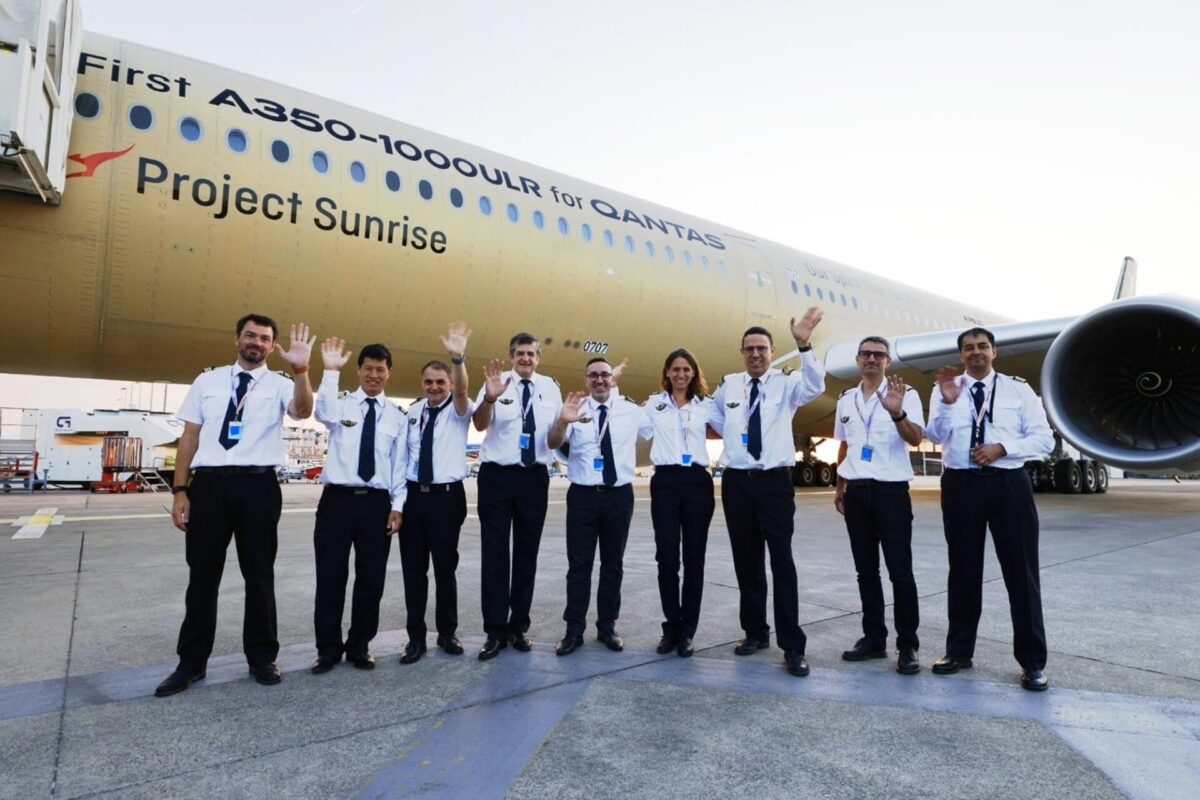
Qantas wants its guests to arrive at their destination feeling refreshed, and this overarching objective has guided the design and underlying philosophy.
The aircraft has just 238 seats, which according to Qantas is the “lowest seat density of any A350 around the world,” and is designed to give travelers more space.
Qantas has been researching the cabin for a decade, working in collaboration with the University of Sydney’s Charles Perkins Centre and Caon Design Office along with other technology partners.
5 comments
Congratulations to Airbus and Qantas on their epic flight! I thought 15hrs 58 mins flying from Heathrow to Osaka west bound over the North Pole in a BA 747 400 was long enough. there were 2 Capt’s and 2 F/O’s!!
It helps extend an aircrafts range if it’s empty. I flew a 747-400F KHSV-VHHH empty (no extra tanks) 18 hours against the Winter headwinds. Really long flights like that is more like standing watch on a ship than normal flying.
CONGRATULATIONS to everyone involved in these two flights from and back to Toulouse, France. I saw on Flightradar24 website’s flight tracker, on landing approach in Toulouse, this plane came down to about 775 feet and then went up, did a turn around and came back to land the second time. I wonder why did they do it like that ? Was that part of the test or there any issue with landing approach on first attempt ?
SUPER AMAZING ULR flight from Melbourne to Toulouse at flight level up to 41,000 feet at over 600 mph in a flight of 24 hours and 24 minutes. I am blown away.
Good luck
Congratulations to everyone participating this event it’s a new record and new project..
We know that the earth circumference at equator. 360×60=21600 nautical mile …
also any two meridian 21600 nautical mile through the north and south poles.
so half of the circumference 180×60=10800 nautical miles
now the Airbus 350-1000ULR Covering 12460 nautical mile now we can go anywhere from any direction..