

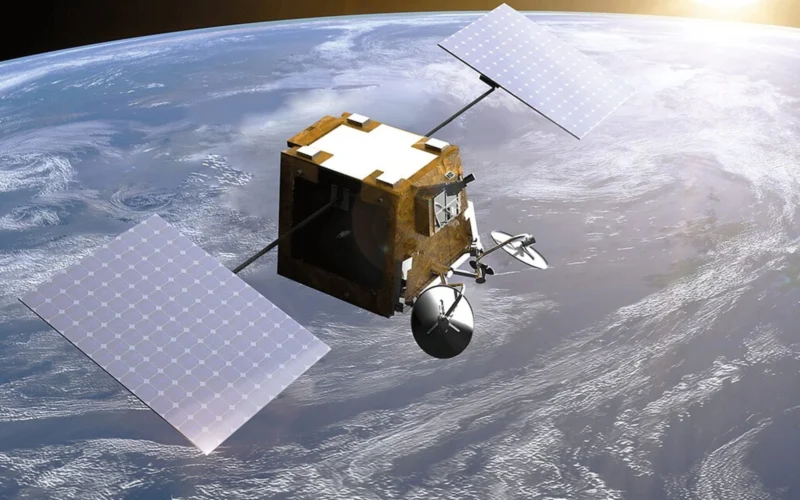
Airbus Defence and Space has secured a contract from Eutelsat to produce an additional 340 OneWeb low Earth orbit (LEO) satellites, bringing the total ordered from December 2024 onward to 440.
The new batch is intended to ensure operational continuity of the OneWeb constellation, as earlier spacecraft near the end of their service lives.
The satellites will be built at Airbus Defence and Space’s Toulouse facility on a newly established production line, with deliveries scheduled to begin at the end of 2026.
The contract marks a new phase for the European-built constellation and is being positioned by Airbus as a contribution to regional space industrial sovereignty, following earlier US-based production for the initial OneWeb satellites.
Upgrades for performance and hosted payload flexibility

Eutelsat’s OneWeb network currently comprises more than 600 satellites, operating in 12 synchronized orbital planes at an altitude of roughly 1,200 kilometers, providing global low-latency broadband coverage. For comparison, SpaceX’s Starlink has expanded to a constellation of 9,400 active satellites as of January 2026.
The latest spacecraft will feature updated onboard processing and more advanced digital channelizers designed to improve efficiency and network flexibility. According to Eutelsat, the platform will also support hosted payload opportunities as it evaluates new business cases beyond the core connectivity mission.
“This latest contract from Eutelsat is an endorsement of our design and manufacturing expertise for LEO satellites,” said Alain Fauré, Head of Space Systems at Airbus. “Airbus has been a key partner and supplier to Eutelsat for more than 30 years and this award further cements our important relationship.”
Eutelsat Chief Executive Officer Jean-François Fallacher welcomed the agreement, saying that the satellites “ensure service continuity for the growing number of our customers and distribution partners benefiting from the unparalleled performance of our ubiquitous, low latency LEO capacity, and enable us to pursue our growth path”.
LEO race tightens
Eutelsat’s latest OneWeb order is part of a broader shift now playing out across the LEO sector, as first-generation satellites begin to age out, and operators plan replacements to keep customers online while adding incremental upgrades.
That transition is visible at Starlink, too. On January 10, 2026, the US Federal Communications Commission approved SpaceX’s plan to deploy an additional 7,500 second-generation Starlink satellites, expanding its authorized Gen2 buildout through late 2028 and 2031.
At the same time, SpaceX has said that it will lower the altitude of a large portion of its existing Starlink shell during 2026, moving satellites from about 550 kilometers (340 miles) to around 480 kilometers (300 miles), a move that it argues should improve space safety by helping failed spacecraft deorbit faster in a more crowded environment.