

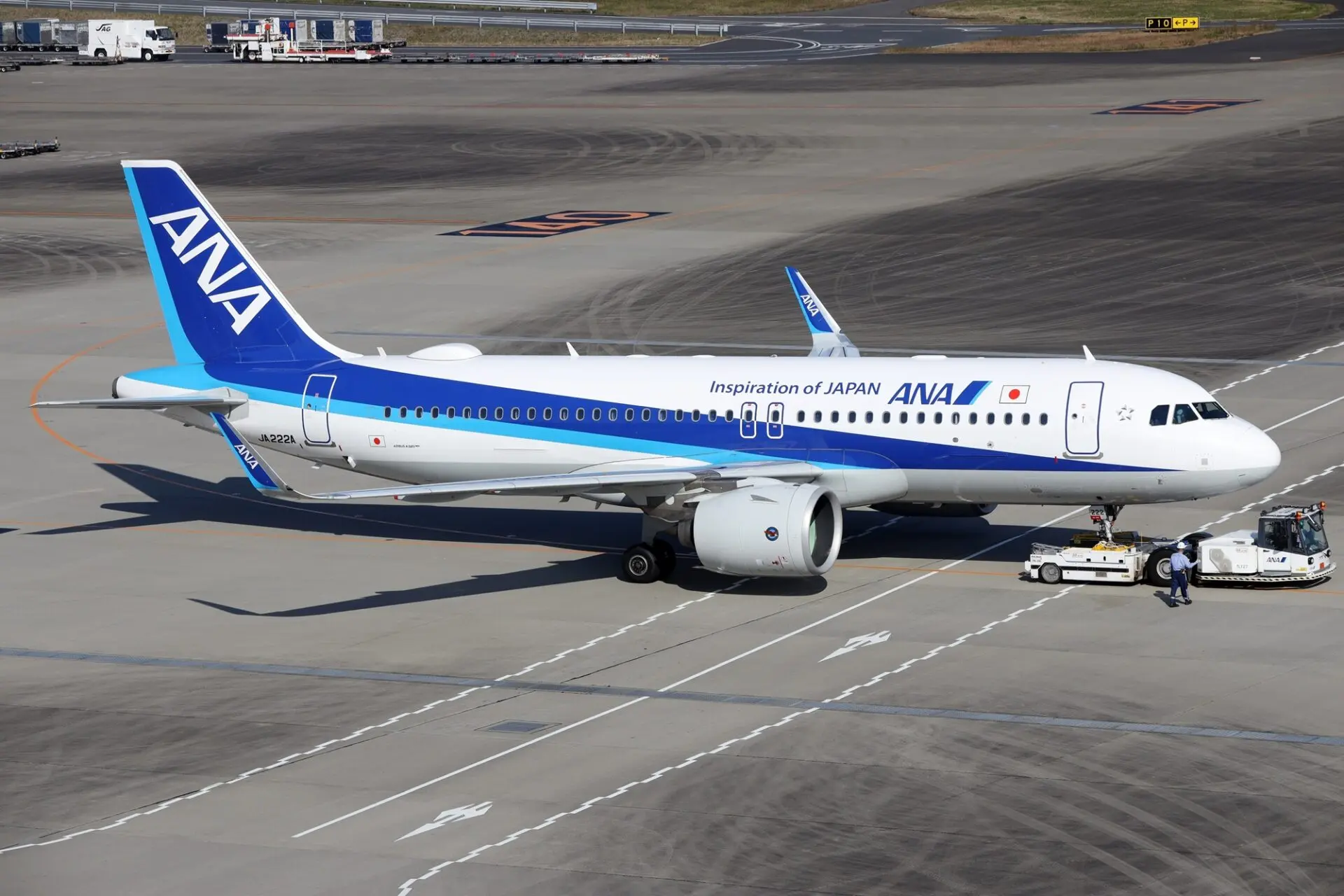
Airbus will train All Nippon Airways’ (ANA) next generation of rookie airline pilots in Portugal as part of a new comprehensive flight training agreement.
On September 2, 2026, Airbus and ANA jointly announced that the first 19 cadets, who have no prior flight experience, will begin training later this year.
The agreement was finalized at the Asia Pacific Aviation Training Summit (APATS) and further expands a strategic partnership between the two companies that stretches nearly four decades.
Airbus will deliver an ab-initio pilot training program for cadets across the ANA Group and partner airlines as the group looks to address the industry wide need for large numbers of new commercial aviators.
The training will take place at Sevenair Academy in Ponte de Sor, Portugal, where the cadets will be taken through every stage of flight training and ultimately become a licensed pilot.
“For a world-class airline to entrust their next generation of pilots to our network is an immense honour,” Thomas Aoudia, Head of Operations and Business Development at Airbus Training Services, said. “Our ab-initio pathway focuses on cultivating core competencies early. By leveraging the global standards of the Airbus flight training framework, we guarantee a harmonised, top-tier training experience from initial flight to the airline flight deck.”
By integrating the training program directly into the Airbus network, the airlines’ cadets will train under a single unified curriculum grounded in standard Airbus flight training concepts, methodologies, and modern learning tools from day one.
“This programme incorporates the latest safety insights and aligns directly with the Airbus philosophy of Competency-Based Training and Assessment (CBTA),” said Takeshi Tsuchida, Executive Vice President of Flight Operations at ANA. “It will equip our cadets with the essential competencies required to navigate complex operational environments and manage flight operations seamlessly.”
According to the latest Airbus Global Services Forecast, the aviation industry will require 633,000 new pilots worldwide over the next 20 years, with 104,000 needed in the Asia-Pacific region alone.
2 comments
A strong investment in the future of aviation. Combining ANA’s high operational standards with Airbus’ global training expertise should create a highly capable new generation of pilots.
A strong investment in the future of aviation. Combining ANA’s high operational standards with Airbus’ global training expertise should create a highly capable new generation of pilots.