
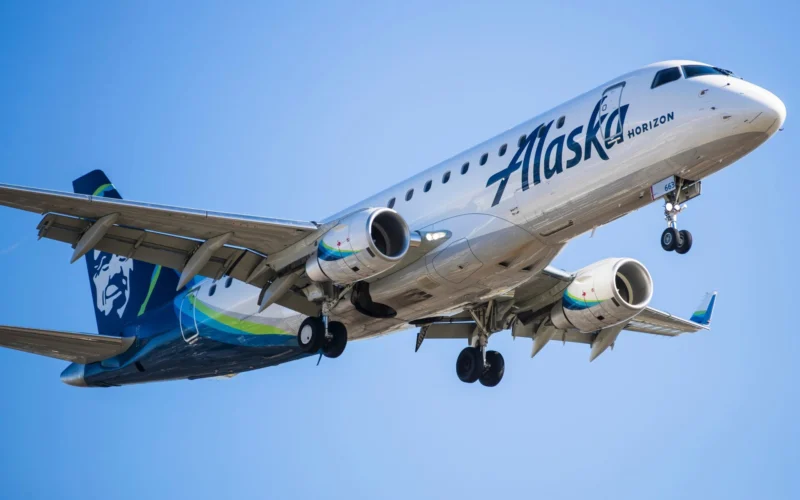
Alaska Air Group reported fourth-quarter and full-year 2025 results that came in ahead of expectations as the company said it entered 2026 with demand improving and a major integration milestone behind it following its acquisition of Hawaiian Airlines.
The company reported earnings per share of $0.18 for the fourth quarter, with adjusted earnings per share of $0.43, which it said landed above both market expectations and its prior guidance range. Alaska generated $3.6 billion in fourth-quarter revenue, and it reported $1.2 billion in operating cash flow for the full year.
CEO Ben Minicucci said Alaska expects momentum to build this year as the Alaska-Hawaiian combination strengthens. “We feel momentum accelerating in 2026 as the Alaska-Hawaiian Airlines combination gains full strength,” he said, pointing to the company’s focus on expanding its network and improving the travel experience.
Alaska now holds a single operating certificate covering both Alaska Airlines and Hawaiian Airlines, a key regulatory step in combining the two carriers.
2026 off to strong start
Alaska offered a cautious but upbeat view of early 2026 demand. The carrier said bookings in the first three weeks of January “have inflected positive” compared with last year, and it described several of the highest booking days in its history since January 1. Alaska said corporate revenues for the first quarter are running 20% higher year over year.
For the first quarter, Alaska guided to adjusted earnings per share between a loss of $1.50 and a loss of $0.50, and it said it expects results to come in roughly flat compared with the prior year. For the full year 2026, the company guided to adjusted earnings per share between $3.50 and $6.50, while emphasizing that the range reflects uncertainty around the broader economy and fuel prices.
In the fourth quarter, Alaska said it grew capacity 2.2% year over year. It also said passenger revenue rose to $3.25 billion, while total revenue reached $3.63 billion. On the cost side, the company reported that unit costs excluding fuel and certain special items rose 1.3% year over year, which it said came in better than its prior guidance and reflected renewed focus on cost control. Alaska reported a fuel price of $2.57 per gallon for the quarter and said elevated West Coast refining prices led to higher fuel costs.
The company highlighted several areas of revenue growth that airlines have leaned on as traditional fare pressure has persisted in parts of the market. Alaska said premium revenue increased 7% year over year in the fourth quarter, cargo revenue rose 22%, and loyalty revenue increased 12%. The carrier also said corporate travel grew 9% year over year, and it pointed to stronger demand as yields rebounded from earlier weakness.
Alaska also said it continued to invest in initiatives tied to its “Alaska Accelerate” strategy. During the quarter, it began selling new international routes from Seattle to London and Rome, with the first flights scheduled for spring 2026. The company also said it is now selling in six foreign currencies and has launched Japanese-, Korean-, and Italian-language websites to support sales outside the United States as it expands international flying.
On the product side, Alaska said it began installing Starlink Wi-Fi on its Embraer 175 fleet in December, with installations on its mainline fleet expected to begin in spring 2026. It also announced the Kahuʻewai Hawaiʻi Investment Plan of more than $600 million over five years, aimed at improving the end-to-end travel experience for Hawaiian customers, including aircraft interior retrofits, airport upgrades in Hawaiʻi, and technology improvements.