

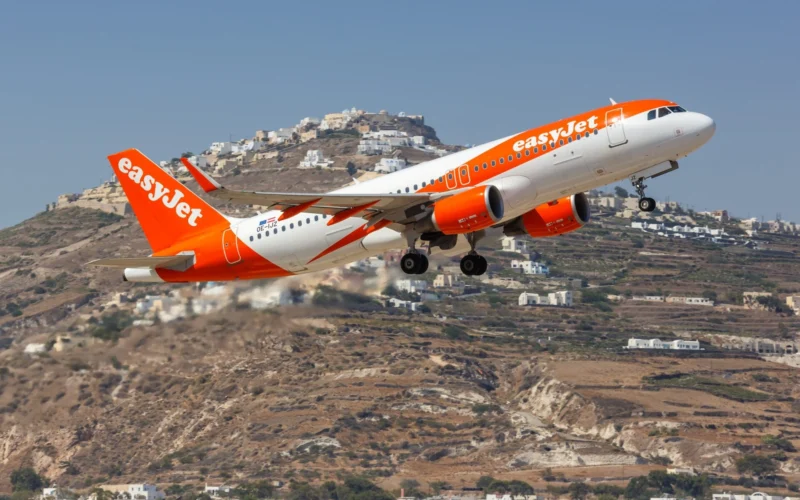
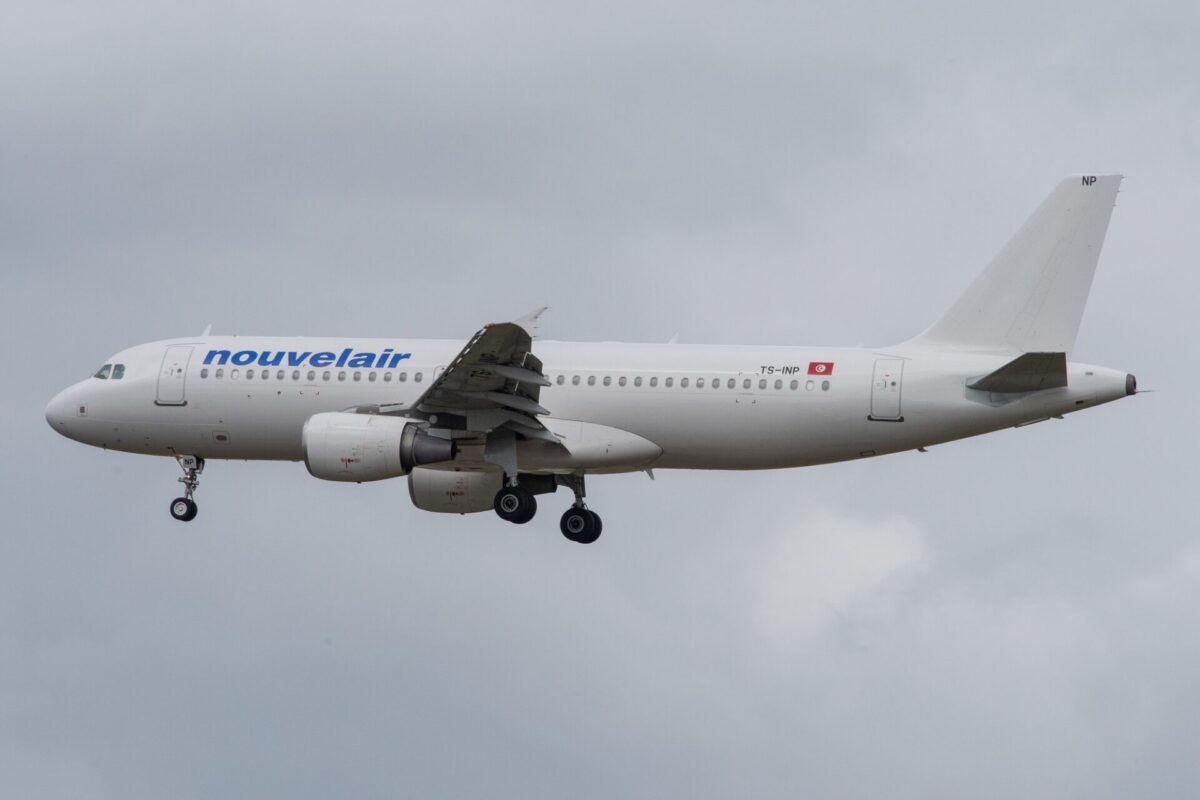
French accident investigators at the Bureau of Enquiry and Analysis for Civil Aviation Safety (BEA) reenacted a night flight to understand how runway lighting impacted a serious incident involving a Nouvelair Airbus A320-200 and an easyJet A320-200 in September 2025.
On September 21, 2026, the BEA issued an update on its investigation into the events that led to the Nouvelair A320 flying closely over an easyJet A320 that was “stopped and aligned with the centerline of runway 04R” at Nice Côte d’Azur Airport (NCE).
In its October 2025 preliminary report, the BEA said that Nouvelair’s “radio altitude value dropped from 39 ft to 10 ft in one second before rising to 24 ft in the following second” and performing a go around.
On September 21, 2025, at around 21:30, the Nouvelair flight team had been cleared to land on runway 04L, which they confirmed, but came into land on runway 04R.
In the BEA’s latest update, it said investigators had been focusing on the weather conditions at the time of the incident and the data from the aircraft’s flight recorders as well as airport air traffic systems and radiocommunications.
They have also conducted interviews with the pilots of the flights and the air traffic controllers and studied crew and air traffic controller training and procedures.
A large part of the investigation has also looked at the approach and “in particular, the impact of the 04L and 04R runway lighting on the carrying out of these approaches”.
To explore this area of the enquiry, BEA asked for the help of the Hyères Gendarmerie Air Section (SAG), a helicopter unit of the French National Gendarmerie.
BEA conduct night flight reenactment
In January 2026, a night flight was reenacted in coordination with French air navigation services, the Nice airport operator and easyJet which provided the BEA with a crew and an aircraft.
The Service Technique de l’aviation Civile (STAC) also analyzed the characteristics of the runway lighting and their impact on how it is perceived.
Additional work also covered European regulations applicable to aerodrome lighting and the procedures for checking and previous occurrences of runway confusion at Nice Côte d’Azur Airport.
“At this stage of the investigation, the information collected has made it possible to specify the sequence of the serious incident and to develop several areas of analysis,” the BEA said.
The BEA also said the investigation had notably shown possibilities of improvement concerning:
- Crews’ knowledge of certain aerodrome specificities.
- Regulatory requirements in connection with aerodrome lighting and more specifically, the methods for checking this lighting (on the ground and in flight).
- Use of the Advanced Surface Movement Guidance and Control System (A-SMGCS) system.
- Direction des Services de la Navigation Aérienne’s (DSNA) handling of safety occurrences.
“These points may evolve according to the results of the work still in progress,” the BEA said. “The investigation is continuing in order to consolidate the findings, identify the factors that may have contributed to the occurrence and, where appropriate, to word safety recommendations or safety messages designed to prevent a similar occurrence from happening again.”