

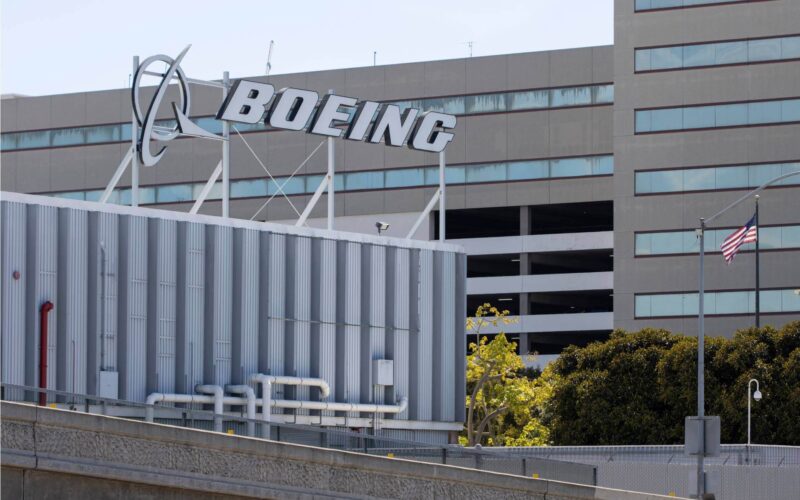
US lawmakers are urging Boeing to resolve a strike at its defense plants in Missouri that has now stretched into a third month, affecting production of fighter jets, weapons, and other military aircraft.
The walkout began on August 4, 2025, when about 3,200 members of the International Association of Machinists and Aerospace Workers (IAM) District 837 went on strike after rejecting Boeing’s contract offer. Workers cited concerns over wages, benefits, and job security. Since then, the strike has devolved into a protracted standoff, with union members twice voting down company proposals and later submitting their own contract plan, which Boeing reportedly did not consider.
On October 1, Senator Bernie Sanders (I-Vermont) sent a letter to Boeing Chief Executive Kelly Ortberg calling on the company to settle with workers.
“Do the right thing,” Sanders wrote. “Sign a fair contract.”
The senator’s letter, sent to coincide with a Senate hearing on labor nominations, underscored growing pressure on the aerospace giant to end the dispute. Sanders criticized Boeing’s approach to its workforce as the strike disrupted operations in the St. Louis area.
During the same hearing, Senator Ed Markey (D-Massachusetts) also faulted Boeing’s handling of the labor talks and Senator Josh Hawley (R-Missouri) condemned what he called inequities in how the company was treating striking workers compared with executives.
“Fairness may be elusive, but that doesn’t look like fairness to me,” Hawley said.
Their remarks follow Boeing’s decision at the end of August to stop covering strikers’ health insurance, a move that union leaders said placed additional financial pressure on workers already going without paychecks.
Union deadlock
IAM members rejected Boeing contract proposals in August and September. In response, the union drafted its own proposal, which members approved overwhelmingly. Boeing, however, has not formally considered the union’s plan.
The deadlock has left both sides at an impasse. Union members continue picketing outside Boeing facilities in St. Louis, while production of several defense programs has slowed or halted.
The strike is now well into its third month, marking one of the longest labor disputes at Boeing’s defense operations in years. The facilities involved produce the F-15 fighter, the F/A-18 Super Hornet, the T-7A Red Hawk trainer, and a range of munitions and weapons systems.
The Pentagon has not publicly detailed the impact of the strike on contract schedules, but extended work stoppages at St. Louis are likely to affect deliveries of critical defense equipment.
Boeing has said it would begin hiring replacement workers to keep factory lines moving.
The dispute comes as Boeing faces increased scrutiny over its labor relations and corporate governance. The company’s chief labor counsel, William Dauster, has been nominated to serve on a Republican-dominated federal labor relations board, a development that drew additional criticism from Senate Democrats.
For Sanders and other senators, the strike reflects broader issues of fairness and corporate responsibility. In his letter, Sanders emphasized that Boeing must negotiate in good faith with its employees rather than prolong a standoff.
With no new talks scheduled, it remains unclear how soon the two sides might reach an agreement. Union leaders have said they remain ready to negotiate but insist that Boeing must take their proposal seriously. Boeing, meanwhile, has not signaled whether it will reopen discussions on terms that align with the union’s demands.