

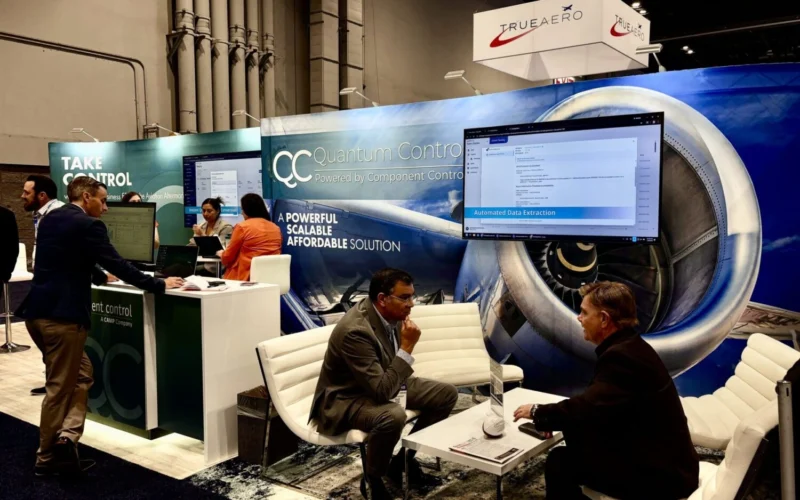
CAMP Systems is moving artificial intelligence into more parts of its aviation software business, rolling out tools for parts pricing, technician support, analytics, customer service and software development as it updates a long-established lineup of maintenance and enterprise resource planning products.
Daniel Tautges, Senior Vice President of Sales at Component Control, a CAMP company, said that these efforts began in 2025 but are now starting to show up in products and internal workflows.
At Component Control, that means more than adding a chatbot to a website. According to Tautges, the company is using AI across operations, support, coding and product design as it tries to modernize older software and bring more of it into a web-based environment.
“If you’re not on the AI bus, you’re going to get run over by the AI bus,” Tautges said during an interview at MRO Americas 2026 in Orlando.
A big part of the work involves legacy software at Component Control. Tautges discussed how CAMP is using AI to review source code, user guides, FAQs and support tickets as it decides how older applications should be updated, moved or rebuilt.
The effort is part of a wider refresh of the company’s software portfolio under the CAMP Aviate name.
Tautges also described several AI tools now being built or rolled out for customers. One is a pricing tool intended to help estimate the value of aircraft parts using internal data and outside market signals. Another is a technician support application designed to help less experienced mechanics find relevant fixes faster by pulling from prior maintenance records and a company’s own knowledge base.
CAMP is also working on an analytics tool that would enable users to ask questions in plain language instead of relying on traditional reports or building custom queries.
On the support side, Tautges said that the company is using AI to speed up answers by drawing on FAQs, videos, past trouble tickets and internal documentation. The same approach is also helping CAMP to train employees internally as ERP systems become more complicated.
Additionally, AI is changing how CAMP writes software. Tautges noted that the company is using it to evaluate older modules and decide more quickly whether they can be moved into a new system or else need to be rebuilt.
CAMP’s AI team has grown to 14 developers and is expected to reach 45 by the end of 2026, Tautges said.
He also stressed that security remains a central concern. CAMP’s AI systems are ring-fencing each customer’s data, so one company’s information is not exposed to another’s. He also pointed to Hearst, CAMP’s parent company, as a source of added legal, compliance and cybersecurity support as the company expands its AI work.