

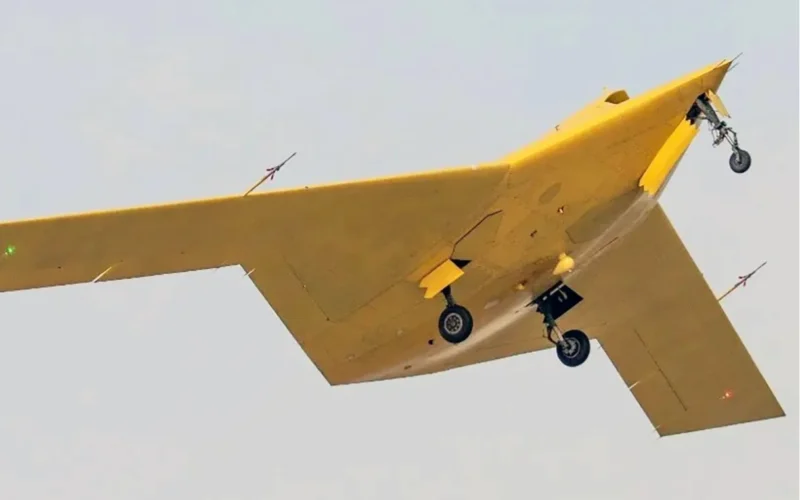
China has confirmed the maiden flight of its CH-7 stealth uncrewed aerial vehicle, marking a significant step in the country’s effort to develop low-observable drones designed to operate in areas protected by modern air defense systems.
Chinese state media reported on December 15, 2025, that the jet-powered, flying-wing UAV completed its first flight from an airfield in northwest China. Imagery and video released through official channels show the aircraft taxiing, taking off, flying, and landing, providing the clearest evidence to date that the long-running CH-7 program has entered flight testing.
The CH-7, also known as the Caihong-7 (Rainbow-7), is being developed by the China Academy of Aerospace Aerodynamics, part of the state-owned China Aerospace Science and Technology Corporation (CASC). A full-scale mockup of the aircraft was first displayed publicly at the Zhuhai Airshow in 2018, but until now there had been no confirmed images of the aircraft in flight.
Is it really stealth?
The CH-7’s tailless flying-wing configuration strongly suggests a design optimized for reduced radar signature. The aircraft features a blended wing-body shape, serrated panel edges, and a shielded engine exhaust intended to reduce both radar and infrared signatures. Early flight images show the aircraft without external stores, a requirement for maintaining low observability.
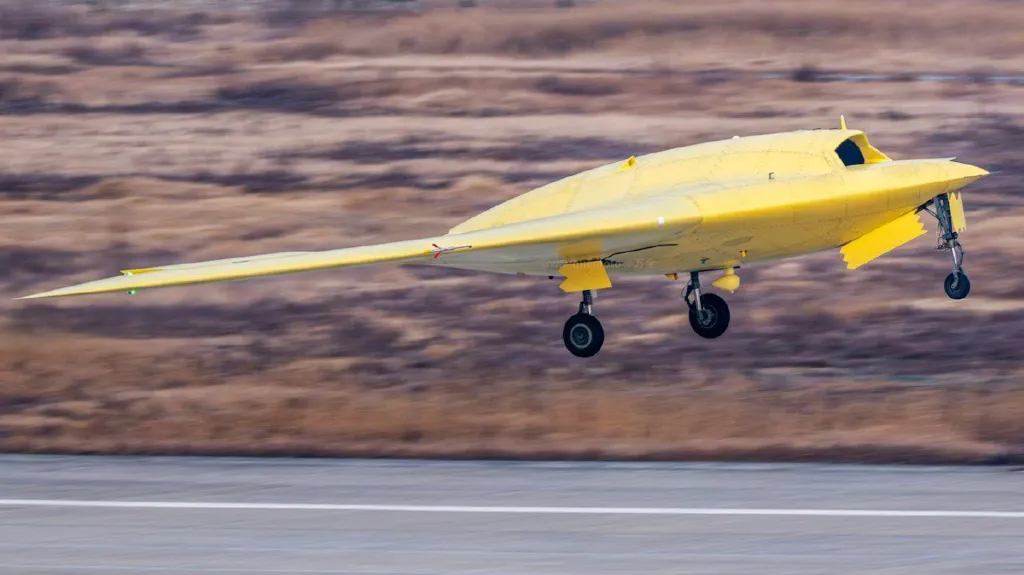
However, “stealth” exists on a spectrum. While the CH-7 incorporates many low-observable design features, its actual radar cross-section, sensor integration, and survivability against modern air defenses remain unknown. Test aircraft appear to be fitted with air-data probes and external antennas that would likely be removed or modified on operational versions.
What is it designed to do?
Chinese officials describe the CH-7 as a high-altitude, long-endurance platform intended for reconnaissance, surveillance, and information support missions under complex battlefield conditions. Independent analysts broadly assess the aircraft as optimized for intelligence, surveillance, and reconnaissance (ISR) rather than as a primary strike platform.
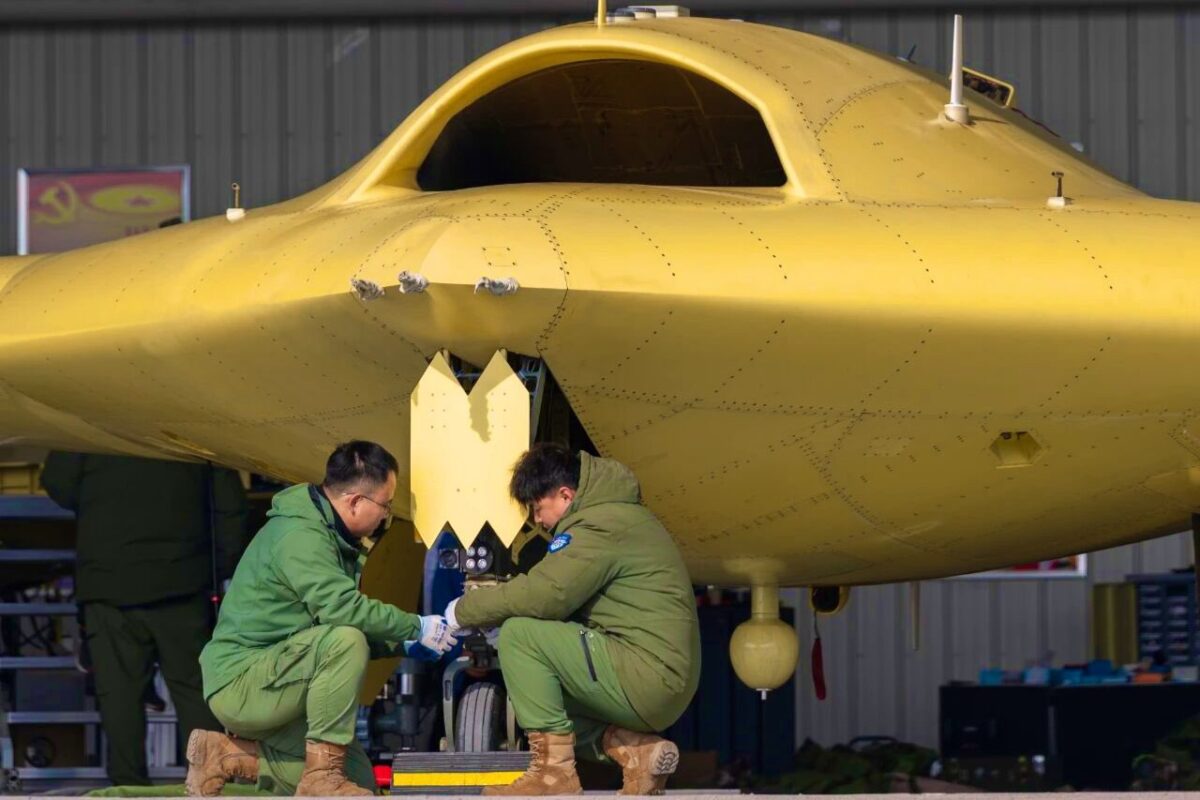
While some imagery suggests the possibility of small internal payload bays, there is limited evidence so far of a substantial weapons carriage capability. This has led many observers to conclude that the CH-7’s primary role is likely to be deep-penetration ISR, gathering targeting data and feeding information into Chinese long-range strike networks rather than delivering weapons itself.
Such a role would align with China’s evolving “kill chain” concepts, in which sensors, command systems, and shooters are tightly networked. A stealthy, high-altitude drone could extend China’s ability to locate and track ships or other high-value targets far from its coastline, particularly in the western Pacific and South China Sea.
Background and next steps
Published specifications for the CH-7 list a length of about 10 meters, a maximum takeoff weight of around 10,000 kilograms, and an endurance of up to 15 hours, though these figures remain provisional given ongoing design changes. State media indicated that additional testing will follow, including flight-envelope expansion and payload validation.
The CH-7 joins a growing family of Chinese stealth UAV programs, alongside the carrier-capable GJ-11 “Sharp Sword” and several other flying-wing designs observed in recent years. Together, they reflect a sustained investment in uncrewed systems intended to operate in environments where traditional drones would be vulnerable.