

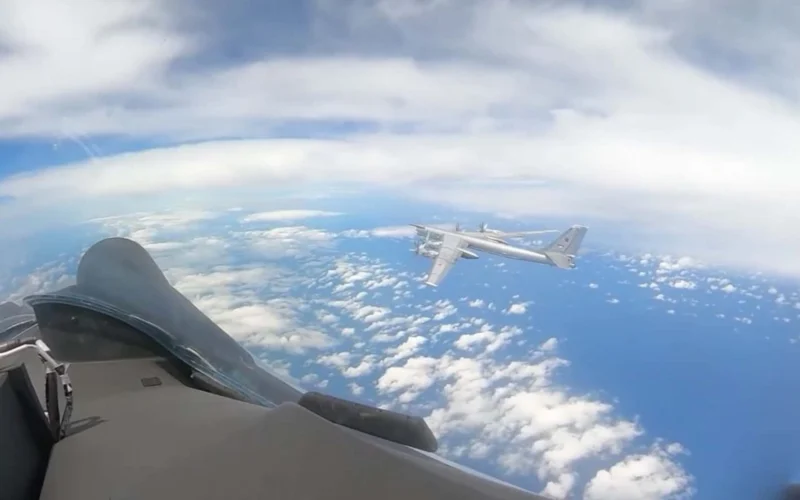
China and Russia conducted their 11th joint strategic air patrol on June 27, 2026, sending a formation of more than 15 aircraft over the Sea of Japan, the East China Sea and the western Pacific in a roughly six-hour flight that drew interceptors from the US Air Force, Japan and South Korea.
China’s Ministry of National Defense said the patrol demonstrated the two sides’ “determination and capability to jointly uphold regional peace and stability.” Russia’s Ministry of Defense described the mission as part of the 2026 military cooperation plan and said the bombers were escorted by foreign fighters at certain points along the route.
A larger, more complete formation
Unlike earlier deployments centered mainly on bomber pairs and fighter escorts, this patrol brought a broader support package, including tankers, early warning aircraft and electronic warfare assets.
6月27日(土)午前から午後にかけて、東シナ海から日本海に進出した中国の爆撃機(H-6)×2機が、日本海においてロシアの爆撃機(Tu-95)×2機及びロシアの哨戒機(Tu-142)×2機と合流した後、東シナ海ま… pic.twitter.com/tgDIkApgHg
— 防衛省統合幕僚監部 (@jointstaffpa) June 27, 2026
According to flight tracks and imagery released by Japan’s Joint Staff, the Russian contingent included two Tu-95MS strategic bombers and two Tu-142 maritime patrol aircraft, escorted at points by Su-35S and Su-30SM fighters.
China contributed four H-6 bombers and J-16 fighters, with footage published by the PLA Air Force also showing a YY-20A aerial refueling tanker, a KJ-500 airborne early warning and control aircraft, Y-9 electronic warfare and signals intelligence variants, and J-10C and J-11 fighters.
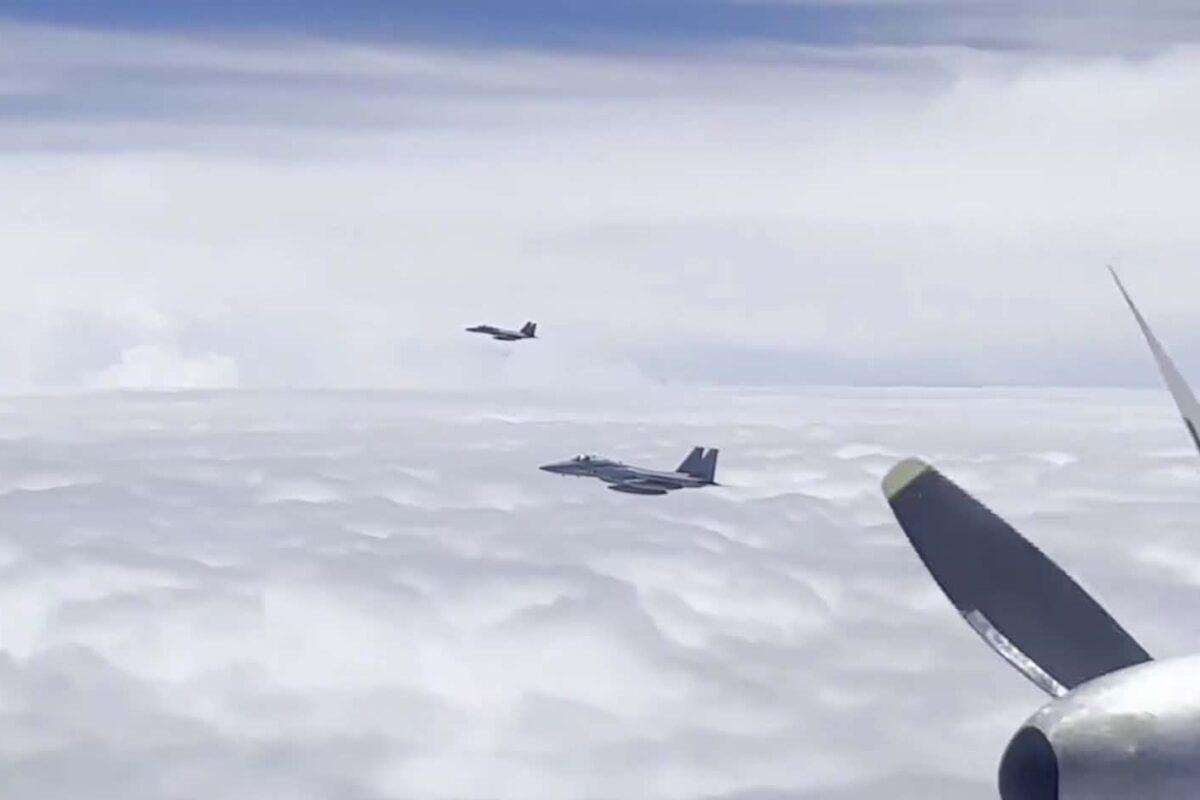
The Russian Ministry of Defense released a video showing two F-35A Lightning II fighters shadowing the Russian aircraft, while Japan Air Self-Defense Force F-15J fighters were also recorded escorting the formation.
Tokyo and Seoul lodge protests
Japan’s Defense Ministry said it scrambled fighters from its Western Air Defense Force after tracking the bombers from morning into the afternoon of June 27, 2026, including a leg from the East China Sea to the Pacific off Shikoku.
South Korea’s Joint Chiefs of Staff said the formation briefly entered and exited the Korea Air Defense Identification Zone over the country’s eastern and southern waters, prompting tactical response flights.
Both governments lodged formal protests through diplomatic channels, with Seoul summoning the Chinese and Russian embassies on June 28, 2026. Beijing’s foreign ministry said there was no need for Tokyo to overreact, framing the patrol as routine annual cooperation.
China and Russia have flown joint strategic patrols since 2019, when bombers from the two countries entered the Korea Air Defense Identification Zone simultaneously for the first time. The flights have generally occurred once or twice a year.
2 comments
Are Both sides trying to resolve differences, or set barriers to them?
Any idea when this joint patrol was planned? Before or after the plane crash into Citic in Beijing Fri 26 Jun 2026?