

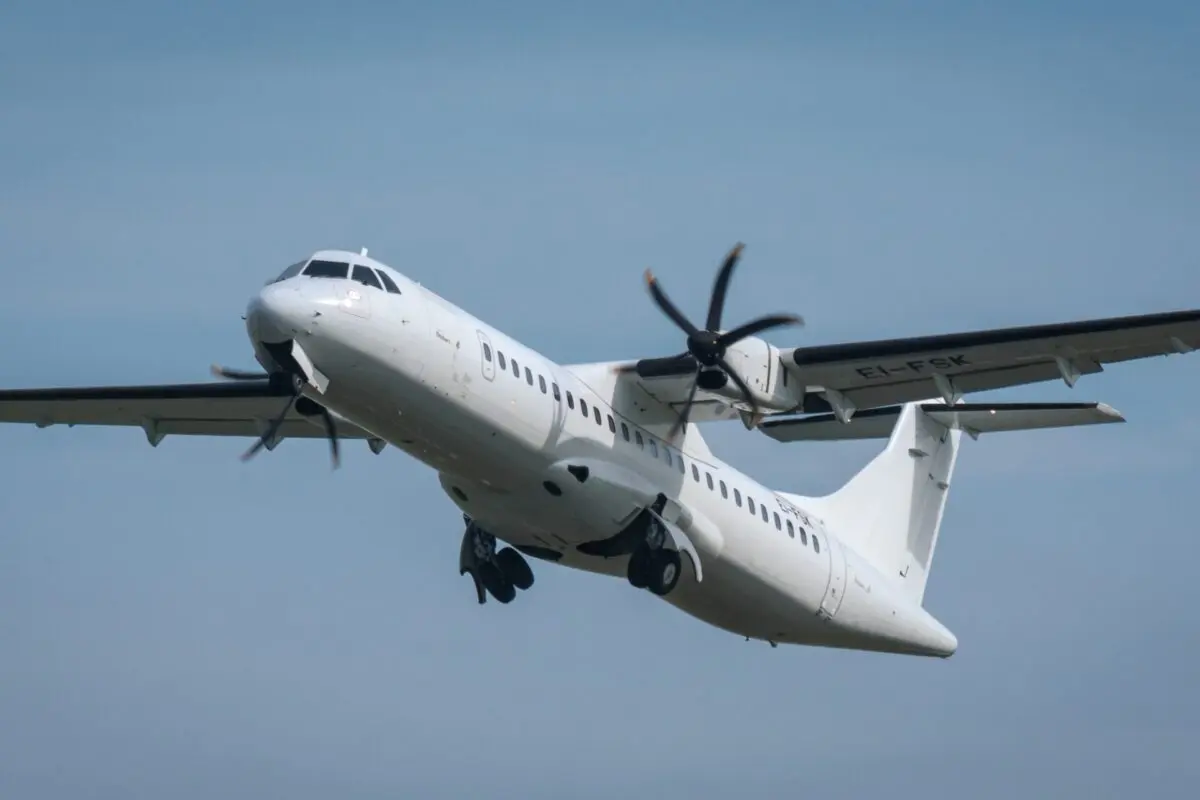
The European Union Aviation Safety Agency (EASA) has ordered operators of ATR 42 and ATR 72 turboprops to check their de-icing systems as often as every 160 flight hours, warning that a valve failure could go undetected until an aircraft encounters icing and lead to an unrecoverable loss of control.
The airworthiness directive, issued November 16, 2026, takes effect November 30. EASA had already shortened the time between checks in January 2025 after a design review identified the risk. A subsequent analysis of how the valves could fail prompted ATR to revise its maintenance instructions again in October.
Brazilian investigators identified ice buildup and multiple de-icing system failures among the factors that contributed to the August 9, 2024, crash of Voepass Flight 2283. All 62 people aboard the ATR 72-500 died when it crashed in Vinhedo, Brazil. ATR issued its first notice to operators about the valve checks in October 2024, about two months after the accident.
The order covers the valves that regulate pressure and shut off the air supply to the de-icing system. How often operators must test them depends on the aircraft model and whether ATR modified it at the factory or an operator had the work done later.
The biggest change is for modified ATR 42-400s, ATR 42-500s and ATR 72s. Under the January 2025 order, those aircraft could fly up to 1,050 hours between checks. The new limit is 160 hours, an 85% reduction. For aircraft of the same models without the modification, the interval drops from 700 hours to 210. Operators of the earlier ATR 42-200, -300 and -320 models will have to check the valves every 190 hours, down from 650.
If a valve fails a check, the operator must correct the problem before the aircraft flies again. If ATR’s published instructions do not cover the fault, the operator must obtain approved instructions from the manufacturer and carry out the work.