
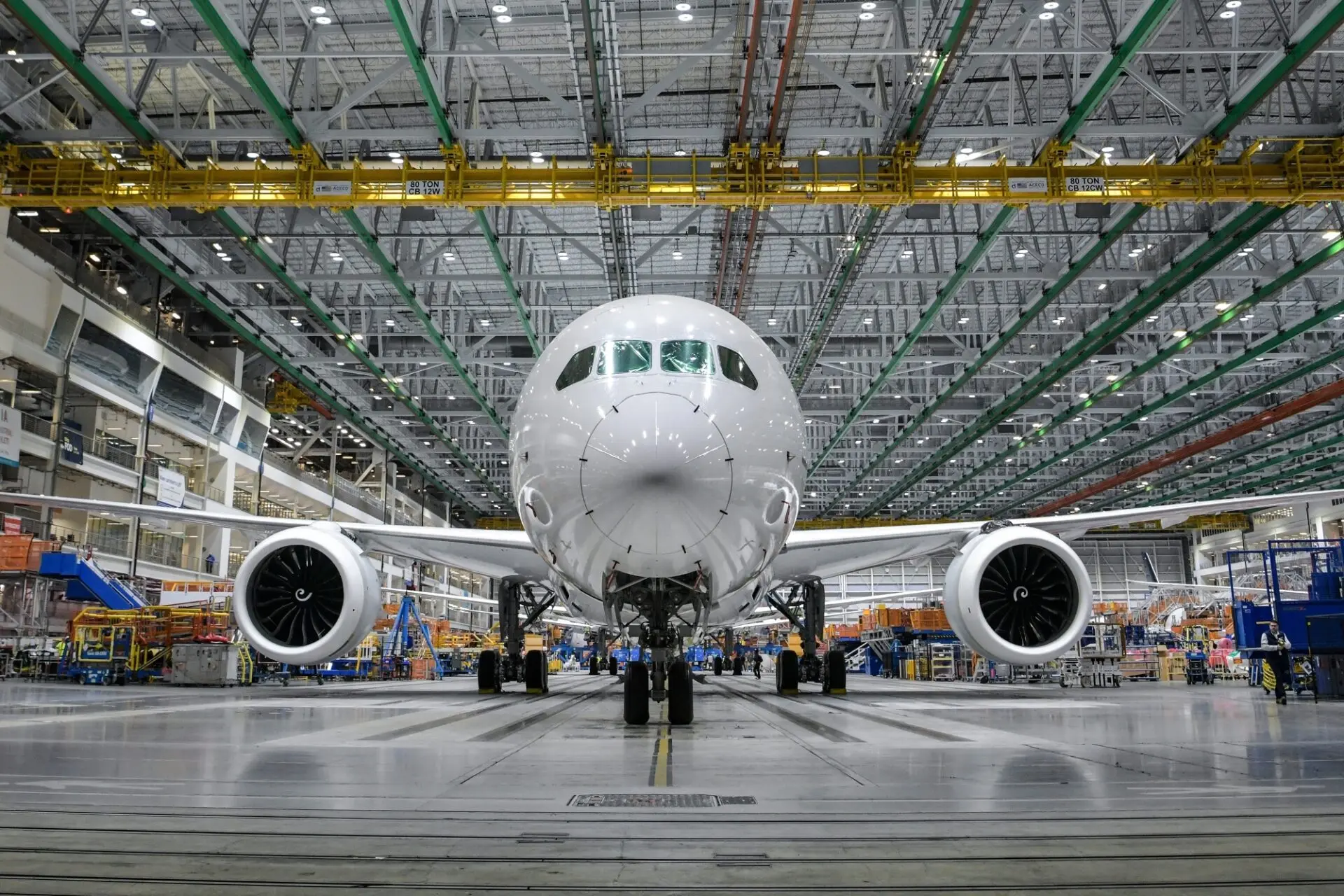
The Federal Aviation Administration (FAA) has ordered inspections of certain Boeing 787 Dreamliners after discovering that required manufacturing checks of fuel tank sealant were not completed or could not be verified, raising concerns about a potential fuel tank explosion during a lightning strike.
The FAA airworthiness directive (AD), published November 2, 2026, applies to certain Boeing 787-8, 787-9 and 787-10 aircraft. The FAA estimates that 60 US-registered aircraft are affected. The directive takes effect December 7, 2026.
The problem involves sealant installations inside the center wing fuel tank that lacked evidence of required visual and adhesion inspections during production.
The FAA warned that defective sealant could allow an ignition source to develop inside the tank during a lightning strike, potentially igniting fuel vapors.
“The unsafe condition, if not addressed, could result in development of an ignition source within the fuel tank volume and a risk of a fuel tank explosion during a lightning strike event,” the FAA said.
Under the directive, operators must carry out detailed inspections of sealant installations in the left, right and center wing side-of-body areas, including sections between the side-of-body rib and rib 2. The work includes checking for sealant defects, surface depressions and inadequate adhesion.
Any defects identified during the inspections must be addressed through approved repairs. The required work follows instructions contained in a Boeing requirements bulletin issued November 5, 2025.
The FAA estimates the AD inspections and adhesion tests will require approximately 34 hours of work per aircraft, costing $2,890 each. The total estimated cost for the 60 affected US aircraft is $173,400, excluding any repairs.
The agency said it lacked sufficient information to estimate the cost of corrective work that might be necessary if defects are discovered. Some expenses could be covered under Boeing’s warranty.
The directive follows an FAA proposal published February 24, 2026. During the public comment period, Boeing and American Airlines requested changes to the repair requirements.
Boeing asked the FAA to allow repairs using existing approved procedures, rather than requiring separate approval for each repair. The FAA agreed.
American Airlines asked the FAA to clarify where the sealant needed to be tested and whether existing Boeing repair procedures could be used. The FAA clarified the inspection areas and agreed to allow the existing repair procedures.
The Foundation for Aviation Safety separately asked whether Boeing was now performing the required sealant inspections during production.
The FAA said the directive covers aircraft for which there was insufficient evidence that the inspections had been completed. It confirmed that the required inspections are being performed during production on aircraft outside the directive’s scope.