
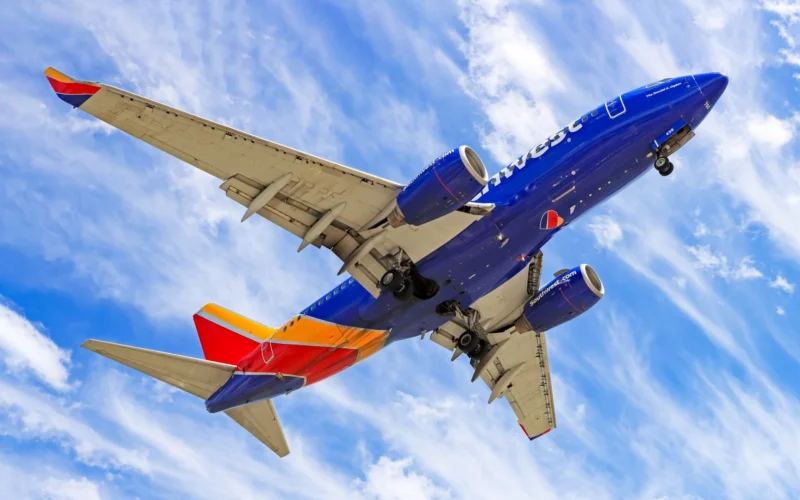
The first Southwest Airlines aircraft fitted with secondary cockpit barriers, a new Boeing 737 MAX 8, entered service on August 30, 2025.
Secondary cockpit barriers, “installed physical secondary barrier (IPSB)” in technical terms, are designed to make it more difficult for any intruders to access an airliner’s flight deck.
Although some airlines had voluntarily installed secondary cockpit barriers in the past, the mandate to install them on all new aircraft was first outlined by the Federal Aviation Administration (FAA) Reauthorization Act of 2018 and confirmed in another FAA ruling in June 2023.
This ruling gave, initially, two years for US airlines to comply, but the FAA has now extended this period for an extra year, until August 23, 2026.
Airlines, however, had been seeking a longer extension from the FAA. This stance has been criticized by unions such as the Air Line Pilots Association, which consider that these delays are exposing them to preventable risks.
Although a whole set of restrictive measures to secure the cockpit of airliners have been in place since the hijacking of four airliners by terrorists on September 11, 2001, the Federal Aviation Administration (FAA) has sought to add additional layers of security onboard aircraft.
The FAA ruling notes that, while no successful attempts to breach cockpit security have been recorded since 2001, it is not uncommon for the pilots to briefly open the cockpit door during the flight. These breaks, the FAA states, could sometimes be just long enough to leave the flight deck exposed to potential intrusions.
The ruling concerns only new aircraft and does not mandate that aircraft currently in service be retrofitted with secondary cockpit barriers.