

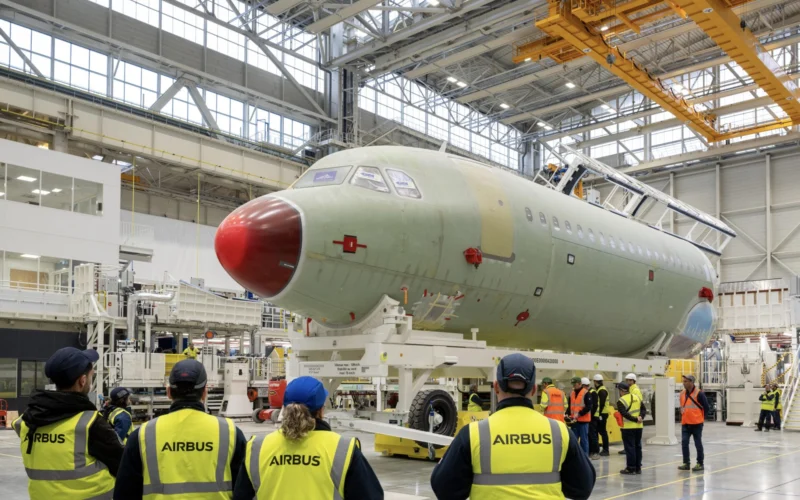
The aerospace and defense industry is heading into 2026 on a strong footing, with Fitch Ratings saying the sector is gaining welcome stability after several uneven years. In its latest outlook, the agency points to record aircraft backlogs, rising defense spending, and supply chains that are showing the first true signs of recovery since the Covid-19 pandemic.
On the commercial side, airlines are flying more passengers and long-haul travel has continued to rebound. That has helped Airbus and Boeing secure years’ worth of production in advance, giving both manufacturers clearer visibility as they work to increase output. Backlogs remain near historic highs, and Fitch expects production rates to rise gradually as parts availability and staffing levels improve.
Maintenance activity is also picking up. Airlines that postponed heavy checks during the pandemic recovery have returned to more normal maintenance schedules, driving demand for components, spare parts, and engine shop visits. Fitch expects the MRO sector to remain one of the most stable parts of commercial aviation in 2026.
However, the report cautions that the industry’s biggest bottlenecks have not completely disappeared. Boeing’s ability to meet delivery targets and regulatory deadlines remains a key pressure point. And across the board, manufacturers continue to struggle with shortages of skilled labor, slowing the pace at which production can ramp up.
On the defense side, the outlook is more straightforward: most major countries are increasing budgets. The United States, Europe, Japan, Australia, and India are all putting more money toward modernization, munitions replenishment, surveillance systems, and autonomous platforms. These long-running programs tend to provide steady, predictable work for contractors, even if the broader economy softens.
Fitch notes that the defense supply chain is benefitting from multiyear procurement commitments, though some smaller suppliers remain fragile. While conditions are improving, the agency says the supply chain is not yet “healthy” and expects further consolidation among subcontractors.
Fitch’s latest outlook carries added weight because the agency rarely issues sector-wide positive guidance unless it sees durable, data-backed improvement. In this case, Fitch says the evidence is clearer there: aircraft backlogs remain near historic highs, supply chains are healing, and defense spending is rising in most major markets. Together, those trends give the aerospace and defense industry a stronger and more stable foundation heading into 2026 than at any point since before the pandemic.
A key structural shift highlighted in the report is Boeing’s planned acquisition of Spirit AeroSystems. Fitch says the deal should give Boeing more control over its most complex aerostructures work and reduce quality-management risk. Airbus has also agreed to take over Spirit facilities tied to its programs, underscoring a broader industry move toward tighter vertical integration.
Fitch also addressed emerging technologies, expecting investment in advanced air mobility to continue — but more cautiously. Near-term momentum is building around autonomous cargo aircraft and defense-oriented unmanned systems, while certification challenges continue to slow progress for passenger eVTOLs.