

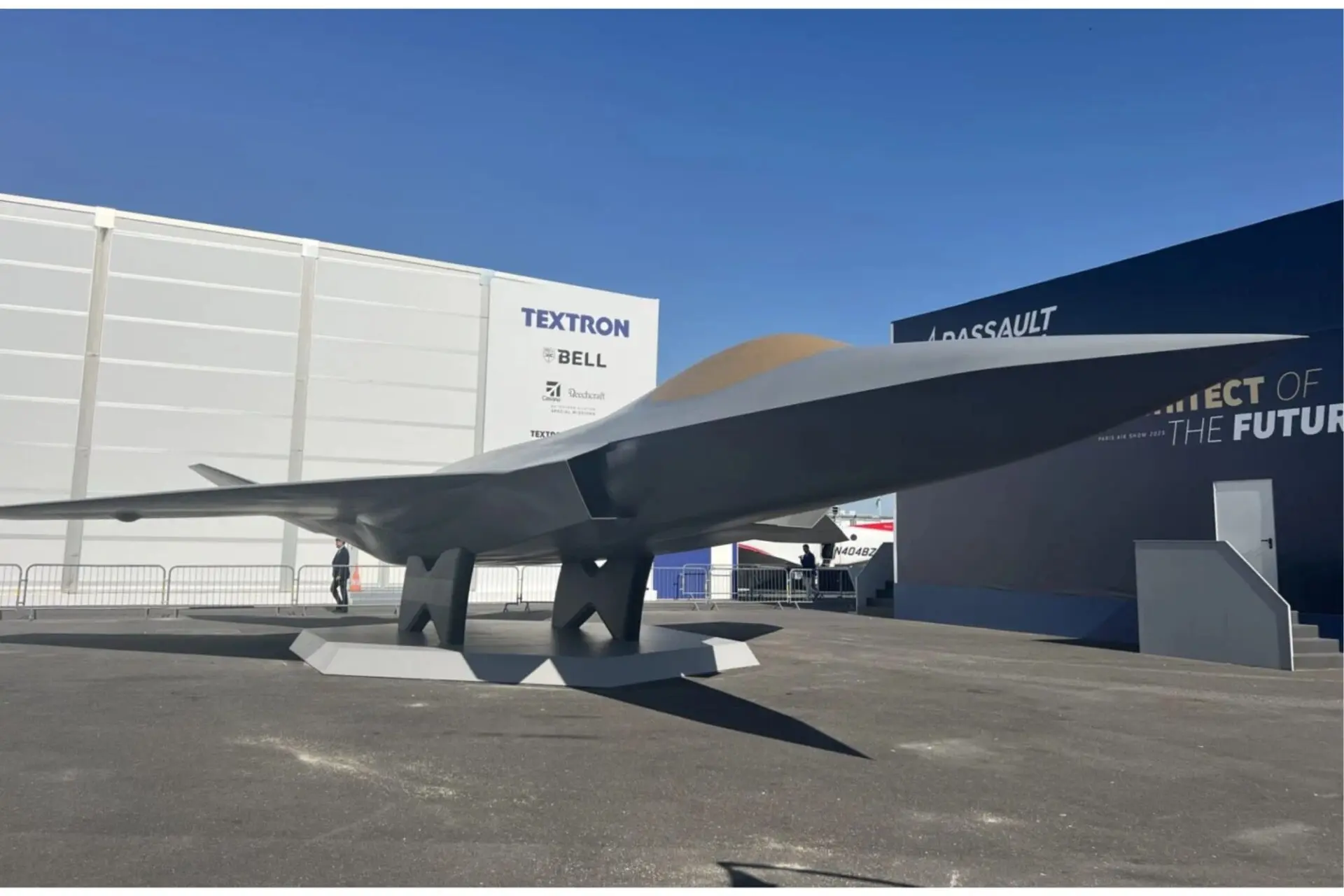
France and Germany have formally shifted their defense relationship away from the wreckage of a failed joint fighter jet program. President Emmanuel Macron and Chancellor Friedrich Merz met near Cologne on July 17, 2026, to move toward new areas of cooperation, including nuclear deterrence.
Macron and Merz then chaired the annual Franco-German government consultations at Augustusburg Castle in Bruehl, a site specifically chosen for its history: French President Charles de Gaulle and German Chancellor Konrad Adenauer laid the groundwork for a Franco-German friendship treaty there in 1962.
En Allemagne, le Conseil des ministres franco-allemand que nous co-présidons aujourd’hui avec le Chancelier Friedrich Merz doit nous permettre de renforcer notre compétitivité, notre sécurité et notre défense et la résilience de nos démocraties.
— Emmanuel Macron (@EmmanuelMacron) July 17, 2026
Le réflexe franco-allemand… https://t.co/9utgniu3Ni
A show of force at Noervenich
Alongside the government consultations, the two countries will hold a Franco-German Defense and Security Council meeting at the Noervenich Luftwaffe air base, underscoring the push for European rearmament amid concerns over Russia and a less reliable American security commitment.
On July 16, 2026, two French Rafale jets, capable of carrying nuclear weapons, were deployed to Noervenich, while a German Eurofighter was refueled mid-air by a French aircraft, a Luftwaffe spokesman told AFP.
The French presidency says the goal for the July 17, 2026 talks is to move past symbolism and advance “concrete” projects, an explicit attempt to recover from the collapse of the Future Combat Air System (FCAS), the countries’ joint sixth-generation fighter jet program, which ran aground in June 2026.
How the fighter jet program began
FCAS was launched in 2017 by Macron and then-German Chancellor Angela Merkel. Positioned as Europe’s flagship sixth-generation combat air program, it came with an estimated price tag of roughly €100 billion.
The project centered on a manned New Generation Fighter, paired with a ‘combat cloud’ architecture meant to link aircraft, drones and satellites into a single digital system.
In October 2019, the two governments met in Toulouse to resolve early friction over how the work would be divided and succeeded in producing an arms export agreement covering jointly developed weapons.
Under the deal, one country would automatically approve arms sales if its share of the selling price fell below a threshold rumored at around 20%. Both governments called it proof of mutual trust, a condition for the success of FCAS and the parallel Main Ground Combat System tank program.
Where it fell apart
The industrial workshare dispute between Airbus, representing Germany and Spain, and France’s Dassault, proved to be the program’s fatal obstacle.
Tensions became public in February 2026, when Merz questioned openly whether a single aircraft platform could meet both countries’ requirements, since France needed a nuclear-capable, carrier-compatible jet, whereas Germany did not.
A mediation effort launched after a Macron-Merz dinner in Brussels on March 18, 2026, collapsed a month later, after the mediator concluded that a jointly-built crewed fighter was no longer realistic. At an informal EU summit in Cyprus on April 23, 2026, Macron and Merz sent the decision back to their defense ministries, with Macron insisting two days later that the program was “not at all” dead.
The core issue never changed. Dassault’s Eric Trappier repeatedly demanded the lead role, rejecting equal footing with Airbus, and a reported personal appeal from Merz failed to change his position.
Germany’s new national aviation strategy, adopted by cabinet on June 10, 2026 and unveiled at the ILA Berlin air show, states that Airbus must co-lead any future German combat aircraft program.
Spain, the program’s third partner, had already hedged by funding an Airbus-Indra study into its own combat air system. Belgium, an observer since 2024, went further. After Merz’s February remarks, Defense Minister Theo Francken declared the program dead, and Brussels announced plans to buy 11 additional F-35A jets instead.
Two countries, two fighter jets
With the joint fighter program dead, France and Germany are now pursuing separate sixth-generation aircraft. Dassault will develop France’s jet independently, backed in part by more than €4 billion allocated to the Rafale F5 standard.
Airbus is to lead Germany’s program, with Spain expected to remain involved. The company has also opened talks with Sweden’s Saab, seen in Berlin as a more cooperative partner. Both programs are expected to produce aircraft during the early 2040s.
Despite the split, the two countries plan to keep developing the combat cloud architecture that formed FCAS’s other core pillar, with responsibilities for that piece expected to come up for discussion at the July 17, 2026 council.