

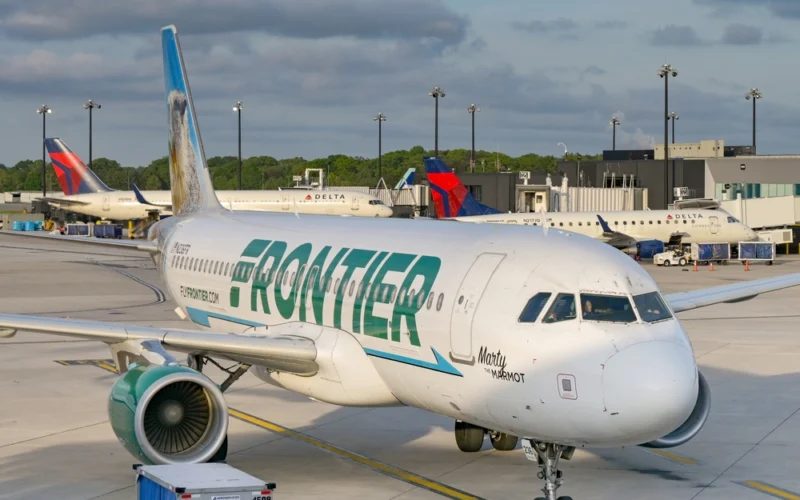
A Frontier Airlines Airbus A320 sustained damage to its left-hand engine after a ground-based air conditioning tube was ingested as the aircraft prepared for departure. The unfortunate incident, which took place at Charlotte-Douglas International Airport (CLT) in North Carolina, led to a delay of around nine hours for the passengers affected while the airline sourced a replacement aircraft.
The aircraft concerned, a 5.7-year-old Airbus A320 registered as N365FR, was at its parking stand preparing for departure to New York-LaGuardia Airport (LGA) on August 16, 2025, as Frontier Airlines flight 3134, a flight that was due to take around one hour and twenty minutes to complete. According to the website PYOK, flight 3134 had already boarded passengers when eyewitnesses caught the moment that the ground air supply hose was sucked into the engine.
This is how a Frontier Airlines Airbus A320-251N aircraft (N365FR) left engine ingested a ground air-conditioning hose at Charlotte Douglas International Airport.
— FL360aero (@fl360aero) August 17, 2025
The incident took place when the aircraft was on the gate and getting prepared for the flight F93134 from Charlotte… pic.twitter.com/tvidoknXXE
This type of equipment is often used at airports in place of running aircraft auxiliary power units (APUs) to provide additional air conditioning to parked aircraft while they sit on their parking stand before their next flight. During the warmer summer months, ground power air conditioning units are an essential piece of ground equipment that supplies cooled air into the aircraft cabin while the engines are switched off and the aircraft is not running its own air conditioning systems.
The cooled air is supplied from large hoses that connect to a special port in the underbelly of the aircraft. When these tubes are not in use, they are supposed to be securely stowed either at the base of the airbridge at the parking stand or in a dedicated storage box located close to the aircraft itself.
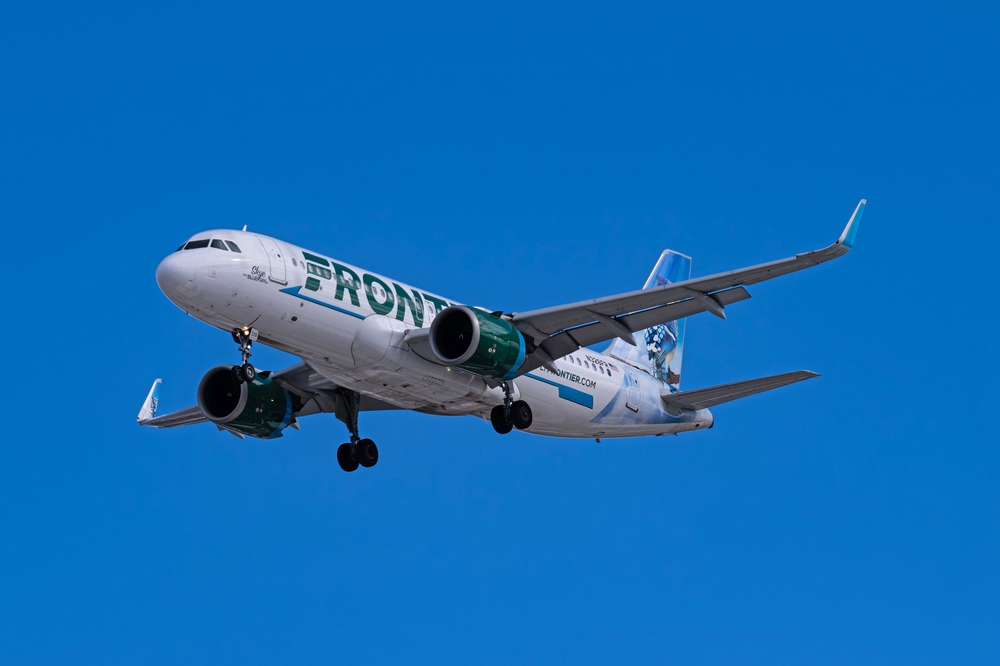
With the aircraft engine damaged by the unplanned ingestion, the crew elected to disembark all the passengers who had boarded, while the airline decided on the best course of action to take to get the passengers to their final destination. It became clear that the engine would have to undergo further inspection, so the airline managed to source another aircraft in the form of Airbus A321neo N715FR to operate the service instead. While the original flight had been scheduled to depart at 09:55 local time, the passengers eventually escaped Charlotte at 19:06, according to data from Flightradar24.
Videos shared by passengers and reported by PYOK captured the hose disintegrating as it spun within the engine’s outer fan blades, with one passenger remarking, “That engine’s fried.” Eyewitness accounts and footage highlighted the severity of the event, showing the shredded hose entangled in the engine fan, with the remnants strewn across the airport tarmac. Airport personnel responded to the aircraft quickly, securing the aircraft and ensuring that there were no injuries occurred among any of the passengers or crew prior to disembarking the aircraft itself.
Frontier Airlines Airbus A320 Incident at Charlotte Douglas International Airport
— aircraftmaintenancengineer (@airmainengineer) August 17, 2025
On August 16, 2025, a Frontier Airlines Airbus A320-251N (N365FR) experienced an incident at Charlotte Douglas International Airport when its left engine ingested a ground air-conditioning hose. The… pic.twitter.com/UjTbJNSAo7
Frontier Airlines issued a statement apologizing to the affected passengers for the inconvenience and commending the airport staff for a swift response to the incident. The airline is reportedly conducting a thorough investigation to determine the cause of the incident and to establish what lessons can be learned to prevent similar occurrences from happening in the future. Investigators will be particularly keen to establish if any lapses in operating procedures, ground equipment handling, or an engine malfunction may have contributed to the incident.
As at the time of writing, the damaged A320 remains out of service at Charlotte Airport as airline engineers assess the condition of the engine and whether it will need to be removed from the wing for a more detailed inspection.
.