

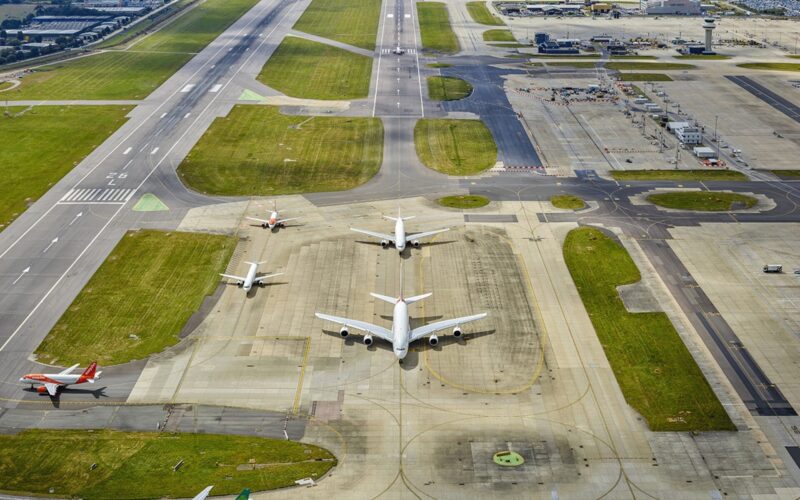
London-Gatwick Airport (LGW) will press ahead with its plans to deliver a second runway after an appeal against the move was rejected by British judges.
On August 4, 2026, Gatwick Airport said that the Court of Appeal had rejected legal challenges to the planning permission that was granted by the government in September 2025.
On June 23, 2026, the High Court upheld the government’s decision to grant planning approval for the Northern Runway Project and campaigners subsequently launched an appeal.
Under the plans, the current standby runway will be moved 12 meters to allow Gatwick to have a second fully functioning runway.
Gatwick argues that the $2.9 billion (£ 2.2 billion) project will “deliver significant” business, tourism and trade benefits for the UK, including 14,000 new jobs, and a $1.3 billion (£1 billion) “boost to the economy every year”.

“Today’s Court of Appeal decision to comprehensively reject the legal challenges brought by the two campaign groups opposing London Gatwick’s Northern Runway Project, confirms, yet again, that the September 2025 decision by the Secretary of State for Transport to approve the Northern Runway Project was taken properly and lawfully,” said Pierre-Hugues Schmit, CEO of London-Gatwick.
He added that he was “pleased” that an eight-year planning and legal process which has “carefully tested and scrutinized every aspect of our expansion plans on multiple occasions” had reached an end.
The UK’s Transport Secretary, Heidi Alexander, said the court’s decision was a “major milestone for Gatwick and for local communities”.
“Around 13 million more passengers and 100,000 more flights will give holidaymakers greater choice and strengthen global links to help make the UK one of the most attractive places in the world to invest,” Alexander added.
The appeal was brought by Peter Barclay, the Chair of Gatwick Area Conservation Campaign, and Communities Against Gatwick Noise Emissions (CAGNE).
CAGNE said the ruling was “deeply disappointing” and that it would use its remaining funds to hold Gatwick to account.
“Our focus moves turns to the proposed new terminal, declining air quality and airspace changes that were not permitted to be considered as part of this application,” CAGNE added.