

A Silicon Valley tech entrepreneur is betting big that the chief safety problem in general aviation isn’t pilot skill, but rather aircraft design.
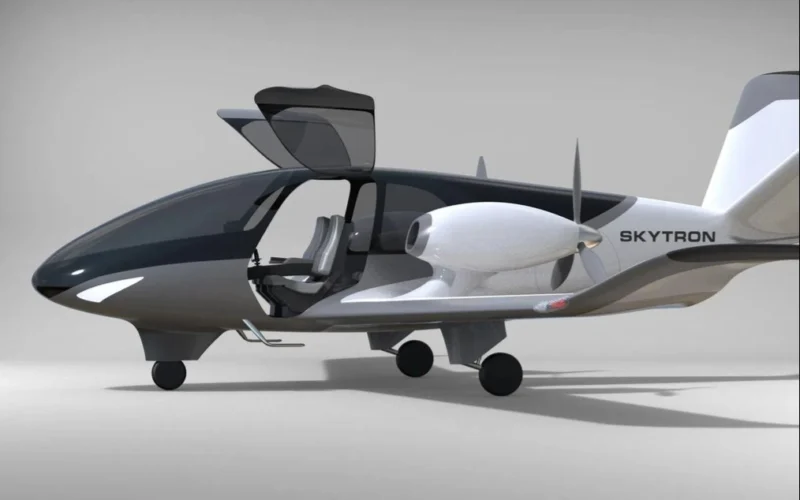
Greg Mercer, best known as the founder of e-commerce analytics company Jungle Scout, has launched Skytron, a clean-sheet, four-seat aircraft designed heavily around automation, fly-by-wire controls, and full flight-envelope protection.
The goal of the project is not autonomy for autonomy’s sake, but rather a dramatic reduction in pilot workload and human-error-related accidents in general aviation through the application of flight-envelope-protection technology and an aircraft that will be “99% autonomous.”
Mercer’s interest in aviation began during his own flight training, where he says the gap between modern consumer technology and light aircraft design became impossible to ignore. While pilots are trained to manage increasingly complex systems, the aircraft themselves have changed little in decades. That mismatch, Mercer argues, is at the heart of general aviation’s safety problem.
Skytron’s response is a fully digital aircraft built around fly-by-wire flight controls. The system is designed to actively prevent stalls, overspeeds, excessive bank angles, and other conditions that often precede loss-of-control accidents. Rather than removing the pilot from the loop, the aircraft limits how far unsafe inputs can go.
The aircraft’s control philosophy departs sharply from current convention. Skytron replaces rudder pedals, trim wheels, and many manual systems with a single side-stick integrated with the aircraft’s flight-control laws. The idea is to allow the pilot to command outcomes rather than manage mechanics, with automation handling much of the workload during normal operations.
Propulsion will come from twin Rotax 916iS engines, each producing about 160 horsepower. Skytron is targeting a cruise speed of roughly 200 knots and a range of about 1,000 nautical miles, performance that would place it well above most piston singles and into territory typically occupied by higher-end piston-powered personal aircraft.
Skytron has not yet disclosed detailed avionics specifications beyond references to its internally developed “Flight OS,” which is expected to rely heavily on touchscreen interfaces and automated flight management. Likewise, the company has not released a finalized cockpit layout or named avionics suppliers or partners.
Skytron is being backed with founder funding, with Mercer reportedly saying he has invested roughly $20 million of his own capital in the program to date.
The target market appears to be owner-pilots and professionals drawn to high-performance personal aircraft but deterred by long training time, workload, and accident risk. Mercer has framed the aircraft as one that could dramatically shorten the path from zero experience to safe, confident flight.
Pricing has not been announced, and Skytron has not provided a firm timeline for FAA certification or first deliveries. Mercer has pointed to the FAA’s MOSAIC framework as a potential enabler for more flexible certification approaches, particularly around automation and integrated systems.