

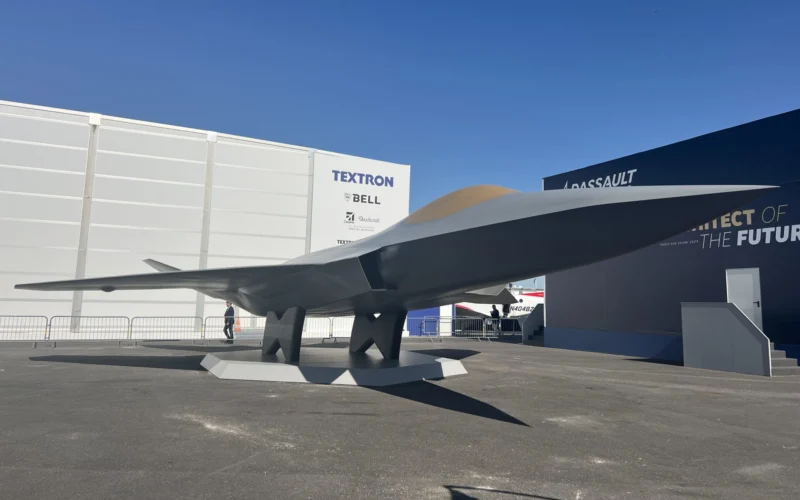
Tensions within the Future Combat Air System (FCAS) program recently resurfaced following a report by German defense outlet Hartpunkt claiming that France is seeking “an 80% stake” in the next-generation European fighter project.
The story sparked alarm among German stakeholders, including Bundestag lawmakers and Airbus union leaders. But what is really at stake?
The reported French demands
According to Hartpunkt, citing “well-informed sources,” France would like to lead three of the FCAS program’s most critical pillars:
- The Next Generation Fighter (NGF) airframe, for which Dassault Aviation is already prime contractor;
- The engine, led by Safran in the 50/50 EUMET joint venture with Germany’s MTU Aero Engines;
- The sensors, where France’s Thales is a key partner.
This would leave Germany leading the Combat Cloud and Remote Carriers (drones), while Spain would retain roles in simulation and electronic warfare. Hartpunkt suggested these arrangements could see France hold as much as 80% of the “strategic value” of the program.
German reactions: “We cannot accept this”
The report triggered an immediate backlash in Germany. Bundestag defense rapporteur Christoph Schmid (SPD) warned:
“If this request were accepted, we would be giving up too much independence and sovereignty, and we would end up financing a French project with German funds.”
Thomas Pretzl, chair of the Airbus Defence and Space Works Council in Germany, went even further. Speaking in Manching on July 7, 2025, the trade unionist questioned Dassault’s suitability as a partner:
“Dassault Aviation is not the right partner. A partnership is based on cooperation, not competition. There are more attractive and suitable partners in Europe,” Pretzl said.
While Pretzl did not name alternatives, potential collaboration with companies involved in the British-led Global Combat Air Programme (GCAP), such as BAE Systems and Italy’s Leonardo, or with Sweden’s Saab, was previously alluded to.
What’s the background?
Launched in 2017, the Future Combat Air System (FCAS) is a sixth-generation fighter jet program, but it is far more than just a fighter. Like the US Next Generation Air Dominance (NGAD) program and the UK-Japan-Italy Global Combat Air Programme (GCAP), FCAS is conceived as a “system of systems.”
It is structured around several pillars, each with designated national leadership and partners (see table below).
At its core is the Next Generation Weapon System (NGWS), which combines a manned Next Generation Fighter (NGF), Remote Carriers (uncrewed drones), and a Combat Cloud to link all assets in real-time. These three pillars are supported by a wider architecture encompassing simulation, electronic warfare, low observability, sensors, and common mission systems, each with its own set of national leads and industrial partners.
This complex web of responsibilities has led to recurring industrial tensions, particularly around leadership, intellectual property, and workload distribution. A long-running dispute between Dassault and Airbus over NGF development delayed the start of Phase 1B, which only moved forward after a hard-won compromise in late 2022.
While Germany and Spain have both ordered F-35s as a stopgap, France is entirely reliant on FCAS to replace its Rafale fighters, particularly for carrier operations and nuclear deterrence. This strategic dependency is reportedly driving Paris to push for what it calls a “best athlete” approach, ensuring that the most capable companies lead key pillars to keep timelines on track.
A negotiation tool?
Though the “80%” claim sparked alarm in German media, a French outlet, Meta-Defense, reported that the figure is neither a political demand nor a unilateral French position. It allegedly originated from a Dassault-led technical report, commissioned within the program, recommending a stronger French role in key pillars to meet the 2045 deadline.
The proposal drew on France’s established capabilities in fighter design, propulsion, and sensors. Rather than a bid for dominance, it was presented as a possible way to unblock progress on a program that has faced repeated delays. Still, the suggestion has highlighted underlying tensions over how leadership and responsibilities should be distributed within this complex, multi-national effort.
Dassault CEO Éric Trappier has repeatedly warned that cooperation must improve, or Dassault may consider pursuing the NGF alone. Speaking at the Paris Air Show 2025, he reiterated frustrations with the program’s industrial setup. Just hours later, Airbus stressed its commitment to FCAS but also called for “simplified cooperation frameworks” and faster alignment between partners.
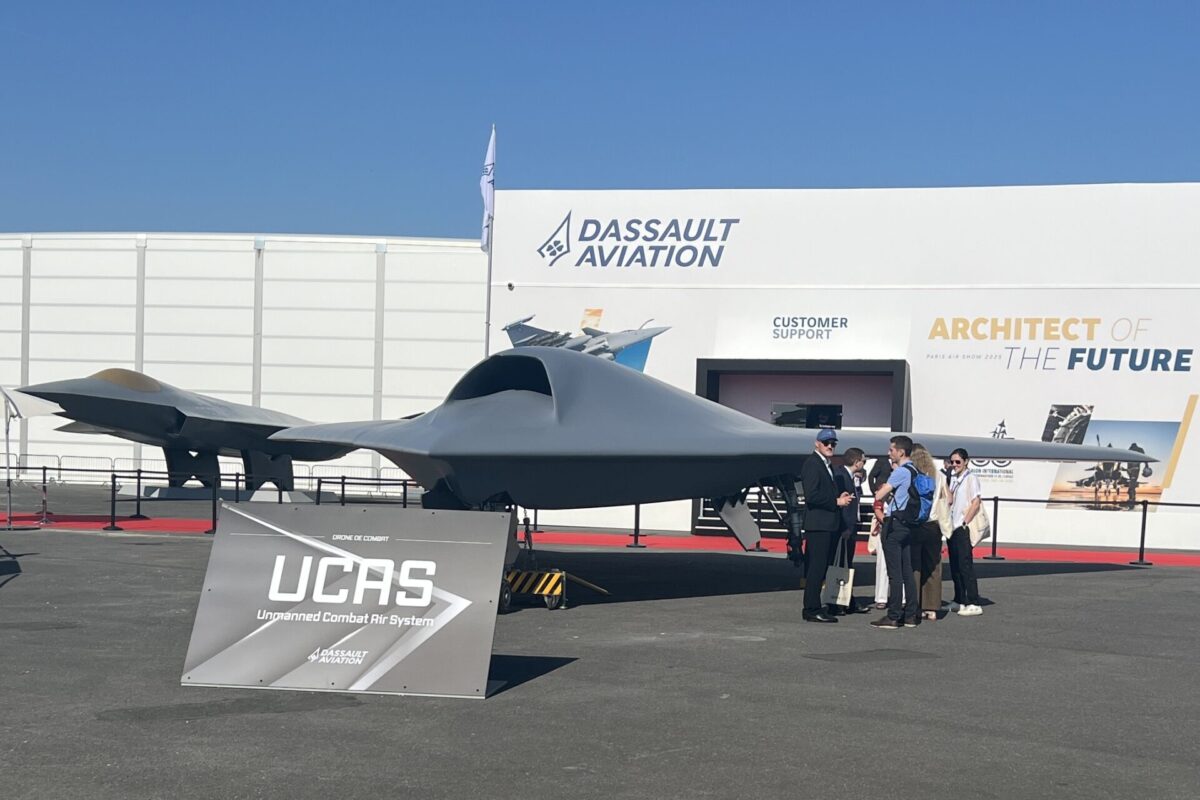
Trappier has frequently pointed to the nEUROn UCAV demonstrator program as a model. Unlike FCAS, which must reconcile the political and industrial expectations of three nations, nEUROn was developed under a unified framework led by France’s DGA. Dassault was tasked with assembling the industrial team and led the program as prime contractor, with other European partners joining under French coordination.
“For the nEUROn, the State asked us to find partners and we have found partners […] and we have built political cooperation around an industrial project. It is the opposite today,” Trappier argued in March 2021 before the French Senate. “Finding other partners is not up to me, but to the State. I did not choose Germany, the decision is political.”
FCAS pillars overview
| Pillar | Prime Contractor(s) | Key Partners |
| Next Generation Fighter (NGF) | Dassault (FR) | Airbus (DE/ES) |
| Engine | EUMET: 50/50 joint venture between Safran (FR), MTU (DE) | ITP (ES) |
| Remote Carriers | Airbus (DE) | MBDA (FR), SATNUS (ES) |
| Combat Cloud | Airbus (DE) | Thales (FR), Indra (ES) |
| Sensors | Indra (ES) | Thales (FR), FCMS (DE) |
| Simulation | Airbus, Dassault, Indra | |
| Stealth/Discretion | Airbus (ES) | Dassault (FR), Airbus (DE) |
| Common Working Environment | Dassault, Airbus, Indra, EUMET |
What’s next?
As Phase 1B nears completion, the pressure to finalize the next stage is mounting. In a world where timelines are slipping and geopolitical threats are growing, both political and industrial leaders are calling for less friction and more delivery.
Whether France aims for 80% control or simply seeks to protect its strategic interests, the controversy highlights a deeper issue: FCAS was conceived in peacetime, but it must now be developed in an era of urgency.
8 comments
French should be satisfied with holding the 20% share. If you want it to work and be a quality product let the Germans take the lead…
France is trying to be dominant, as if it will erase its weak past in dealing with Germany. Germans should accept Nothing less than a 50/50 equitable partnership. Or just move on independently.
Agreed
La seule faiblesse de nous, Français, par rapport à l’Allemagne, c’est de ne toujours pas vous faire confiance. L’histoire nous donne toujours raison.
Oui, la France a de sérieux atouts pour revendiquer le leadership dans ce genre d’association, et pour cause, nous avons la technologie depuis des décennies que nous ne pouvons laisser à nos partenaires. Ainsi va la vie !!
le french were involved with both the pre tornado and the typhoon before stopping off on both, not the most reliable partners on such projects.
Hi,
France and Germany do not have the same requirement: Germany wants a big plan with a long range and air superiority whereas France wants a marine version and an nuclear component.
Even the project management is different. In Germany they follow the “Eurofighter” way meaning same working share and decision rights for everybody, whereas France and Dassault rather follow the “Neuron” way, one leader and working share depending on know-how.
I just wanna remember that the Rafale cost less than the German Eurofighter part and was delivered 9 months earlier than expected. So cooperation do not necessary mean cost reduction.
FCAS is actually more a political project with military backgrounds. Germany and France announced in 2017 that they will build a jet together but did not agree before that about the characteristic of the fighter jet. That’s a one of the reason why FCAS is so late now (even if officially the deadline is still 2040, which will be very difficult to hold).
So should they really continue to work together under these conditions? Well we will see.
“If you want it to work and be a quality product let the Germans take the lead…” Gmoney, is that a joke ????
“Si quieres que funcione y sea un producto de calidad, deja que los alemanes tomen la iniciativa…” Gmoney, ¿es una broma? no es broma, en esta epoca cualquiera puede construir un avion, turquia, iran, etc, pero lo que hace un avion que vuele a uno especial que nos ea derribable y de sexta generacion..alemania tiene la tecnologia en sensores, inteligencia artificial, radares, cuantica, materiales, que francia no tiene. Francia vive de su pasado, todos sabemos que en un combate de eurofighter vs rafale rafale es destruido eso no es ningun secreto, solo comparesn radares y sensores y guerra electronica, rafale es una basura