

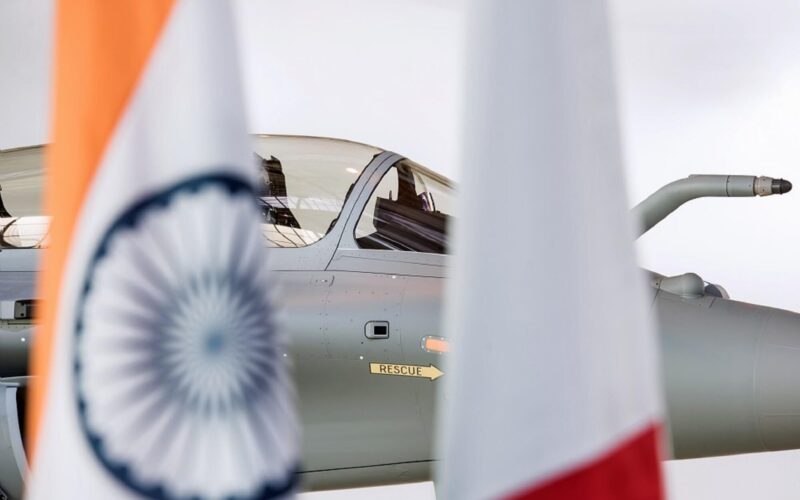
The French Ministry of the Armed Forces has publicly confirmed that India is pursuing a plan to acquire 90 Rafale F4 fighter jets, with an additional option for 24 Rafale F5s, marking the most explicit acknowledgment yet of New Delhi’s commitment to the aircraft’s upcoming variant.
The reference appeared in a ministry analysis, since removed from public access, addressing the information campaign launched by China and echoed by Pakistan following the loss of an Indian Air Force (IAF) Rafale during Operation Sindoor in May 2025.
In its assessment of those coordinated disinformation efforts, the ministry wrote: “India’s order for ninety Rafale F4s and the option for twenty-four Rafale F5s is an example of the trust that binds the two states.”
India’s MRFA shift and the post-Sindoor context
India’s interest in a large Rafale follow-on order emerged publicly in August 2025, when The Times of India reported that the government was preparing a direct government-to-government (G2G) proposal for 114 additional fighters under the Multi-Role Fighter Aircraft (MRFA) program.
The IAF recommended bypassing a traditional tender, arguing that squadron strength pressures, combined with the aircraft’s proven performance during Operation Sindoor, justified a fast-track G2G acquisition.
The operation itself, conducted against Pakistan in May 2025, became the catalyst for an information campaign by Beijing and Islamabad to promote Chinese equipment. Chinese and Pakistani state-linked accounts circulated fabricated images, AI-generated visuals, and even video-game screenshots purporting to show Rafale jets shot down by Chinese-supplied systems.
Previously highlighted by the US Congress, this coordinated influence effort was now addressed directly by the French Ministry of the Armed Forces.
A two-step acquisition: Rafale F4 and the next-generation F5
In October 2025, the Indian Defence Research Wing outlined the parameters of the planned contract: 90 Rafale F4s, followed by an option for 24 Rafale F5s to be delivered from 2030. The deal was expected to be signed in 2026.
While the French ministry’s wording made the planned acquisition sound like a confirmed order, it is not. India has not yet signed a contract for the 90 Rafale F4s or the 24 Rafale F5 options, and the figures reflect New Delhi’s declared intentions rather than a finalized procurement.
This likely explains why the ministry’s article was no longer accessible at the time of publication. Even so, the reference is significant: it is one of the clearest official acknowledgments to date that India is actively considering the Rafale F5 as part of its long-term force structure.
The Rafale F4 standard introduces a range of software, networking, and sensor upgrades, while the F5, currently in development, will be the most substantial evolution of the aircraft since its entry into service.
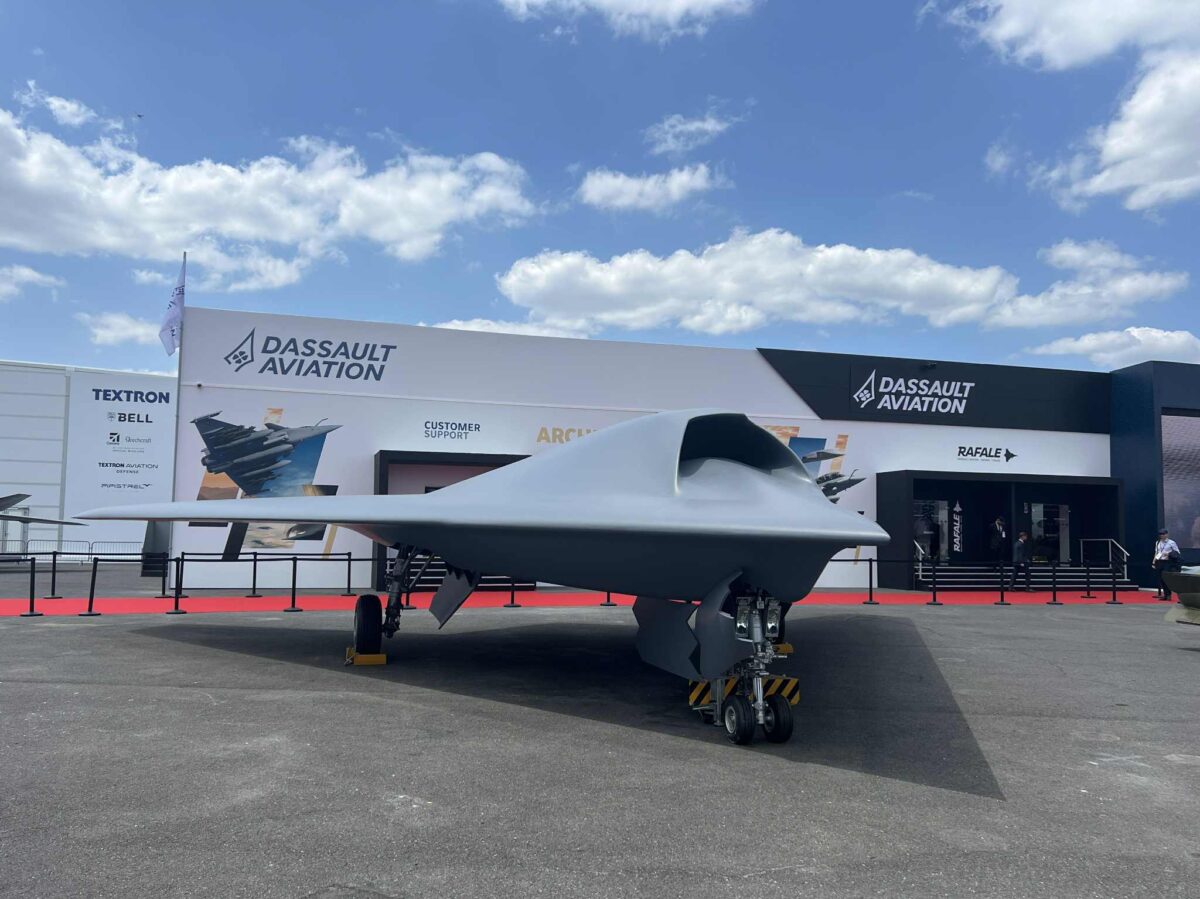
The F5 variant is expected to feature Safran’s upgraded M88 T-REX engine and operate in a manned-unmanned teaming architecture. Dassault has already confirmed that the fighter will work alongside a stealth unmanned combat air system (UCAS) derived from the nEUROn demonstrator, positioning the F5 as France’s bridge toward future air-combat systems.
Strategic timing for France
If confirmed, the combined F4–F5 package would represent one of the largest fighter procurement programs in India’s history. It would restore IAF squadron numbers, deepen industrial cooperation with France, and enable early integration of next-generation combat-air technologies ahead of India’s own Advanced Medium Combat Aircraft (AMCA) timeline.
The timing is also strategically significant for France. Moscow has revived its pitch for the Su-57, positioning the aircraft as a way for India to rebalance its long-term combat-air mix. The outreach, reported ahead of President Vladimir Putin’s visit to New Delhi on December 4, 2025, marks Russia’s most assertive attempt in years to re-enter India’s high-end fighter market after the collapse of the earlier FGFA program.
4 comments
The one question that needs answering, the only consequential question, finds no answer in any of the flurry of defence hardware acquisition stories clogging media space: WHEN? Most of the stories are speculative or based on connecture. India’s need is NOW, IMMEDIATE. But most media stories including this one, make vague, passing references tp 2030 and beyond as the earliest realistic timeline for any of these aircraft to enter service.
Hi India trying to invite Pakistan la Russia waiting Ukraine I don’t understand why does he need to buy so many fighter jet who is gonna fight with just doesn’t show any diplomacy. It shows that he becoming director on the Earth instead of helping the human humanity within the country with so much population and they’re investing huge money on weapons to kill humankind. What sort of democracy is that?
r f4 up-gradable to f5 version????
The most bizarre aspect of all this is the way Dassault Aviation SA has handled the loss of first Rafale in modern combat. As a reputable western aircraft manufacturer it should have published an authoritative report about loss of Rafale with full forensics – just like Lockheed, Boeing or Saab. Such dereliction of professionalism is what has spawned all this mess. Indians are expected to obfuscate but not Dassault.